

Table of Contents
- What Defines Modern Boho Living Room Decor
- How to Style a Boho Living Room on a Budget
- Budget-Friendly Boho Wall Art and Decor
- Natural Materials and Sustainable Choices
- Mixing Vintage and Modern Furniture Affordably
- Rental-Friendly Boho Decor Solutions
- Maintenance and Care of Boho Materials
- Frequently Asked Questions
Last Updated: September 17, 2026
What Defines Modern Boho Living Room Decor
Modern boho living room decor blends bohemian aesthetics with contemporary minimalism, creating spaces that feel both eclectic and curated. At The Family Nest, we understand this design philosophy isn't about cluttering your home with every global-inspired accent you can find, it's about intentional layering that tells a story whilst maintaining visual calm.
Modern boho strips away traditional bohemian maximalism and replaces it with thoughtful restraint. You're mixing vintage finds with clean-lined furniture, layering natural textures like jute and rattan, and building warmth through colour rather than volume. The emphasis on negative space distinguishes it from traditional boho: modern boho leaves room to breathe. When done well, a modern boho space feels like a personal retreat that reflects who you actually are.
How to Style a Boho Living Room on a Budget
Styling a boho living room on a budget means prioritising layering over quantity. Start with a neutral foundation, cream, soft grey, or pale terracotta, then build texture and depth from there.
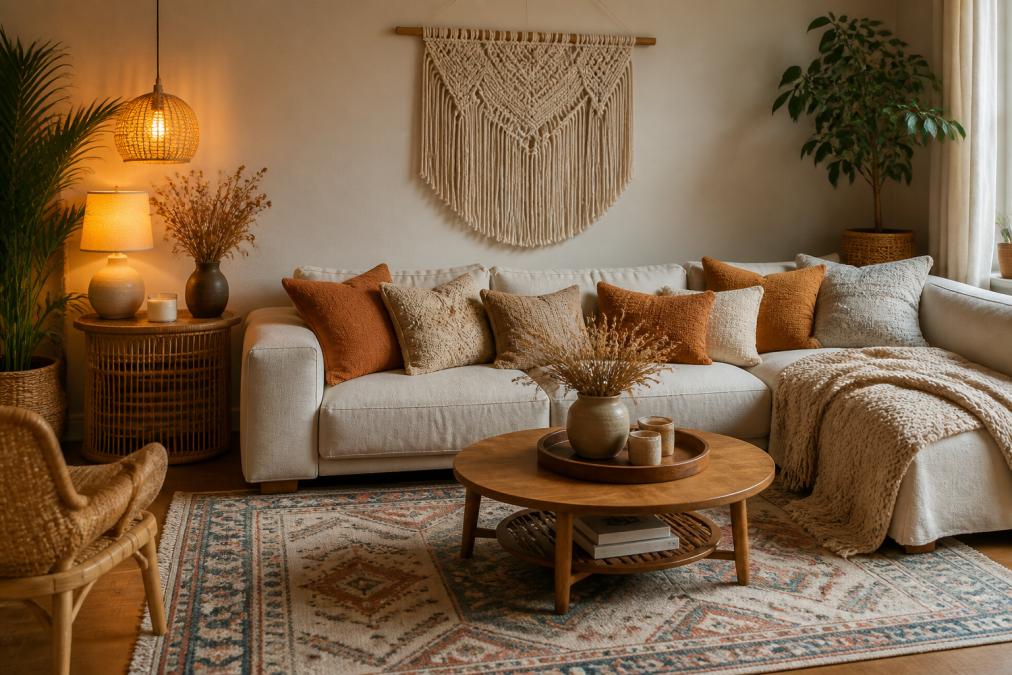
The most affordable way to achieve boho warmth is through textiles. Throw pillows, area rugs, and wall hangings cost far less than furniture but create the impression of a fully designed space. Look for pieces in natural fibres, cotton, linen, wool, rather than synthetic materials.
Layering Textures Without Breaking the Bank
Texture is where modern boho truly lives. The combination of smooth, rough, soft, and woven surfaces creates visual interest and tactile appeal.
Start with your largest pieces: an area rug in jute or wool grounds the room. Layer a smaller patterned rug on top if budget allows. Add throw pillows in varying fabrics, a macramé pillow cover next to linen next to woven textile creates visual richness without chaos. Wall hangings like macramé pieces, woven tapestries, and dried florals add dimension without requiring floor space.
The key mistake is using too many similar textures. Mix smooth ceramic with rough wood, soft textiles with structured rattan, and matte finishes with subtle sheen.
Colour Palettes That Work for Boho Spaces
Boho colour palettes centre on earthy tones: terracotta, ochre, sage green, warm grey, and cream. Modern boho adds restraint, select three to five core colours rather than using every earth tone simultaneously.
A common palette combines cream walls with terracotta accents (through pillows or wall art), sage green touches (a plant, a throw blanket), and warm wood tones. Pattern mixing is essential but requires intention: choose one bold patterned piece, then complement it with smaller geometric or botanical prints in pillows and accessories.
Warm lighting dramatically affects how colours read. Pendant lights with warm-toned bulbs make earthy colours glow, which is why boho spaces feel so welcoming.
Budget-Friendly Boho Wall Art and Decor
Wall decor sets the tone for an entire room. A gallery wall combining prints, woven pieces, and small shelves creates visual impact without high cost.
Dried florals offer authentic boho appeal at minimal expense. Pampas grass, eucalyptus, and dried wheat bundles cost far less than fresh arrangements and last indefinitely. Arrange them in simple glass vases or ceramic vessels.
Prints don't need to be expensive. Black-and-white botanical illustrations, abstract line drawings, and travel-inspired maps work beautifully in boho spaces. Frame them in simple wood frames to keep costs down. Woven wall hangings and macramé pieces are increasingly affordable, especially from online retailers.
Your walls should reflect your interests, travel, nature, art, culture, rather than following a prescribed formula. This authenticity is what makes boho spaces feel lived-in and genuine.
Natural Materials and Sustainable Choices
Modern boho celebrates natural materials: wood, rattan, jute, linen, cotton, and ceramic. These materials age gracefully and align with the design philosophy of authenticity and connection to nature.
Rattan and wicker furniture has become more accessible through budget retailers. Jute rugs and natural fibre cushion covers provide texture at lower cost than synthetic alternatives. Wooden furniture, whether new or vintage, anchors a modern boho space. Look for pieces with visible grain and natural finishes rather than high-gloss coatings.
Sustainable sourcing matters to boho philosophy without requiring premium pricing. Secondhand wooden pieces, vintage rattan, and reclaimed materials tell stories whilst reducing environmental impact. Thrift stores and online marketplaces often have authentic boho pieces at a fraction of retail cost.
Mixing Vintage and Modern Furniture Affordably
The tension between vintage and modern is where modern boho gets interesting. A sleek, low-profile sofa paired with a carved wooden side table creates the balance that defines this aesthetic.
Understanding the Vintage-Modern Balance
Modern boho works because it combines two opposing forces: the eclectic energy of vintage pieces with the restraint and functionality of contemporary design. Vintage furniture brings authenticity and character; modern pieces provide clean lines and visual breathing room.
The key principle is material and colour coherence. Don't mix randomly; choose pieces that share either a material family (wood tones, metal finishes) or a colour palette (warm neutrals, earth tones). A vintage brass lamp and modern brass-accented shelving feel cohesive because they speak the same metallic language.
Another critical rule: balance visual weight. If you introduce a large, ornate vintage statement piece, anchor it with clean-lined modern furniture nearby. A heavily patterned vintage rug needs a simple, modern sofa to prevent visual chaos.
Where to Source Vintage Pieces on Budget
Estate sales and house clearances offer the best value, particularly in outer suburbs where competition is lower. Pieces sell for 30-60% less than city-centre antique shops. Attend sales 30 minutes before closing when vendors are motivated to clear stock.
Online marketplaces (Facebook Marketplace, Gumtree, eBay) offer convenience and wider selection.
Reupholstering and Refinishing: Cost-Benefit Analysis
A vintage wooden chair with worn upholstery can be reupholstered in linen or cotton, often cheaper than buying a new boho-styled chair. However, reupholstering is only worthwhile if the frame is solid and the design aligns with your aesthetic.
Creating a Cohesive Vintage-Modern Mix: Practical Framework
Step 1: Establish your modern anchor. Choose one or two contemporary pieces that define the room's functionality, typically a sofa, bed, or large shelving unit. Modern pieces should have clean lines, neutral colours, and minimal ornamentation.
Specific Vintage Pieces Worth Seeking Out
Wooden side tables and nesting tables (£40-150): Solid wood construction with visible grain and minimal damage.
Avoiding Common Mistakes
Don't mix too many eras. Stick to two or three time periods maximum. Don't sacrifice function for aesthetics; test pieces before purchasing. Don't ignore condition, water damage and structural issues are expensive to fix. Surface wear and patina are desirable; structural problems are not. Don't overspend on one piece; balance investment pieces with affordable finds.
Rental-Friendly Boho Decor Solutions
Renters face a unique challenge: creating a personalised space without permanent alterations. Modern boho is ideal for rental properties because the aesthetic relies on removable elements rather than structural changes.
Maintenance and Care of Boho Materials
Natural materials require different care than synthetic alternatives, but maintenance is straightforward once you understand each material's specific needs.
Jute and Natural Fibre Rugs
Vacuum weekly in high-traffic areas, fortnightly elsewhere. Spot-clean spills immediately with a damp cloth and allow to air dry completely. For stubborn stains, use equal parts white vinegar and water applied sparingly. Avoid direct sunlight, which fades natural fibres over 6-12 months. Rotate rugs every three months to prevent uneven wear.
Rattan and Wicker Furniture
Dust weekly with a soft brush and light-clean with a damp cloth every 2-3 months. Avoid excess moisture, which causes swelling and mould growth. Never submerge rattan pieces or use a pressure washer.
Linen and Cotton Textiles
Wash according to fabric care labels, typically in cool water on a gentle cycle. Air-dry completely to preserve shape. Linen wrinkles naturally; this is part of its charm. For throws and large wall hangings, hand-wash in cool water with mild detergent. Store in breathable cotton bags rather than plastic. Avoid prolonged storage in direct sunlight.
Wooden Furniture
Dust regularly with a soft, dry cloth and avoid prolonged direct sunlight. Use coasters and trivets to prevent water marks. Inspect quarterly for woodworm (small holes with fine sawdust) or dry rot (soft, crumbly texture). A light wood conditioner applied annually maintains appearance. In dry climates, maintain consistent indoor humidity (40-50% is ideal) using a humidifier during winter months.
Dried Florals and Botanicals
Keep away from direct sunlight and moisture. Dust gently every 2-3 months with a soft brush or compressed air. Replace dried arrangements annually as they fade. Store spare botanicals in sealed boxes to prevent dust accumulation.
Seasonal Maintenance Schedule
Spring: Deep-clean all textiles, rotate rugs, inspect wooden furniture for winter damage, refresh dried arrangements.
Frequently Asked Questions
What are the essential elements of modern boho living room decor?
Modern boho combines eclectic, globally-inspired pieces with natural textures and warm, earthy tones. Key elements include layered textiles (throw pillows and area rugs), rattan or wicker furniture, macramé wall hangings, dried florals, ambient pendant lighting, and a mix of vintage and contemporary pieces. The style emphasises handcrafted, artisan items and organic shapes, creating spaces that feel curated yet lived-in and inviting.
How can I style a boho living room without spending a lot?
Start with affordable basics: neutral sofas or low-profile seating, then layer inexpensive throw pillows in warm neutrals and patterned textiles. Add budget-friendly wall art through gallery walls of thrifted frames, DIY macramé, or printed botanical pieces. Source rattan and jute items from homeware retailers, use dried florals from craft stores, and mix one or two statement vintage pieces with modern, affordable furniture. Thrift stores and online marketplaces often have authentic vintage finds at lower prices than new bohemian reproductions.
What colour palettes work best for boho living rooms?
Boho thrives on warm, earthy tones as the foundation: terracotta, ochre, warm neutrals (beige, cream, taupe), and soft greens. Layer these with deeper accents like rust, burnt orange, or charcoal. Add pops of jewel tones (emerald, sapphire, mustard) through textiles and accessories. The key is balancing maximalism with cohesion, choose a primary palette of 3-4 colours and repeat them across different textures and items to create visual warmth without chaos.
Is boho interior design still popular in 2026?
Yes, boho remains popular in 2026, though it has evolved into 'boho-modern', a blend of bohemian warmth with minimalist restraint and sustainability focus. The trend now emphasises quality artisan pieces, ethical sourcing, and authentic vintage finds rather than mass-produced bohemian reproductions. This shift makes it an excellent choice for budget-conscious decorators, as thrifted and secondhand boho pieces align perfectly with the current aesthetic and values.