

Table of Contents
- Why Glass Food Storage Containers Are Worth the Switch
- Glass vs Plastic Food Containers: What Actually Changes in Your Kitchen
- Are Glass Food Containers Safe? What You Need to Know
- How to Clean Glass Food Containers Without Clouding or Cracking
- Best Glass Food Storage Containers: What to Look For
- The Benefits That Matter Most in a Small Kitchen
- Common Mistakes People Make With Glass Containers
- Conclusion
- Frequently Asked Questions
Last Updated: October 12, 2026
Why Glass Food Storage Containers Are Worth the Switch
The benefits of glass food storage containers come down to three things: they don't hold onto stains or smells, they're safe to reheat without leaching chemicals, and they last for years instead of months. This guide from The Family Nest walks through what actually changes in your kitchen when you make the swap, how to choose the right set, and the mistakes that cost people money.
Here's the honest version: glass costs more upfront than plastic. But a container you keep for a decade beats one you replace every year, and that maths works out in your favour.
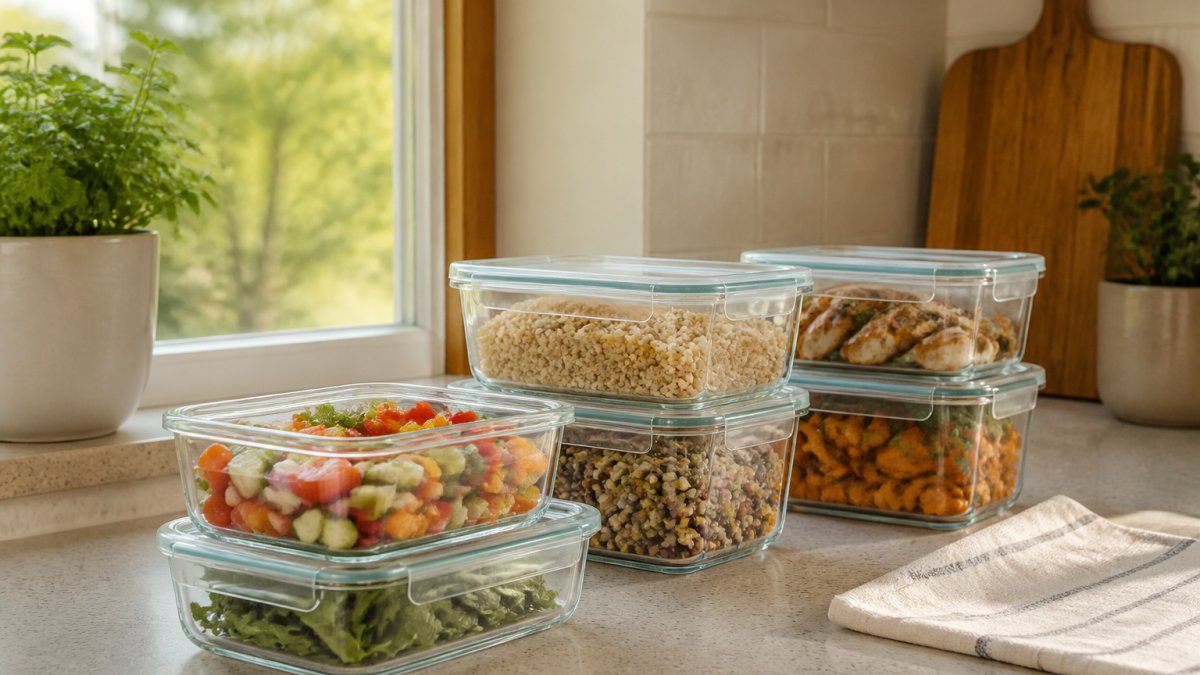
The case for switching has three parts.
- No staining or smell transfer. Tomato sauce, curry and garlic leave plastic permanently marked. Glass wipes clean.
- Oven and microwave safe. You can reheat or bake in the same dish, which cuts down on washing up.
- You can see what's inside. Clear sides mean you actually eat the leftovers instead of discovering them three weeks later.
That last point matters more than people expect. A well-organised fridge reduces food waste simply because you can see what needs eating first.
Glass vs Plastic Food Containers: What Actually Changes in Your Kitchen
The practical difference between glass and plastic comes down to weight, heat tolerance and how long each lasts. Plastic is lighter and cheaper. Glass is heavier, heat-proof and effectively permanent if you look after it.
What most guides miss is the reheating question. Plastic containers are fine for cold storage, but many people microwave them daily, and that's where the trade-off shifts toward glass. If you're reheating leftovers at work five days a week, glass removes a variable you don't have to think about.
Weight is the real cost. A glass lunch container adds noticeable heft to a work bag, and dropping one on a tiled floor can crack it. That's the honest downside, and it's worth knowing before you buy a full set.
| Factor | Glass | Plastic |
|---|---|---|
| Weight | Heavier | Lightweight |
| Heat tolerance | Oven and microwave safe | Microwave only |
| Lifespan | Years with care | Replaced often |
| Stains and odours | None | Absorbs over time |
| Upfront cost | Higher | Lower |
Are Glass Food Containers Safe? What You Need to Know
Yes, glass food containers are safe for storing and reheating food. Glass is non-porous, so it doesn't absorb food particles, and it doesn't release chemicals into your food when heated the way some plastics can.
The type of glass matters. Borosilicate glass handles sudden temperature changes better than standard soda-lime glass, which is why some containers are labelled oven-safe and others aren't. Always check the manufacturer's instructions before putting a container under a grill or in a hot oven.
A few safety points worth remembering:
- Let a cold container come to room temperature before adding hot food, or it may crack.
- Don't move a hot dish straight from the oven to a wet benchtop.
- Check lids separately. Many are plastic and aren't oven-safe even when the base is.
The Food Standards Australia New Zealand guidance on food contact materials sets out how food-contact products must perform, which is a useful reference if you want the regulatory picture.
How to Clean Glass Food Containers Without Clouding or Cracking
Cleaning glass properly is mostly about avoiding sudden temperature changes and abrasive tools. Most clouding comes from hard water minerals or scratched surfaces, not from the glass itself failing.
A simple routine keeps containers clear for years.
- Let containers cool before washing. Thermal shock is the main cause of cracks.
- Wash by hand in warm, soapy water, or use the dishwasher on a normal cycle.
- For baked-on residue, soak in warm water for 15 minutes before scrubbing.
- Use a soft sponge, never steel wool or abrasive pads.
- For hard water film, soak in a mix of white vinegar and warm water, then rinse.
- Dry upside down on a rack so water doesn't pool in the base.
Stubborn smells usually come from the lid, not the glass. Silicone seals trap odours over time, so remove and wash them separately, or replace them when they stop sitting snugly.
Best Glass Food Storage Containers: What to Look For
The best glass food storage containers share four traits: borosilicate or tempered glass, lids that seal properly, a shape that stacks, and sizes that match how you actually eat. Everything else is preference.
Work through this checklist before buying any set.
- Glass type: Look for borosilicate or tempered glass, and check whether it's oven-safe.
- Lid quality: Snap-lock or clip lids seal better than loose press-on lids.
- Lid material: Silicone or BPA-free plastic is standard; check if lids are dishwasher-safe.
- Stackability: Rectangular shapes stack more efficiently than round ones.
- Size range: A mix of small, medium and large covers more meals than six identical tubs.
- Replacement parts: Can you buy spare lids separately? You'll want to in a year or two.
At The Family Nest, we stock home organisation essentials chosen for exactly this reason: items that hold up over time rather than looking good for one season. Our ACCC guidance on consumer guarantees is worth reading before any kitchen purchase, because it explains what you're entitled to if a product fails early.
The Benefits That Matter Most in a Small Kitchen
Space is where glass quietly wins. Because glass containers stack squarely and you can see through them, a small kitchen gets more usable storage from the same shelf.
Think about a typical rental kitchen: one cupboard, a narrow fridge and no pantry. Plastic tubs tumble into a heap because they're light and oddly shaped. Glass sits flat, stacks in a column, and lets you spot the container you want without emptying the shelf.
The other benefit is durability through moves. If you're renting and relocating every year or two, you want kitchen items that survive packing. Glass, wrapped properly, does. Cheap plastic often doesn't.
Three benefits stand out for tight spaces:
- Vertical stacking frees up shelf height you'd otherwise waste.
- Transparency means fewer duplicate purchases because you can see what you already own.
- Multi-use design means one dish goes from fridge to oven to table, so you store less.
Common Mistakes People Make With Glass Containers
Most glass container problems trace back to a handful of avoidable habits. Fix these and a set can last many years.
Mistake 1: Skipping the cooldown. Moving hot glass to a cold surface, or cold glass to a hot oven, causes cracks. Let containers adjust gradually.
Mistake 2: Microwaving with the lid sealed. Trapped steam builds pressure and can warp or split the lid. Vent it, or leave it off.
Mistake 3: Buying one uniform size. A set of six identical containers rarely matches how a household eats. Mixed sizes get used far more.
Mistake 4: Stacking without protection. Glass on glass scratches and chips over time. A thin cloth or silicone mat between layers prevents it.
Mistake 5: Ignoring the warranty and returns policy. If a container cracks in normal use within weeks, that's worth raising with the retailer rather than replacing at your own cost.
Conclusion
Switching to glass is a small change with a long payoff, but only if you buy the right set and treat it well. Choose borosilicate or tempered glass, get lids that seal, and buy mixed sizes rather than a matching row.
If you're setting up a kitchen from scratch or reorganising a small space, The Family Nest can help. We offer free shipping and free returns, a 30-day return policy, and easy installation guides with every order, plus secure SSL payment so checkout is straightforward. Browse our home organisation range and build a kitchen that works the way you actually cook.
Frequently Asked Questions
What are the benefits of glass food storage containers?
Glass food storage containers do not absorb food odours, stains or flavours the way plastic does, so a curry container will not smell like curry after washing. They can go from fridge to microwave to oven without warping, and the clear sides let you see what is inside without opening the lid. Because glass is non-porous, it also does not scratch easily, which means fewer places for bacteria to hide.
Are glass food containers better than plastic?
For most kitchens, yes. Glass does not leach chemicals when heated, does not stain from tomato or turmeric, and holds its shape for years. Plastic is lighter and cheaper, which matters if you are carrying lunch in a backpack. A practical approach is glass for home storage and reheating, and one or two plastic containers for days you need something lightweight.
Is it safe to store food in glass containers?
Borosilicate and tempered glass containers are made to handle temperature changes, so they are safe for hot food, the fridge and the freezer. The main risk is thermal shock: moving a container straight from the freezer to a hot oven can crack it. Let frozen glass sit at room temperature for a few minutes first. Always check that the lid is labelled microwave-safe before heating.
Do glass containers keep food fresher for longer?
Glass itself does not extend shelf life on its own, but an airtight lid does. Glass containers with silicone-sealed lids keep air out, which slows wilting and drying. Because glass does not hold onto smells or stains, you are also more likely to reuse the container, which means leftovers get eaten instead of forgotten at the back of the fridge.