

Table of Contents
- Why Switch From Plastic Storage Bins
- Glass Containers for Food Storage
- Eco-Friendly Pantry Storage Ideas
- Sustainable Home Organisation Tips
- Wooden Crates for Heavy-Duty Storage
- Budget-Friendly DIY and Recycled Options
- Storage for Damp and Non-Climate-Controlled Spaces
- Choosing the Right Alternative for Your Needs
Last Updated: August 26, 2026
Why Switch From Plastic Storage Bins
Plastic storage bins have dominated home organisation for decades, but they come with hidden costs most people overlook. Microplastic exposure from degrading containers, chemical leaching into stored items, and the environmental burden of single-use plastics are pushing households toward alternatives to plastic storage that actually perform better (peer-reviewed research).
Beyond performance, the psychology matters. Opening a cupboard filled with mismatched plastic bins feels chaotic. The same space organised with natural materials, glass, or wood creates a sense of calm. That shift in how your home feels is worth considering alongside the practical benefits.
The real question isn't whether to switch, it's which alternative fits your space, budget, and lifestyle. The options available now are far more diverse than they were five years ago, and many cost less than premium plastic systems.
Glass Containers for Food Storage
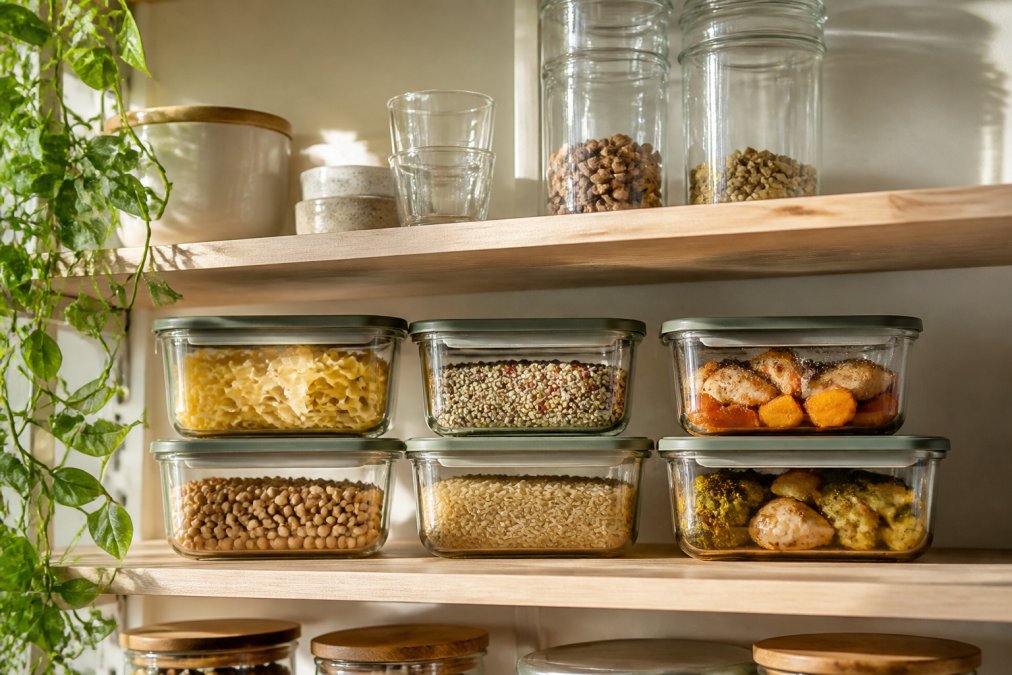
Glass is the gold standard for food storage, and for good reason. Borosilicate glass doesn't leach chemicals into your food, doesn't absorb odours or stains, and lasts indefinitely. Unlike plastic, which degrades and sheds microparticles over time, glass remains chemically stable whether you're storing leftovers, meal-prepped portions, or dry goods.
Earthware Glass Food Storage Containers exemplify what modern glass storage should be. Their borosilicate glass bases pair with silicone lids for airtight seals, making them microwave and freezer safe. Individual containers start from approximately A$13.95, with sets available up to A$62.95. The visibility advantage alone justifies the switch, you see exactly what you have without opening containers, reducing food waste and simplifying meal planning.
The drawbacks are real but manageable. Glass weighs more than plastic, which matters if you're frequently moving containers. It's also breakable, though borosilicate is significantly more durable than standard glass. If you have young children or live in a space with limited cupboard depth, the heft and fragility require honest consideration.
For most households, the longevity argument wins. A set of glass containers used daily for five years costs less per use than replacing plastic bins every 18 months. They also transition seamlessly between storage, serving, and reheating, eliminating the need for separate dishes.
Eco-Friendly Pantry Storage Ideas
Pantry storage is where the shift from plastic becomes most visible. Unlike refrigerator containers that stay hidden, pantry solutions are on display, which means they either add to your space's aesthetic or detract from it. Eco-friendly alternatives to plastic storage do both jobs simultaneously: they organise effectively and look intentional.
Bamboo and Ceramic Canisters
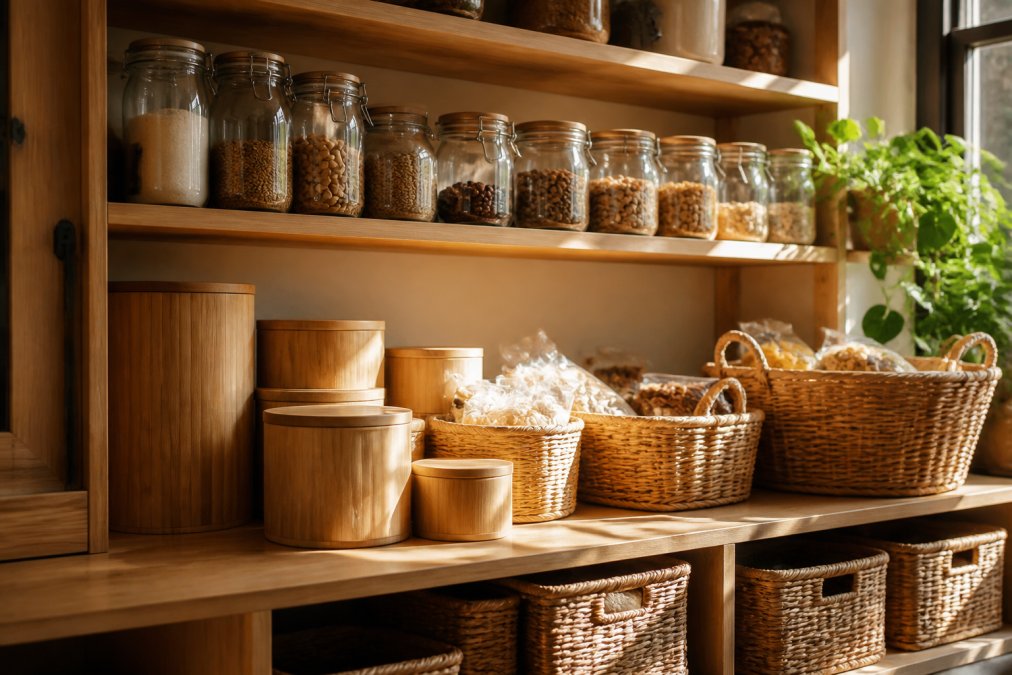
Bamboo canisters represent the intersection of sustainability and functionality. Bamboo grows rapidly, regenerates without replanting, and possesses natural antibacterial properties that make it ideal for food storage (peer-reviewed research). Little Label Co Bamboo Tubs are part of modular organisation systems, often sold as complete sets like their Bamboo & Glass Pantry Organisation Set at A$523.05. Individual tubs work equally well for spices, tea, coffee, or baking supplies.
Ceramic canisters offer a different aesthetic, more traditional, more durable than bamboo in some respects, and equally non-toxic. Both materials resist moisture better than cardboard and breathe better than sealed plastic, which matters for items that need airflow.
The trade-off is rigidity. Neither bamboo nor ceramic flexes or collapses when empty, so they require dedicated shelf space. For renters or anyone anticipating frequent moves, this inflexibility can feel limiting. However, if you have permanent pantry space, they're a one-time investment that outlasts multiple generations of plastic.
Natural Fibre Baskets
Wicker, rattan, jute, and seagrass baskets solve the problem plastic bins create: they're beautiful enough to leave visible. Billy Basket specialises in natural fibre storage, offering everything from small jute organisers at A$9.00 to large seagrass tray sets at A$89.00. These materials are genuinely sustainable, lightweight, and flexible enough to fit awkward spaces.
Natural fibre baskets work best for items that don't require airtight sealing, tea towels, cookbooks, serving utensils, dried herbs in sealed jars. They're not waterproof, so kitchens with steam or splash zones require careful placement. In damp climates or poorly ventilated spaces, they can develop mildew if stored items aren't completely dry.
The longevity advantage is significant. A quality wicker basket lasts 10-15 years with basic care. Plastic bins typically fail within 5-7 years as hinges crack and walls become brittle.
Sustainable Home Organisation Tips
Shifting to alternatives to plastic storage isn't just about swapping one material for another, it's about rethinking how you approach organisation itself. The most sustainable storage systems are the ones you actually use and maintain.
Start by auditing what you currently store. Plastic bins often accumulate because they're cheap and invisible, you buy them without considering whether you need them. Sustainable alternatives cost more, which creates natural accountability. You'll think twice before purchasing a bamboo crate for items you'll never access again.
Layering materials works better than uniformity. A combination of glass for frequently accessed items, natural fibre for decorative storage, and wood for heavy-duty needs creates a system that adapts to actual use patterns. This mixed approach also looks more intentional and less like institutional storage.
Stainless Steel Storage Solutions
Stainless steel occupies an interesting position: it's industrial, durable, and completely non-toxic. Metaltex Australia manufactures heavy-duty stainless steel boxes designed for commercial and industrial use, though they work equally well for home storage. Custom fabrication is available, with pricing provided on request.
Stainless steel excels in challenging environments. Workshops, garages, and outdoor storage areas where temperature fluctuates, moisture accumulates, or heavy items require support, these are stainless steel's domain. It resists rust, corrosion, and chemical damage. It's also infinitely recyclable, making it genuinely sustainable at end-of-life.
The aesthetic is decidedly industrial. If your home leans minimalist or contemporary, stainless steel works. If you prefer warmth and organic textures, it feels out of place. It's also heavier than most alternatives, which matters for wall-mounted storage or frequent repositioning.
Canvas and Linen Storage Bags
Canvas and linen storage bags offer flexibility plastic can't match. Underkover Australia manufactures heavy-duty canvas bags in Western Australia, with options ranging from A$68.00 fishing rod sleeves to A$225.00 4WD canopy bags. These aren't decorative, they're engineered for harsh conditions, weather resistance, and durability.
Canvas and linen bags work brilliantly for seasonal storage, camping gear, and items stored in non-climate-controlled spaces. The breathable fabric prevents moisture accumulation that would trap mildew inside sealed plastic. Many designs include clear panels for visibility without opening.
The limitation is capacity. Soft bags don't provide rigid structure, so they work best for flexible items, blankets, camping gear, textiles, rather than dishes or fragile goods. They also require more shelf space than compact bins because they don't stack as efficiently.
Wooden Crates for Heavy-Duty Storage
Wood is often overlooked as a storage solution, but it's genuinely superior for heavy items and long-term durability. Reclaim & Timber Co. builds wooden storage crates from sturdy timber frames and plywood, designed to withstand industrial use. Pricing is quote-based, reflecting the customisation available.
Wooden crates excel when you're storing items that genuinely need protection, tools, heavy equipment, archived documents. They're also visually distinctive. A wooden crate in a bedroom or living room reads as intentional storage rather than generic organisation.
The trade-offs are weight and space. Wooden crates are heavy, making them impractical for frequent repositioning. They also require more floor or shelf space than compact plastic bins. In small apartments, they're often impractical.
However, if you have the space, wooden crates age beautifully. They develop character, can be refinished or repainted, and often become design features rather than hidden storage. This longevity, both physical and aesthetic, justifies the initial investment.
Budget-Friendly DIY and Recycled Options
Not every storage solution requires purchasing new. Recycled cardboard boxes, repurposed glass jars, and upcycled wooden crates often outperform budget plastic bins.
Boxfactory supplies recycled cardboard boxes across Australia, with pricing that's extremely competitive. Stock levels vary, requiring confirmation before ordering, but the cost advantage over new boxes is substantial. For moving, archiving, or temporary storage, recycled cardboard is genuinely practical. It's not ideal for damp environments or long-term storage, but for organised chaos, holding items during a house reorganisation, it works.
Glass jars, mason jars, pasta sauce jars, large food containers, cost nothing if you're already consuming their contents. Cleaned and grouped by size, they're excellent for dry goods, craft supplies, or bathroom organisation. They're transparent, stackable, and free.
Old wooden crates from produce markets or farmers' markets can be collected, sanded, and repurposed. Local community groups often have surplus crates available. With minimal effort, they become attractive storage that cost nothing.
The limitation of DIY approaches is consistency. Your storage won't look curated or uniform. However, if your priority is function over aesthetics, and if you're willing to invest time rather than money, DIY solutions often outperform budget plastic alternatives.
Storage for Damp and Non-Climate-Controlled Spaces
This is where most guides fail readers. They recommend beautiful glass and natural fibres without acknowledging that these materials behave differently in moisture-prone environments. If your storage space isn't climate-controlled, a garage, shed, caravan, or basement, material choice becomes critical.
Stainless steel and sealed wood (properly finished or treated) handle humidity better than natural fibres. Glass is fine as long as contents stay dry. Plastic, despite its flaws, actually performs well in damp conditions because it doesn't absorb moisture or develop mildew.
Canvas and linen bags are specifically designed for moisture-prone environments. The breathable fabric prevents condensation from trapping inside, which is why they're popular for camping and 4WD storage. If you're storing items in a non-climate-controlled space, Underkover's canvas solutions are genuinely worth the investment.
For baskets and natural fibres in damp spaces, use them only for items that are already sealed or dried. Store tea in airtight glass jars inside a wicker basket, the basket adds aesthetics, the jar provides protection.
Weight and stackability matter in these environments too. If you're stacking containers on a concrete floor prone to moisture, lighter materials that can be elevated on shelving work better than heavy items sitting directly on damp surfaces.
Choosing the Right Alternative for Your Needs
The best alternative to plastic storage isn't universal, it depends on what you're storing, where you're storing it, and how often you access it.
For frequently accessed food items: glass containers with airtight seals. Visibility and non-toxicity matter more than cost.
For seasonal or archived items: canvas bags or wooden crates. Durability and protection matter more than aesthetics.
For visible pantry storage: natural fibre baskets or bamboo canisters. Aesthetics and functionality matter equally.
For damp environments: canvas, sealed wood, or stainless steel. Moisture resistance is non-negotiable.
For small spaces or frequent moves: collapsible linen boxes or soft canvas bags. Flexibility and stackability matter more than rigidity.
For heavy-duty or long-term storage: stainless steel or wooden crates. Durability and protection are paramount.
The Family Nest recognises that organisation isn't one-size-fits-all. The best storage system combines multiple materials matched to actual use. Start with your most-accessed items, invest in quality glass or natural fibres there. Use budget-friendly recycled options for items you access rarely. Layer materials so your storage adapts to real life rather than forcing life to adapt to storage.
The shift from plastic storage isn't about perfection, it's about intentionality. Every alternative material we've covered outlasts plastic, performs better in specific contexts, and creates spaces that feel more considered. The Family Nest helps families build storage systems that work for how they actually live, not how storage companies say they should live. Explore alternatives to plastic storage that match your environment and budget, and you'll find that organisation becomes sustainable in every sense of the word.
Frequently Asked Questions
Q: What are the best non-toxic alternatives to plastic storage bins?
A: Glass containers with silicone lids, stainless steel boxes, and natural fiber baskets like jute or rattan are excellent non-toxic options. Borosilicate glass eliminates microplastic exposure and chemical leaching concerns. Bamboo and wooden storage solutions offer eco-friendly durability without synthetic materials. For food storage specifically, food-grade glass or ceramic canisters prevent odours and staining while remaining completely non-toxic and BPA-free.
Q: How do I choose sustainable home organisation solutions that actually last?
A: Look for materials rated for your specific use case: glass and stainless steel for moisture-prone areas, natural fiber baskets for dry spaces, and canvas or linen for outdoor gear. Check durability ratings and read reviews about stackability and weight-bearing capacity. Invest in airtight seals for food storage to extend shelf life. Consider the item's end-of-life disposal, biodegradable options like bamboo and wicker are genuinely sustainable only if they'll decompose properly rather than sit in landfill.
Q: Are glass and metal containers really better for pantry organisation than plastic?
A: Yes, for several reasons. Glass containers with airtight seals keep food fresher longer and resist staining and odours better than plastic. They're microwave and freezer-safe without leaching chemicals. Stainless steel provides durability and moisture resistance in humid kitchens. Both materials are reusable indefinitely, reducing waste significantly over time. However, they're heavier and more fragile, so placement matters, secure shelving is essential for safety.
Q: What should I do with my old plastic storage bins?
A: Check your local recycling guidelines, as many plastic bins are recyclable if they're clean and in reasonable condition. Some councils accept them in kerbside collections; others require drop-off at recycling centres. If bins are damaged or heavily stained, consider donating them to community groups, op shops, or schools that may repurpose them. Avoid sending them to landfill if possible, the microplastics from degrading plastic persist in soil and water for decades.
This article was written using GrandRanker