

Table of Contents
- What Coastal-Chic Decor Actually Means (and What It Isn't)
- Budget Coastal Living Room Ideas That Look Expensive
- Building a Coastal Colour Palette for Interiors
- DIY Coastal Decor Ideas You Can Finish in a Weekend
- Natural Textures for Coastal Interiors: Where to Spend and Where to Save
- A Room-by-Room Plan with a Realistic Budget Breakdown
- Rental-Friendly, Family-Proof and Clutter-Free Coastal Styling
- Frequently Asked Questions
Last Updated: October 8, 2026
What Coastal-Chic Decor Actually Means (and What It Isn't)
Coastal-chic decor is a relaxed, light-filled decorating style that borrows colours and textures from the coastline without turning your home into a themed beach shack.
This guide from The Family Nest covers how to get that look on a real budget, room by room.
The style works because it leans on light and texture rather than expensive pieces.
What coastal-chic is not:
- Not nautical kitsch. No anchors, life rings or "Gone Fishing" signs.
- Not a colour explosion. Two or three tones, used consistently, beat a rainbow.
- Not a showroom. A lived-in, breezy feel is the whole point.
Get those three ideas straight and the rest of the styling gets much easier.
Budget Coastal Living Room Ideas That Look Expensive
The fastest way to make a living room feel coastal is to work with what you already own. Add light, layer texture, and keep the palette calm. You do not need new furniture to change how a room reads.
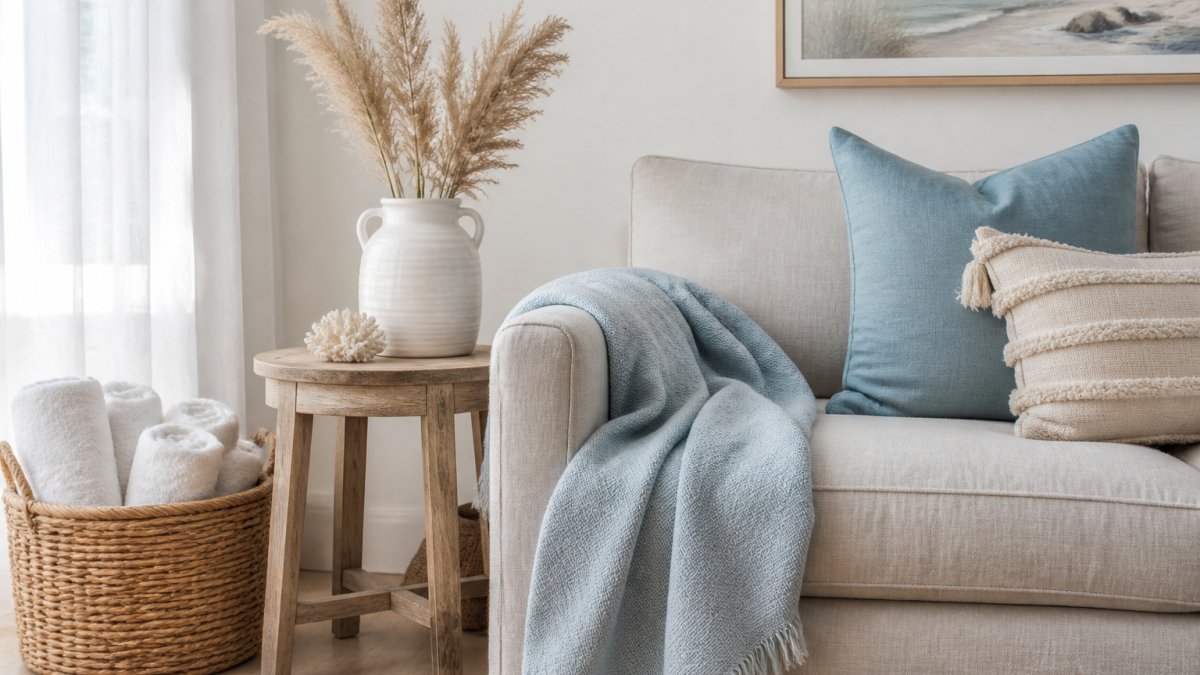
Layer Light and Texture on a Sofa You Already Own
Start with the sofa you have. A neutral throw in linen or cotton, draped rather than folded, softens the lines instantly. Add two cushion covers in different weaves, one smooth and one textured, in the same colour family.
Keep it to three layers maximum. More than that starts to look cluttered.
Style Open Shelves with Everyday Objects
Open shelves look best when they hold things you actually use. Group items in odd numbers, vary the heights, and leave gaps between clusters. A stack of books, a ceramic bowl and a small plant is a complete shelf.
- Roll towels in a basket instead of folding them flat
- Turn book spines so the pages face out for a softer look
- Use one large item instead of five small ones
Building a Coastal Colour Palette for Interiors
A coastal colour palette for interiors works best with three tones: a light base, a mid tone, and one accent. This keeps a room calm and stops the space feeling flat.
The Three-Tone Rule: Base, Mid and Accent
Pick one colour for each role and stick to it across the room.
| Role | Colour Example | Where It Goes |
|---|---|---|
| Base | Warm white or soft sand | Walls, large furniture |
| Mid | Muted blue or soft grey | Cushions, throws, curtains |
| Accent | Deep navy or driftwood brown | Vases, frames, one chair |
Repeat the same three tones in every room. That is what makes a home feel cohesive rather than patchy.
DIY Coastal Decor Ideas You Can Finish in a Weekend
Most DIY coastal decor ideas need nothing more than a free afternoon, a drop sheet and a bit of patience. The trick is to follow a clear sequence so you are not jumping between projects or buying materials you do not need. Work through the steps below in order, and you can finish a full room refresh in a weekend.
Step 1: Measure and Plan Before You Buy Anything
Before you pick up a paintbrush or browse online, measure the space you want to update. Note the width of shelves, the height of bedside tables, and the size of any wall you plan to hang art on.
Write a simple list with three columns: what you have, what you need, and what you can make. Most people find they already own more than they think.
Step 2: Choose Your Three-Tone Palette
Pick one base, one mid tone and one accent, then stick to them across every project. A warm white or soft sand base, a muted blue or soft grey mid tone, and a deep navy or driftwood brown accent will work in almost any room. Write the colours down and take the list with you when you shop for paint, fabric or accessories.
Step 3: Source Secondhand and Free Materials First
Look for solid timber pieces at op shops, garage sales and online marketplaces. Glass bottles, jars and cans are free vases once the labels are off. Fabric remnants from op shops or craft stores can become cushion covers or table runners. Sourcing first means you spend less on new items and often end up with pieces that look more collected and less mass-produced.
Step 4: Paint and Distress Secondhand Wood Furniture
Secondhand wood furniture is where the budget goes furthest. A small side table or bedside unit is ideal for a first attempt.
- Wipe the piece down and let it dry fully.
- Lightly sand the surface with fine sandpaper.
- Apply one thin coat of chalk or water-based paint.
- Let it dry, then sand the edges and corners back a little.
- Seal with a clear matte finish.
The distressed finish should look worn, not damaged. Go gently on the edges.
Step 5: Repurpose Bottles, Jars and Cans into Vases and Vessels
Glass bottles, jars and cans make free vases once the labels are off. Soak them in warm water, peel the labels, and remove any sticky residue with a little oil.
- Tall bottles suit single stems
- Wide jars suit dried grasses or eucalyptus
- Clean cans work as pen pots or small planters
Group three together at different heights for a styled look.
Step 6: Arrange and Finish the Room
Once your projects are dry and your sourced pieces are clean, arrange them in the room. Start with the largest items first, a rug, a throw, a basket, then layer in smaller pieces.
Finish by checking the light. Move a lamp or open a curtain to see how the textures and colours read at different times of day. Coastal-chic style depends on light, so the final arrangement should make the most of it.
Natural Textures for Coastal Interiors: Where to Spend and Where to Save
Natural textures for coastal interiors do the heavy lifting in this style. Jute, linen, rattan, timber and cotton all add depth. The trick is knowing which ones to invest in and which to buy cheaply.
Spend on:
- Rugs, because they take the most wear
- Curtains, because they change the light in a room
- One or two large baskets that get daily use
Save on:
- Cushion covers, which are easy to swap and replace
- Small decorative objects
- Dried stems and greenery
A Room-by-Room Plan with a Realistic Budget Breakdown
A coastal-chic refresh works best when you plan it room by room and set a spending limit before you shop. Prices vary by retailer and season, so treat the ranges below as a guide rather than a fixed figure. The key is to spend where the eye lands first and save on the pieces you can swap out later.
Sample Spending Plans by Room
These three tiers assume you are starting with a neutral room and adding coastal touches. They do not include furniture you already own.
| Room | Lean (under $150) | Mid ($150-$400) | Fuller ($400-$800) |
|---|---|---|---|
| Living room | Two cushion covers ($20-$40), one throw ($30-$60), one woven basket ($25-$50) | Add a jute rug ($80-$200) and a floor lamp ($60-$120) | Add a slipcover ($100-$250) and two large baskets ($60-$120) |
| Bedroom | Linen-look bedding ($50-$100), one bedside lamp ($30-$60) | Add a timber bedside table ($80-$180) and wall art ($40-$100) | Add a bench ($120-$250) and a second set of bedding ($50-$100) |
| Bathroom | Rolled towels in a basket ($30-$60), one timber stool ($40-$80) | Add a round mirror ($60-$150) and a second basket ($25-$50) | Add a freestanding shelf ($80-$180) and a bath mat ($30-$60) |
| Entry | A tray for keys and mail ($15-$35), one hook ($10-$25) | Add a bench or shoe rack ($80-$180) | Add a runner rug ($60-$150) and a mirror ($60-$150) |
What to Update First When Money Is Tight
Start with the room you use most. That is usually the living room. A throw, two cushion covers and a basket can shift the whole feel of the space for under $100 if you shop sales or op shops.
Next, move to the bedroom. Bedding does more for a room than almost anything else, and it is easy to change again later.
Leave wall art and larger furniture until last. They cost more and matter less to the overall feel.
Lower-Cost Alternatives That Still Look Coastal
- Instead of a jute rug, use a flat-weave cotton rug or a large cotton throw as a layered rug.
- Instead of a timber bedside table, paint a secondhand piece in a warm white or soft sand.
- Instead of new cushion covers, sew simple envelope covers from linen or cotton fabric remnants.
Rental-Friendly, Family-Proof and Clutter-Free Coastal Styling
Renters can get the coastal look without losing a bond. Stick to changes you can undo: freestanding shelves, removable hooks, and textiles that pack flat when you move.
Families need the same look to survive daily life. Choose washable covers, avoid light rugs in high-traffic spots, and keep surfaces clear.
To keep clutter down, follow one rule: if it is not used or loved, it does not go on display. Coastal style reads calm because there is space between things. Clutter kills the effect faster than any wrong colour choice.
For pieces that need to move with you, look for furniture that comes apart and reassembles without tools.
Frequently Asked Questions
How can I decorate my home in a coastal style on a budget?
Start with what you already own. Rearrange furniture to open up floor space, swap heavy curtains for lighter fabrics, and add one or two natural-texture pieces such as a jute rug or woven basket. Secondhand shops, marketplace listings and op shops regularly stock timber furniture, glass jars and framed wall art for a fraction of retail. Set a per-room spending limit before you shop so coastal-chic decor stays affordable rather than accidental.
What colours make a room feel coastal?
A coastal colour palette for interiors usually starts with a soft white or warm off-white base, adds a mid-tone such as sandy beige, driftwood grey or muted sage, then finishes with a deeper accent like navy, ocean blue or charcoal. Keeping to three tones stops the room looking busy. Test paint swatches on the wall in daylight and again at night, because coastal colours shift noticeably as the light changes.
How do I make coastal decor look chic rather than themed?
Skip the shells, anchors and novelty signage. Coastal-chic decor works because it borrows the feeling of the coast, not the souvenirs. Use natural textures such as linen, rattan, jute and raw timber, keep surfaces mostly clear, and let one or two pieces carry the theme. A single large piece of beach-inspired wall art reads more sophisticated than ten small ornaments, and it is easier to dust.
Can I create a coastal look in a rental without damaging the walls?
Yes. Removable adhesive hooks, freestanding shelving and leaning artwork avoid drilling altogether. Swap out curtains and lampshades, which you can take with you, and add texture through rugs, throws and cushions rather than paint or wallpaper. If you do want colour on the walls, choose a landlord-approved shade and keep the tin for touch-ups. Everything reversible means you get the look without risking your bond.
Getting the coastal look on a budget is really about restraint and order, not spending. Start with one room, one weekend and one change, then build from there as the budget allows. The Family Nest can help with the practical side: space-saving furniture, smart storage and cosy textiles, all with easy installation guides, free shipping and a 30-day return policy. Get started with The Family Nest and turn one room into the calm, breezy space you have been picturing.