

Table of Contents
- What Makes Durable Outdoor Patio Furniture Stand Up to the Elements
- Best Outdoor Furniture Materials for Australia: Comparison & Performance
- How to Maintain Outdoor Furniture for Long-Term Durability
- Weatherproof Outdoor Furniture Covers: Why They Matter
- Top Durable Outdoor Patio Furniture Options for Australian Homes
- Storage Solutions for Off-Season Outdoor Furniture
- Lifecycle Cost: Investing in Durability Over Time
- Conclusion
Last Updated: August 26, 2026
What Makes Durable Outdoor Patio Furniture Stand Up to the Elements
The difference between outdoor furniture that lasts five years and furniture that lasts fifteen comes down to material selection and maintenance discipline. Durable outdoor patio furniture requires understanding how different materials respond to moisture, UV exposure, temperature swings, and salt air. Australia's climate is unforgiving: coastal properties face salt corrosion, inland areas experience intense sun and temperature extremes, and tropical regions deal with humidity and mould. Each environment demands specific material choices.
The materials that perform best resist moisture absorption, withstand UV radiation without fading, maintain structural integrity under load, and require minimal maintenance. This guide breaks down the science behind material durability, explains maintenance protocols that extend furniture life, and reviews specific products engineered for Australian conditions.
Best Outdoor Furniture Materials for Australia: Comparison & Performance
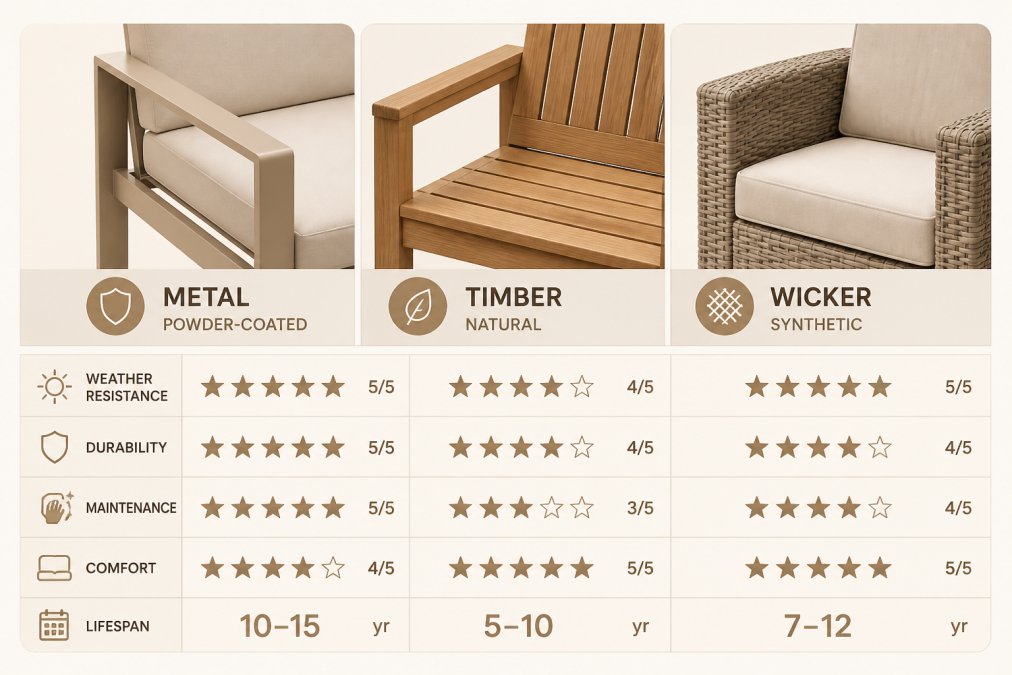
Material choice determines how well your furniture handles environmental stress.
Powder-Coated Metal & Aluminium
Powder-coated metal and aluminium represent the gold standard for corrosion resistance and low maintenance. Aluminium naturally resists rust through oxidation, forming a protective layer on its surface. Powder coating adds another protective barrier, creating a finish that withstands salt spray, UV exposure, and temperature fluctuations.
The Cosh Living Addis Aluminium Bench exemplifies this approach. Its aluminium construction provides inherent rust resistance while remaining lightweight, a significant advantage for anyone who needs to move or rearrange furniture. The material doesn't absorb moisture, so it won't warp, split, or develop mould. Powder-coated finishes come in multiple colours and resist chipping better than paint.
One limitation: aluminium can feel cold to the touch and lacks the warmth of timber. It's also more expensive upfront, though lifecycle cost often favours aluminium due to minimal maintenance.
Durable Timber: Acacia, Eucalyptus & Cedar
Quality timber brings warmth and natural aesthetic that metal cannot match. Acacia, eucalyptus, and cedar are specifically chosen for their density and natural resistance to decay and insect damage.
Acacia timber is exceptionally dense and naturally resistant to warping, splitting, and fading. The Domayne Mazgar 3-Seater Outdoor Lounge uses acacia for precisely this reason. Eucalyptus offers similar benefits, while cedar contains natural oils that resist decay, though it's softer and requires more careful maintenance.
The advantage of quality timber is aesthetic and repairability: natural grain patterns, warmth, and the ability to refinish or repair individual components. The trade-off is maintenance intensity. Timber absorbs moisture and expands with humidity, then contracts during dry periods. Without regular treatment every 12-24 months, timber deteriorates faster than metal alternatives. Mould and mildew can develop in humid conditions if the timber isn't properly sealed.
Synthetic Wicker & Rattan
Synthetic wicker and rattan are engineered to replicate natural wicker without the maintenance burden. These materials are typically made from high-density polyethylene (HDPE) or polypropylene woven around aluminium or steel frames.
Synthetic wicker resists moisture absorption entirely, eliminating warping and mould issues. UV-stabilised synthetic fibres resist fading far better than natural materials. The material is lightweight, easy to clean, and requires only occasional washing with mild soap and water.
The limitation is repairability: if synthetic wicker breaks, the entire section typically requires replacement. Additionally, synthetic materials can feel plastic-like compared to natural alternatives. Synthetic wicker works particularly well in humid or coastal environments where natural materials struggle.
How to Maintain Outdoor Furniture for Long-Term Durability
Purchasing durable outdoor patio furniture is only half the equation. Maintenance determines whether that furniture reaches its full lifespan or fails prematurely.
Metal Furniture Care
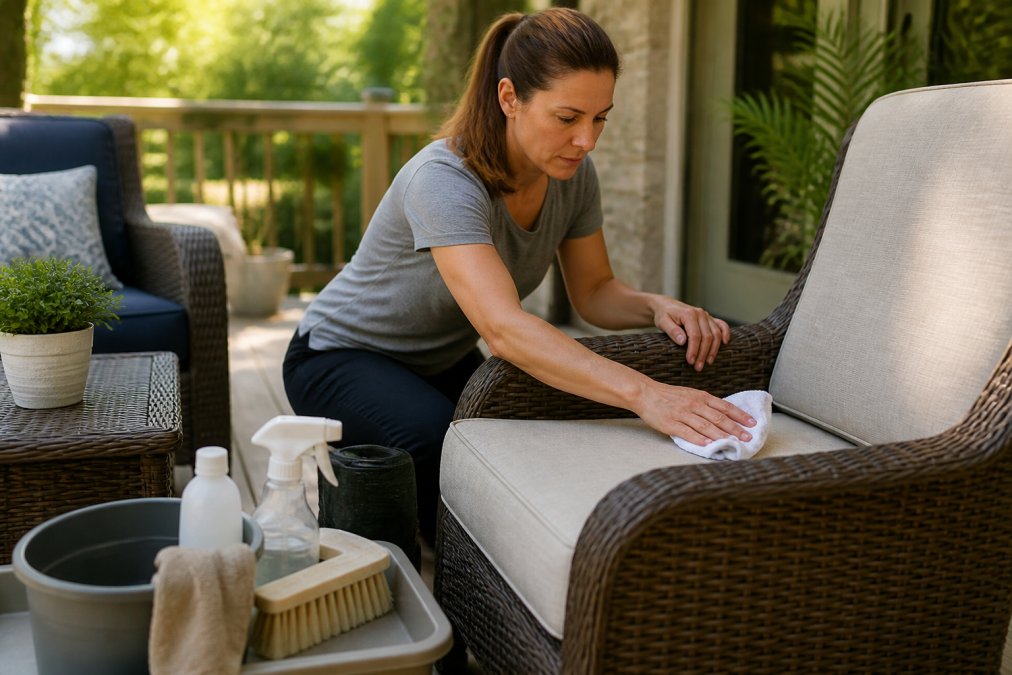
Powder-coated metal and aluminium require minimal maintenance but benefit from regular attention. Clean metal furniture every 3-6 months with mild soap and water, using a soft brush to remove dirt, salt residue, and organic debris.
Inspect the coating annually for chips or scratches. Small damage can be touched up with matching powder-coat paint or automotive touch-up products. For coastal properties, increase cleaning frequency to every 2-3 months. Avoid abrasive cleaners, wire brushes, or pressure washers on coated surfaces.
Timber Maintenance & Treatment
Timber requires more active maintenance but rewards diligent care with longevity. Apply a quality outdoor timber sealant or oil every 12-24 months, depending on climate and exposure. Before resealing, clean the timber thoroughly with a soft brush and mild detergent. For stubborn discolouration, light sanding with fine-grit paper (120-150 grit) removes surface damage without compromising structural wood. Never use pressure washers on timber furniture.
In humid climates, inspect timber quarterly for mould or mildew. Clean affected areas with a dilute vinegar solution, then ensure the timber dries completely before resealing.
Cushion & Fabric Protection
Cushions and outdoor fabrics deteriorate faster than structural materials. Remove cushions during extended rain or when furniture isn't in use. Store them in a dry location or use waterproof storage containers.
Clean cushions every 3-4 months with mild soap and water. Air-dry completely in sunshine, which kills mould spores. Consider cushion covers as an additional protection layer; they shield cushions from direct sun and rain whilst allowing airflow.
Weatherproof Outdoor Furniture Covers: Why They Matter
Weatherproof covers are among the most cost-effective investments in furniture longevity. Covers should fit snugly to prevent wind displacement but allow ventilation underneath. Tight-fitting covers that trap moisture accelerate deterioration rather than prevent it.
For seasonal storage, covers are essential. A covered lounger stored in a garage or under a pergola experiences far less UV and moisture exposure than one left exposed year-round. Quality covers typically cost 10-15% of furniture value but extend lifespan by 30-50% [EXTERNAL_LINK: research on furniture lifespan extension | researchgate.net].
Top Durable Outdoor Patio Furniture Options for Australian Homes
King Living Delta Outdoor Modular Sofa
The King Living Delta represents premium outdoor seating engineered for Australian climate challenges. The modular design allows customisation to fit various outdoor spaces. The Delta features water-resistant technology with sealed seams, preventing moisture penetration during heavy rain. Cushions use Ultradown fibres, engineered to resist water and mould whilst maintaining breathability. The KingCote powder-coating process on steel and alloy components resists salt spray and UV exposure.
Removable covers enable easy cleaning and refreshing. Individual components can be replaced if damage occurs, rather than replacing the entire sofa. Starting from $2,490 AUD, it represents a substantial investment but delivers proportional durability.
Cosh Living Addis Aluminium Bench
The Addis Aluminium Bench exemplifies minimalist design paired with maximum durability. The aluminium construction provides inherent rust resistance without requiring protective coatings. The lightweight construction makes repositioning effortless, whilst maintaining structural integrity under load.
Maintenance is minimal. Occasional cleaning with mild soap and water maintains appearance. At $2,220 AUD, the Addis offers premium durability at a competitive price point for aluminium furniture.
Tait Jak Chair
The Tait Jak Chair represents locally manufactured excellence. Made to order in Melbourne with 18 powder-coat colour options, the Jak is engineered to withstand diverse Australian climates. The powder-coated aluminium construction resists corrosion whilst maintaining aesthetic appeal.
At approximately $700 AUD per chair, the Jak delivers exceptional value for locally made, customisable seating. The made-to-order approach means approximately six weeks lead time but ensures each piece meets quality standards.
Domayne Mazgar 3-Seater Outdoor Lounge
The Mazgar demonstrates how quality timber can deliver durability when properly specified and maintained. Constructed from acacia timber, the lounge resists warping, splitting, and fading. Water-repelling fabric with waterproof filling on cushions addresses the primary vulnerability of timber furniture.
At $2,499 AUD, the Mazgar positions timber as a competitive option for those willing to commit to maintenance routines that preserve appearance and structure.
Storage Solutions for Off-Season Outdoor Furniture
Climate variation across Australia demands seasonal storage strategies. In tropical regions with distinct wet seasons, protecting furniture during monsoon months extends lifespan dramatically. Optimal storage protects furniture whilst allowing air circulation. Enclosed storage, sheds, garages, or weatherproof containers shield furniture from direct elements whilst allowing ventilation to prevent moisture accumulation.
For furniture that must remain outdoors year-round, strategic placement under pergolas, awnings, or covered patios reduces direct exposure. The Family Nest offers easy-to-disassemble pieces that are far simpler to store than monolithic designs.
Lifecycle Cost: Investing in Durability Over Time
The lowest initial price rarely delivers the lowest total cost of ownership. Consider a fifteen-year timeline: a $500 lounge requiring replacement every five years costs $1,500 total, while a $2,000 lounge lasting fifteen years costs $2,000 total, plus the inconvenience of three replacement cycles.
Maintenance expenses accumulate with lower-quality furniture. Timber furniture requires regular sealing ($200-500 every 2-3 years). Low-quality cushions need replacing every 3-4 years ($300-800 per set). Premium materials reduce these ongoing costs substantially.
The most durable materials, powder-coated aluminium, quality acacia timber with sealed cushions, and premium synthetic wicker, deliver the best lifecycle economics. Environmental considerations reinforce this logic: furniture lasting fifteen years instead of five reduces manufacturing demand, waste generation, and transportation emissions proportionally.
Investing in durable outdoor patio furniture means choosing materials engineered for your specific climate and committing to maintenance routines that preserve structure and appearance. Quality outdoor furniture transforms outdoor spaces into functional retreats rather than seasonal afterthoughts. Start with materials proven to withstand Australian conditions, maintain them consistently, and you'll enjoy your outdoor living space for decades rather than seasons.
=== FAQ ANSWERS (audit these too, same rules) ===
[1] Q: Which outdoor furniture material is the most durable in Australia? A: Powder-coated aluminium and stainless steel offer exceptional durability, resisting rust and corrosion in coastal and harsh climates. Quality timber like acacia and eucalyptus also performs well when treated regularly. The best choice depends on your location: coastal areas benefit from corrosion-resistant metals, while inland regions suit both metal and timber options. All-weather synthetic wicker combines durability with low maintenance.
[2] Q: How often should I treat my outdoor timber furniture? A: Timber furniture should be treated annually, ideally before winter or the wet season. Apply a quality timber sealant or oil to protect against moisture, UV damage, and mould. Check treatments every 6 months and reapply if water no longer beads on the surface. Regular maintenance prevents splitting, warping, and extends the lifespan of your pieces significantly.
[3] Q: What's the best way to protect outdoor furniture from sun damage? A: UV-protected covers specifically designed for outdoor use provide the strongest defence when furniture is not in use. Choose covers that allow moisture to escape to prevent mould growth. When furniture is in use, position it in partial shade where possible. For added protection, apply UV-protective sealants to timber and ensure cushions have fade-resistant fabrics. Weatherproof covers also shield against rain, wind, and salt spray in coastal areas.
[4] Q: Can I repair outdoor furniture myself, or do I need professional help? A: Minor repairs like tightening bolts, replacing cushion covers, or resealing timber are manageable for most people. However, structural damage to frames, rust treatment of metal components, or replacing sealed seams requires professional expertise. Check whether your furniture supplier offers replacement parts or repair services before purchasing, as sourcing specific components can be difficult with some brands.
Frequently Asked Questions
Which outdoor furniture material is the most durable in Australia?
Powder-coated aluminium and stainless steel offer exceptional durability, resisting rust and corrosion in coastal and harsh climates. Quality timber like acacia and eucalyptus also performs well when treated regularly. The best choice depends on your location: coastal areas benefit from corrosion-resistant metals, while inland regions suit both metal and timber options. All-weather synthetic wicker combines durability with low maintenance.
How often should I treat my outdoor timber furniture?
Timber furniture should be treated annually, ideally before winter or the wet season. Apply a quality timber sealant or oil to protect against moisture, UV damage, and mould. Check treatments every 6 months and reapply if water no longer beads on the surface. Regular maintenance prevents splitting, warping, and extends the lifespan of your pieces significantly.
What's the best way to protect outdoor furniture from sun damage?
UV-protected covers specifically designed for outdoor use provide the strongest defence when furniture is not in use. Choose covers that allow moisture to escape to prevent mould growth. When furniture is in use, position it in partial shade where possible. For added protection, apply UV-protective sealants to timber and ensure cushions have fade-resistant fabrics. Weatherproof covers also shield against rain, wind, and salt spray in coastal areas.
Can I repair outdoor furniture myself, or do I need professional help?
Minor repairs like tightening bolts, replacing cushion covers, or resealing timber are manageable for most people. However, structural damage to frames, rust treatment of metal components, or replacing sealed seams requires professional expertise. Check whether your furniture supplier offers replacement parts or repair services before purchasing, as sourcing specific components can be difficult with some brands.
This article was written using GrandRanker