

Table of Contents
- Why Easy to Disassemble Furniture Matters for Renters
- Top Renter-Friendly Furniture Australia: What to Look For
- Modular Furniture Australia: Flexibility That Moves With You
- Tool-Free Assembly Furniture: Disassembly Made Simple
- Moving Tips Australia: DIY vs Professional Removalists
- Easy to Disassemble Furniture: Sustainability and Long-Term Value
- Common Mistakes When Disassembling and Moving Furniture
- Conclusion: Making Smart Furniture Choices as a Renter
Easy to Disassemble Furniture for Renters: A Smart Buying Guide
Last Updated: July 25, 2026
Why Easy to Disassemble Furniture Matters for Renters
Renting means mobility. You might stay two years in one apartment, then relocate across town or across the country. Easy to disassemble furniture for renters is essential because the pieces you choose today will either move with you smoothly or become a logistical nightmare.
At The Family Nest, we understand the specific pressures renters face when furnishing a space. You need pieces that look intentional and feel like home, but can't commit to heavy, permanently-installed solutions. Many renters make the same mistake: they buy whatever looks good in the showroom, then panic when moving day arrives.
The good news? Easy to disassemble furniture for renters has become mainstream. Flat-pack design, modular construction, and tool-free assembly have evolved from budget compromises into legitimate style choices. Pieces that move easily don't have to look cheap or temporary. Below, we'll show you exactly what to look for when shopping for renter-friendly furniture, which specific pieces work best, and how to handle disassembly and moving without stress or damage.
Top Renter-Friendly Furniture Australia: What to Look For
When evaluating furniture for rental living, several characteristics separate pieces that move well from pieces that become anchors.
Weight matters more than you think. A sofa weighing 45 kilograms is dramatically easier to move than one weighing 80 kilograms. Check product specifications before purchasing. Lightweight doesn't mean flimsy; many modern pieces use engineered materials that are both light and durable.
Modular construction is your friend. Furniture that comes apart into smaller sections moves through doorways and stairwells more easily. A sectional sofa that separates into three pieces is infinitely more practical than a single eight-seater.
Look for minimal hardware. Bolts, brackets, and permanent fixtures make disassembly harder. The best renter furniture uses dowels, cam locks, or simple screw connections that don't require special tools.
Legs should be removable. Furniture with detachable legs reduces overall height for moving and storage. This single feature can mean the difference between fitting a piece through a doorway and needing to leave it behind.
Avoid built-in features. Shelving units with fixed backs, drawers with permanent runners, or upholstered pieces with stapled joints all complicate disassembly. Simple, modular designs with independent components move faster and reassemble more reliably.
Portable Beds and Frames
A bed is the foundation of any bedroom and often the most expensive piece you'll buy. Platform beds with removable slats work better than box springs. They're typically lighter, easier to move in pieces, and don't require matching bases. Look for frames where the headboard detaches completely from the base.
Metal bed frames are generally superior to solid wood for renters. They're lighter, disassemble more easily, and handle repeated assembly cycles without developing wobbles. Avoid bed frames with integrated storage underneath, as drawers and compartments add weight and complicate disassembly.
Modular Sofas and Sectionals
A sofa is often the visual anchor of a living room and usually the hardest piece to move. Modular sofas solve this problem by design.
A three-piece sectional that separates into independent modules is infinitely more practical than a single connected piece. Each module should weigh under 40 kilograms and fit through a standard doorway when positioned vertically.
Look for sofas with removable legs and detachable armrests. These features reduce overall dimensions and make moving substantially easier. Fabric choice affects both durability and maintenance during moves; microfibre and performance fabrics resist staining and hold up better during packing and unpacking.
Modular Furniture Australia: Flexibility That Moves With You
Modular furniture Australia has expanded dramatically in recent years, moving well beyond basic flat-pack basics. The category now includes genuinely stylish pieces designed specifically for flexible living.
Modular furniture works because it breaks larger pieces into smaller, manageable components. A modular shelving unit might consist of five separate boxes that stack and connect; you can rearrange them, move them independently, or reconfigure them in your next space. The best modular systems use simple connection methods: metal brackets, dowels, or interlocking joints that don't require permanent fastening.
Storage cubes, stackable shelving, and modular desks have become design-forward rather than purely utilitarian. The key advantage of modular furniture Australia is that it acknowledges the reality of renting: you might not stay in one place long, and your next space might be different. Flexibility built into the furniture itself eliminates the need to buy and sell repeatedly.
Tool-Free Assembly Furniture: Disassembly Made Simple
Some of the best furniture for renters requires minimal tools to assemble and disassemble. Tool-free design isn't just convenient; it's a marker of thoughtful engineering.
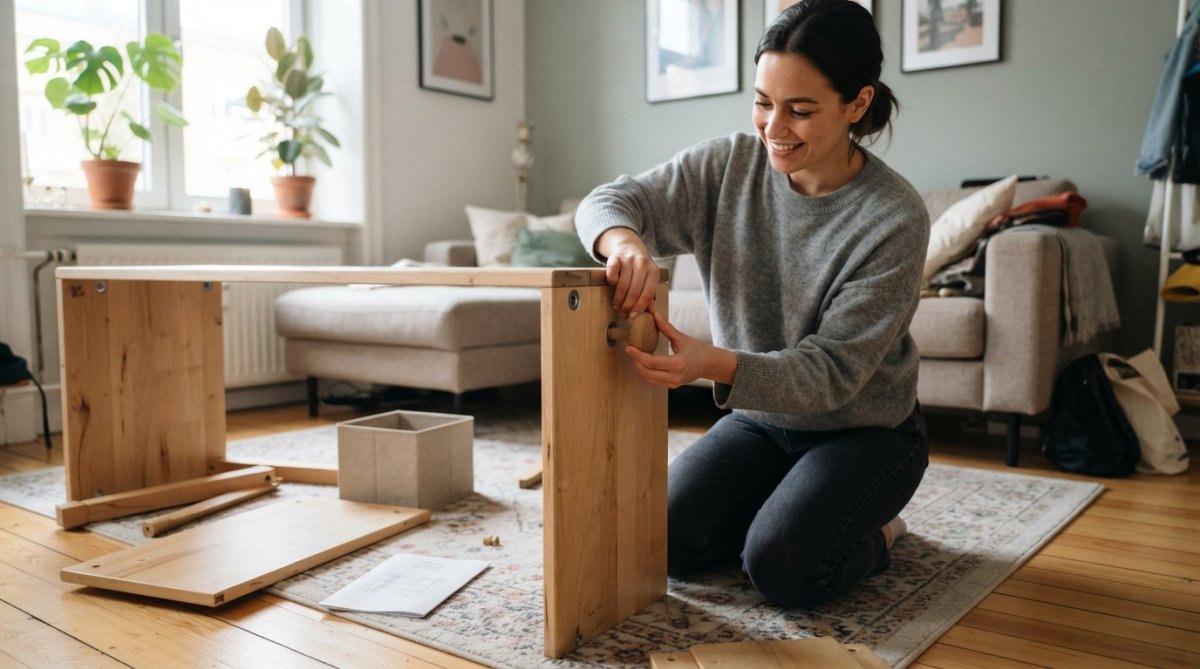
Furniture using cam locks, dowels, and friction-fit joints can be assembled and disassembled without power tools or specialised equipment. A standard screwdriver and Allen key are sufficient for most operations. The advantage during a move is significant: you don't need to hire a handyperson or spend hours troubleshooting assembly instructions in reverse.
However, "tool-free" doesn't mean "instantaneous." Even well-designed pieces take time to disassemble carefully. Allow 30-45 minutes for a typical bed frame or bookshelf. Rushing increases the risk of damaging joints or losing small hardware pieces.
What Tools You Actually Need
A cordless drill-driver with a screwdriver bit saves enormous time and reduces hand fatigue. An Allen key set (metric and imperial) is essential; having the correct size prevents stripping and damage. A rubber mallet helps separate tight joints without damaging wood or finishes. Screwdrivers (Phillips and flathead) remain useful for small or recessed screws. A headtorch is surprisingly valuable during disassembly, as furniture often has fasteners in dark corners.
Bubble wrap, moving blankets, and kraft paper protect surfaces during disassembly and transport.
Step-by-Step Disassembly Process
Approaching disassembly methodically prevents damage and lost parts.
Step 1: Clear the space. Remove everything from the furniture and place these items in separate boxes.
Step 2: Take photos and notes. Before removing a single fastener, photograph the assembled piece from multiple angles. These images are invaluable during reassembly months later.
Step 3: Work from top to bottom. Start disassembling from the top of the piece and work downward. This prevents upper sections from falling when lower supports are removed.
Step 4: Remove fasteners systematically. Use a small container or magnetic tray to collect fasteners from each section. Label the container so you know which fasteners belong where during reassembly.
Step 5: Separate joints carefully. Once fasteners are removed, use a rubber mallet and gentle tapping rather than forcing pieces apart. Forcing often damages dowels or joints.
Step 6: Protect surfaces immediately. As pieces separate, wrap them in bubble wrap or moving blankets.
Step 7: Document the final state. Take a final set of photos showing all separated components, including close-ups of connection points.
How to Label and Protect Hardware
Small hardware pieces, screws, dowels, Allen bolts, washers, are the most commonly lost items during moves. Use small ziplock bags or labelled containers for hardware from each section. Write directly on the bag: "Bed frame, headboard screws" or "Shelving unit, right side bolts."
For furniture with multiple identical pieces, number each piece using painter's tape or a permanent marker. Create a master hardware inventory listing what fasteners belong to each piece and how many of each type. Photograph the contents of each hardware container before sealing it.
Moving Tips Australia: DIY vs Professional Removalists
The decision between moving furniture yourself and hiring professional removalists depends on several practical factors: the volume of furniture, the distance, your physical capability, and your budget.
When to Hire Professional Removalists
Professional removalists in Australia are experienced in handling disassembly, protection, and reassembly. They have the equipment, dollies, furniture pads, moving blankets, that makes moving dramatically easier and safer.
Hire professional removalists if you're moving more than about 15 pieces of furniture, moving interstate, or moving to a significantly higher floor. Get quotes from at least three removalists. Removalists charge either by the hour (typically $60-$120 per hour in Australia) or by the job. Hourly rates work better for small amounts of well-organised furniture; job quotes work better for full house moves.
DIY Disassembly and Moving Checklist
If you're moving locally and have a manageable amount of furniture, DIY disassembly and moving is feasible with proper planning.
- Two weeks before: Photograph all furniture from multiple angles. Create a master inventory of what's being moved.
- One week before: Gather disassembly tools: cordless drill, Allen keys, screwdrivers, rubber mallet, headtorch.
- One week before: Collect packing materials: bubble wrap, moving blankets, kraft paper, ziplock bags, painter's tape, permanent markers.
- Three days before: Begin disassembling larger pieces. Work methodically, labelling hardware as you go.
- Two days before: Complete disassembly. Wrap all components. Pack hardware containers in a clearly marked box.
- One day before: Confirm your moving vehicle is booked and ready. Verify it's large enough for your largest pieces.
- Moving day: Load heaviest items first. Protect all wrapped pieces with additional blankets or cardboard during transport.
- After arrival: Before unpacking, photograph your new space and measure doorways, hallways, and room dimensions. Verify all pieces will fit before beginning reassembly.
- Reassembly: Work from largest pieces first. Refer to your photos and hardware labels. Don't rush; reassemble correctly rather than quickly.
A typical DIY move of 10-15 pieces takes 6-8 hours for disassembly and 8-12 hours for reassembly, depending on complexity.
Easy to Disassemble Furniture: Sustainability and Long-Term Value
One overlooked advantage of easy to disassemble furniture for renters is its sustainability. Furniture designed to move with you across multiple homes has dramatically longer useful life than pieces that are abandoned or discarded after each move.
A well-made sofa that disassembles and reassembles cleanly might serve you for 10-15 years across three or four different apartments. Modular furniture also reduces waste because pieces can be repaired or replaced individually. Choosing quality modular furniture is both practical for renters and the more sustainable choice compared to replacing cheap, non-movable furniture repeatedly.
Common Mistakes When Disassembling and Moving Furniture
Learning from others' mistakes prevents expensive damage and frustration.
Mistake 1: Not photographing before disassembly. Photograph everything before you start; you won't remember how the shelving unit connects.
Mistake 2: Mixing hardware from different pieces. Separate hardware by component rather than dumping all screws into one container.
Mistake 3: Over-tightening fasteners during reassembly. Tighten fasteners firmly but not excessively; over-tightening strips threads and damages joints.
Mistake 4: Forcing pieces apart. Use a rubber mallet and gentle tapping instead of brute force when joints seem stuck.
Mistake 5: Skipping protection during transport. Wrap pieces individually and use additional cardboard or furniture pads for extra protection.
Mistake 6: Disassembling too early. Disassemble as close to moving day as practical, ideally the day before or the morning of.
Mistake 7: Not measuring your new space. Verify your largest pieces will actually fit through doorways and into rooms before moving.
Mistake 8: Reassembling without checking all hardware. Before beginning reassembly, verify you have all hardware and that nothing was lost during the move.
Conclusion: Making Smart Furniture Choices as a Renter
Renting doesn't mean settling for temporary-looking furniture or accepting that moving will be a nightmare. The market for easy to disassemble furniture for renters has matured dramatically, offering pieces that are genuinely stylish, functional, and portable.
The Family Nest specialises in exactly this category: furniture designed for people who move frequently and need pieces that adapt to different spaces. Their modular sofas separate into independent sections, their bed frames feature removable legs and tool-free assembly, and their storage solutions stack and reconfigure without permanent fastening. Free shipping, easy returns, and detailed assembly guides make the process straightforward from purchase through reassembly.
Start your search by prioritising weight, modularity, and removable components. Take time during disassembly to photograph, label, and protect hardware. Whether you move yourself or hire professional removalists, planning prevents damage and frustration. Over time, furniture that moves with you becomes an investment in both your comfort and your sustainability.
Data Table: DIY Disassembly vs Professional Removalists
| Factor | DIY Disassembly | Professional Removalists |
|---|---|---|
| Cost | $200-$500 (materials & supplies) | $1,500-$4,000+ (labour & transport) |
| Time Required | 12-20 hours (disassembly + reassembly) | 4-8 hours (on-site labour) |
| Best For | Local moves, 5-15 furniture pieces, lighter items | Interstate moves, 20+ pieces, heavy furniture |
| Risk of Damage | Higher (without experience) | Lower (professional handling) |
| Reassembly Support | DIY only | Often included or available |
| Suitable Furniture | Modular, flat-pack, lightweight pieces | Any furniture type |
Frequently Asked Questions
What kind of furniture is easiest to disassemble for renters in Australia?
Flat-pack and modular furniture designed with bolt-together construction is easiest to disassemble. Look for pieces using Allen keys and standard screws rather than dowels or cam locks. Portable beds with metal frames, modular sofas that separate into individual seats, and shelving units without fixed brackets all disassemble quickly. Furniture made by brands specialising in renter-friendly design typically includes clear assembly guides that reverse easily for disassembly.
How do I protect easy to disassemble furniture during a move?
Use bubble wrap and furniture blankets to protect surfaces during disassembly and transport. Label all hardware in small containers or ziplock bags and tape them to the corresponding furniture piece or take photos of each step. Store screws, bolts, and Allen keys in a single labelled box. Take photos before disassembly as reassembly reference. Wrap cushions and fabric components separately. This approach prevents damage and makes reassembly stress-free at your new rental property.
Should I hire professional removalists for disassembling furniture in Australia?
Professional removalists offer value if you're moving interstate, have heavy pieces, or lack time and tools. They handle disassembly, protection, and reassembly, reducing moving stress and damage risk. However, for simple flat-pack furniture and local moves within Australia, DIY disassembly is cost-effective if you follow a clear checklist and take reassembly photos. Consider your budget, timeline, and furniture complexity before deciding.
Is modular furniture in Australia really worth the investment for renters?
Yes, modular furniture offers genuine long-term value for renters. It adapts to different apartment layouts, disassembles easily for moves, and often lasts through multiple rentals without visible wear. While pricing may be higher upfront than basic pieces, the durability, flexibility, and reduced replacement costs offset this. Modular sofas and beds especially prove cost-effective over 3+ years of renting, as you avoid repeatedly buying new furniture for each property.
[EXTERNAL_LINK: Australian Consumer Law and furniture safety standards | accc.gov.au]
[EXTERNAL_LINK: Moving house checklist and planning guide | moving.com.au]
[EXTERNAL_LINK: Sustainable furniture design principles | designmuseum.org]
This article was written using GrandRanker