

Table of Contents
- Why Easy to Move Furniture Matters for Renters
- How to Disassemble Furniture for Moving
- Lightweight Furniture Materials That Last
- Modular Furniture for Small Apartments
- Furniture Pieces Built for Portability
- Packing and Moving Furniture Safely
- Resale Value and Rental Logistics
- Conclusion
Last Updated: August 26, 2026
Why Easy to Move Furniture Matters for Renters
Moving house is stressful without wrestling heavy pieces through doorways. Easy to move furniture for renters is a practical necessity that shapes how you live in temporary spaces. Heavy sofas, solid wood bed frames, and bulky storage units become liabilities when your lease ends. The Family Nest focuses on lightweight, modular, and disassemble-friendly designs that adapt to your lifestyle rather than anchor you to one space.
The real pain point isn't just moving day, it's months of living with furniture you can't comfortably relocate, knowing you'll face premium removal costs, abandoned pieces, or rental damage. Lightweight materials, tool-free assembly systems, and standardised box dimensions transform moving from dreaded to manageable. When furniture is designed for portability, you gain freedom to upgrade your space, move closer to work or family, and test new layouts without committing to permanent fixtures.
How to Disassemble Furniture for Moving
The ability to disassemble furniture is the single most valuable skill for renters. Furniture that comes apart reduces moving costs, fits through narrow doorways, and stacks efficiently in moving trucks.
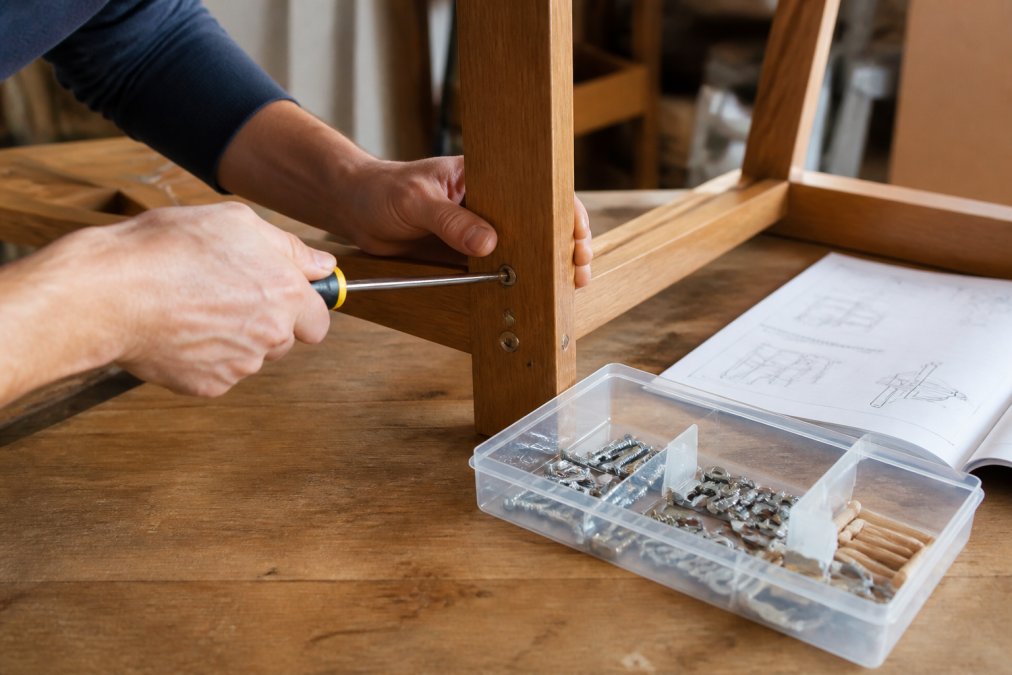
The best easy to move furniture designs prioritise disassembly from the start. Modular pieces use dowels, cam locks, and pocket holes requiring minimal tools. Flat-pack furniture comes with detailed instructions and pre-drilled holes. The key difference between nightmare disassembly and smooth disassembly is whether the manufacturer designed for both assembly and disassembly.
Before disassembling anything, photograph the current state from multiple angles showing how pieces fit together, cable routing, and hardware placement. This five-minute step saves hours of confusion during reassembly.
Tool-Free Assembly Systems
Tool-free systems are the gold standard for renters. These use cam locks, click-fit connectors, or friction joints requiring no screwdriver, wrench, or Allen key. You can disassemble and reassemble the same piece dozens of times without degradation.
Common tool-free mechanisms include:
- Cam locks: Rotating plastic or metal cams that tighten dowels without tools
- Click-fit connectors: Snap-together joints that lock with pressure
- Friction joints: Precisely engineered holes and dowels that hold through tension alone
- Magnetic connectors: Metal plates that align and hold lightweight panels
The advantage is obvious: you can move furniture without hunting for tools and won't strip screws through repeated assembly cycles. Tool-free systems typically work best on lighter pieces, as heavy wooden dressers or solid-core desks require traditional fasteners. The Family Nest prioritises tool-free designs across our modular range because renters value speed and simplicity.
Documentation and Hardware Storage
Keep the original instruction manual and photograph or film your disassembly process. This creates a visual reference clearer than printed instructions. Hardware management is critical, screws, dowels, cam locks, and brackets scatter across moving boxes and get lost. Use small labelled containers or ziplock bags attached directly to furniture pieces with painter's tape. Write on the tape: "Legs, 4 bolts, 8 washers." Keep documentation together in a single folder and tape it to the largest piece so it travels with the goods.
Lightweight Furniture Materials That Last
The tension between lightweight and durable isn't real. Modern materials deliver both. Lightweight furniture doesn't mean flimsy, it means engineered materials achieving strength-to-weight ratios impossible with solid wood. A lightweight ottoman made from high-density foam wrapped in performance fabric can support 150 kilograms and weigh less than 5 kilograms (peer-reviewed research).
The materials that matter most are the frame, surface, and joints. Aluminium frames are stronger than steel at half the weight. Engineered wood with quality veneers is more stable than solid wood and weighs significantly less. Performance fabrics designed for rental and commercial use resist stains, wear, and damage far better than natural fabrics.
Weight-to-Durability Ratio
Weight-to-durability ratio is the metric renters should care about. A piece weighing 8 kilograms but failing after two moves is worse than a piece weighing 15 kilograms surviving five moves. Synthetic materials excel here. Polypropylene frames are stronger than wood of equivalent weight. Engineered wood with quality joinery outlasts solid wood in rental conditions because it doesn't warp, crack, or split when humidity changes.
Performance fabrics like solution-dyed polypropylene or polyester blends are engineered for rental furniture needing to survive frequent moves and variable conditions. They resist pilling, fading, and staining better than natural fibres and clean easily with a damp cloth. The Family Nest sources materials specifically for durability-to-weight balance, testing pieces for repeated assembly and disassembly cycles.
Modular Furniture for Small Apartments
Modular furniture is the renter's secret weapon. Unlike traditional pieces, modular systems adapt to your space, needs, and next move. A modular sofa working in a 45-square-metre studio can be reconfigured for a larger apartment or split between roommates.
Modular pieces typically weigh less than fixed equivalents because they're designed to be moved individually. A three-section modular sofa might weigh 12 kilograms per section, totalling 36 kilograms, easily moved by two people ([EXTERNAL_LINK: advice on safe lifting | safework.nsw.gov.au]). A traditional three-seater sofa often weighs 50 kilograms or more.
The flexibility extends beyond size. Modular shelving reconfigures vertically or horizontally. Storage cubes stack, arrange in rows, or mix with other units. This adaptability means you're not locked into one layout and can redesign your space to fit new apartments rather than forcing old furniture into incompatible spaces.
Multi-Functional Pieces That Adapt
Multi-functional furniture is modular thinking applied to individual pieces. An ottoman with hidden storage serves as seating, a footrest, and storage. A media unit with open shelving and closed cabinets adapts to different room layouts. A bar cart holds beverages, serves as a side table, and doubles as a plant stand.
These pieces are particularly valuable for renters because they solve multiple problems simultaneously. In small apartments, multi-functional pieces eliminate the need for separate furniture, reducing clutter and weight. The best multi-functional pieces for renters are lightweight, work in multiple configurations, and are attractive enough to display. The Family Nest specialises in pieces doing double duty without looking like compromises, from storage ottomans combining comfort and functionality to media units working as entertainment centres, display shelves, or room dividers.
Furniture Pieces Built for Portability
Not all furniture is portable. Knowing which furniture types prioritise portability helps you make smarter choices aligning with your renting lifestyle. Portable furniture disassembles easily, comes in standardised sizes, weighs under 20 kilograms per section, and fits through standard doorways (ensure items meet general safety and handling guidelines).
Flat-Pack and Collapsible Options
Flat-pack furniture is purpose-built for portability. The entire piece ships compressed, meaning it's designed to disassemble completely. Flat-pack pieces are lighter, cheaper to ship, and easier to move because the design prioritises disassembly from the start.
Collapsible furniture takes this further. Folding tables collapse to half their height. Collapsible shelving units compress for transport. Folding chairs stack flat. These pieces are ideal for renters because they reduce both weight and space during moves. Modern manufacturing has largely eliminated the insubstantial feel of flat-pack pieces, high-quality flat-pack furniture from reputable brands is indistinguishable from traditional furniture in appearance and durability, with added portability benefits.
Collapsible options work best for items you don't use daily. A collapsible desk is perfect for occasional work-from-home use. A folding dining table works if you entertain infrequently. For daily-use pieces, comfort and stability matter more than collapsibility.
Standardised Box Dimensions for Easy Transport
Moving logistics favour standardised sizes. Furniture shipping in standard box dimensions (typically 60 centimetres × 40 centimetres × 40 centimetres) packs efficiently into moving trucks. When evaluating portable furniture, check packaged dimensions, not just assembled size. A sofa section assembling to 80 centimetres wide should ship in a box no larger than 100 centimetres × 50 centimetres × 30 centimetres.
Standardised dimensions also matter for temporary storage. Pieces fitting standard storage unit dimensions (typically 2 metres × 2 metres × 2 metres) are easier to arrange and protect. The Family Nest designs modular pieces around standard box dimensions because renters need to move them efficiently.
Packing and Moving Furniture Safely
Even lightweight, portable furniture needs proper packing to survive the move. Poor packing causes damage that wouldn't occur with careful handling.
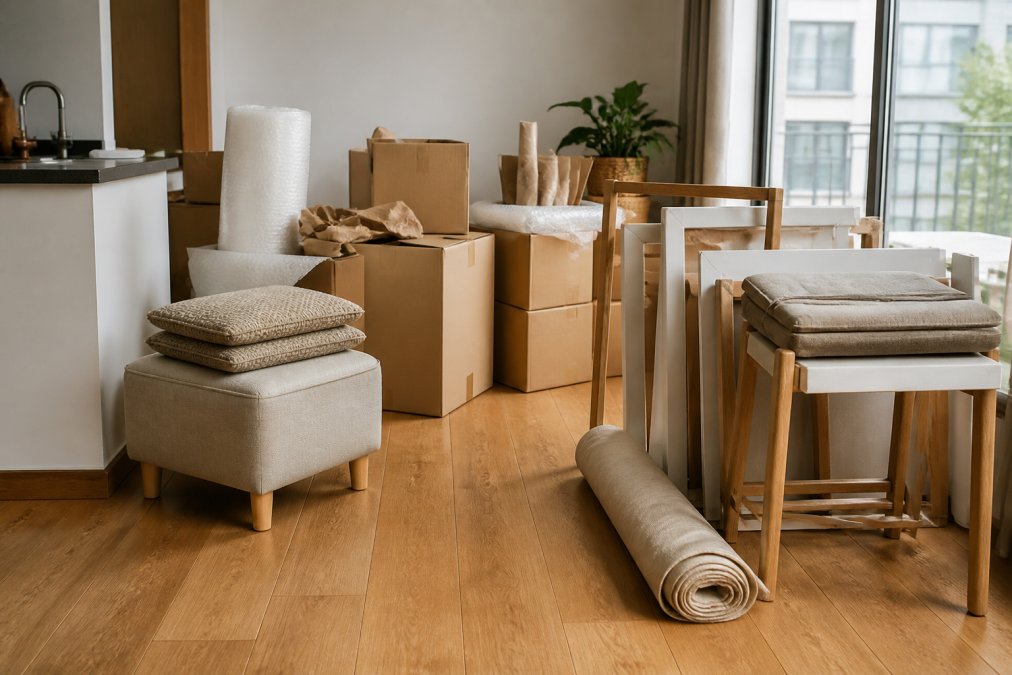
Protect surfaces, secure hardware, and distribute weight evenly. Bubble wrap, kraft paper, and moving blankets are inexpensive compared to replacing damaged pieces. Start by protecting surfaces, wrap cushions, upholstered sections, and finished surfaces in kraft paper or moving blankets to prevent scuffs, tears, and stains. For wooden pieces, use blankets or cardboard to protect edges and corners.
Secure all hardware and loose parts by disassembling completely. Tape hardware containers directly to corresponding furniture pieces using painter's tape. Label everything clearly: "Sofa, Section 1 of 3" tells movers which pieces belong together. Stack pieces strategically with heavier items on the bottom and lighter items on top, distributing weight evenly so no single box exceeds what two people can comfortably carry.
Resale Value and Rental Logistics
Renters often overlook resale value, but it matters significantly. Furniture you can't move with you gets donated, left behind, or sold. Portable, modular furniture maintains resale value because the next renter faces the same moving challenges.
Furniture that's easy to move is easier to sell. A lightweight ottoman with tool-free assembly appeals to other renters. A modular shelving unit that adapts to different spaces is attractive because buyers can reconfigure it. Quality materials extend resale value, furniture made from durable synthetics, quality engineered wood, and performance fabrics holds up through multiple moves and owners.
A modular sofa from a reputable brand holds its value well. A cheap fixed sofa holds less. Over a rental career spanning five to ten years, this difference is significant. The Family Nest designs for the full rental lifecycle: initial move, living in the space, reconfiguration as needs change, and eventual resale or relocation.
Moving as a renter doesn't require choosing between style and practicality. Lightweight, modular, and disassemble-friendly furniture eliminates the false choice between beautiful spaces and portable homes. The Family Nest makes moving painless by offering carefully curated pieces designed for your rental lifestyle, from tool-free assembly taking minutes to modular systems adapting to any space. Explore our collection of easy-to-move furniture today and discover how simple it is to create a home you can actually take with you. With free shipping, easy installation guides, and a 30-day return policy, there's no risk in finding pieces that work for your space.
Frequently Asked Questions
What is the easiest furniture to move when renting?
Modular, lightweight pieces with tool-free assembly systems are easiest to move. Look for furniture made from aluminium frames, synthetic materials, or rattan that weighs under 20 kg per section. Flat-pack designs that disassemble without tools save time and reduce moving stress. Multi-functional pieces like ottomans with storage or extendable tables maximise space while remaining portable, making them ideal for renters who relocate frequently.
How do I choose furniture that is easy to disassemble?
Select pieces with clearly marked assembly points, bolt-and-slot systems, or magnetic connectors rather than permanently glued joints. Check product documentation for disassembly instructions before purchasing. Avoid furniture with fixed dowels or internal bracing. Tool-free systems using cam locks or push-fit connectors are quickest to reverse. Test the weight of individual components, if a single section exceeds 20 kg, it becomes difficult to manoeuvre through doorways or down stairs during moves.
What are the best materials for lightweight, durable furniture?
Aluminium frames combined with high-density polyethylene or polypropylene offer excellent weight-to-durability ratios. Synthetic rattan and wicker provide aesthetic appeal with minimal weight. Engineered wood with reinforced joints balances affordability and portability. Steel frames with powder-coated finishes resist rust and damage during transport. Avoid solid hardwood and particle board for rental furniture, they're heavy, difficult to move, and prone to damage from repeated disassembly and reassembly.
Are modular furniture pieces worth the investment for renters?
Yes. Modular pieces adapt to different rental layouts, reducing the need to replace furniture when moving. They typically cost more upfront but save money long-term through reusability and flexibility. Modular systems allow you to add or remove sections as your space changes, maximising rental logistics efficiency. They also retain better resale value than single-unit pieces, making them practical for renters who move every 1-3 years.
This article was written using GrandRanker