

Table of Contents
- Measure Your Space Before You Buy a Space Saving Dining Table
- Dining Table Size Guide: Seating Capacity and Room Dimensions
- Extendable Dining Tables: Flexible Seating Without the Footprint
- Folding Dining Tables: The Most Compact Option for Tight Spaces
- Dining Table Materials and Durability: What Actually Lasts
- Common Buying Mistakes That Waste Money on Space Saving Dining Tables
- Conclusion: Choosing a Durable Space Saving Dining Table With Confidence
- Frequently Asked Questions
Last Updated: October 16, 2026
Measure Your Space Before You Buy a Space Saving Dining Table
The single biggest mistake we see is furniture bought before the room is measured. Learning how to choose durable space saving dining tables starts with a tape measure, not a shopping cart. Get the numbers right and everything else falls into place.
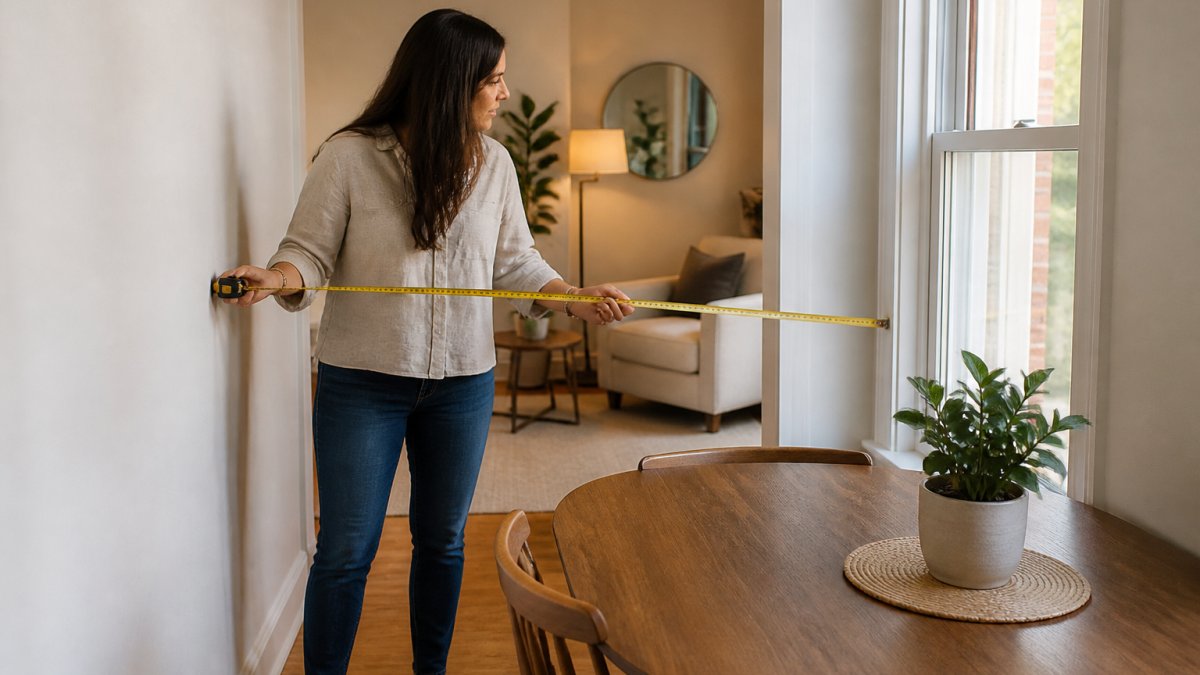
Measure the longest wall and the shortest wall. Note where doors swing, where windows sit, and where power points live. These details decide what actually fits.
Clearance Rules for Small Dining Areas
Leave at least 75cm between the table edge and any wall or fixed furniture. That gap lets a chair pull out and a person walk past without shuffling sideways.
For main walkways, aim for 90cm to 110cm. Squeeze below 75cm and the table becomes a hurdle, not a dining spot.
- 75cm: minimum for chair pull-out
- 90cm: comfortable walkway
- 110cm: generous circulation
- 45cm: space each diner needs at the table edge
Matching Table Shape to Room Layout
Match the table shape to the room's proportions, not the other way around. A square or compact space works better with a round or square design.
Round tables soften tight corners and let people slide in from any side. Oval tables give the same flow with more room for platters.
Rectangle tables line up neatly along walls. According to CHOICE's buying guide on furniture, checking how a piece suits your actual room beats choosing on looks alone.
Dining Table Size Guide: Seating Capacity and Room Dimensions
The right table size comes down to diners and floor space. A space saving dining table earns its name only when the numbers work together.
Use this guide to plan seating:
| Diners | Table Size | Minimum Room Footprint |
|---|---|---|
| 2 | 70cm round or 80x80cm square | 2.0m x 2.0m |
| 4 | 120x80cm rectangle | 2.6m x 2.4m |
| 6 | 150x90cm rectangle | 3.0m x 2.6m |
| 8 | 180x90cm rectangle | 3.4m x 2.8m |
Allow 60cm of table edge per person. Crowd diners closer and elbows collide.
A space saving dining setup also needs legroom. Check that table legs or a central pedestal leave clear space for knees and chairs.
Extendable Dining Tables: Flexible Seating Without the Footprint
Extendable tables give you a compact footprint day to day and a larger surface when guests arrive. The mechanism you choose matters more than the finish, because it is the part that fails first and the part that decides how often you actually use the table.
The Main Space-Saving Mechanisms Compared
Most compact tables rely on one of five mechanisms. Each trades footprint, seating capacity, and effort differently.
| Mechanism | Closed footprint | Seats when open | Effort to use | Best for |
|---|---|---|---|---|
| Drop-leaf | Slim console against a wall | 2-4 | Lift one or two hinged leaves | Studios, tight kitchens |
| Butterfly leaf | Full table size, leaf stored inside | 4-8 | Unfold internal leaf, no storage needed | Homes that host often |
| Gateleg | Narrow when folded | 2-6 | Swing legs out, drop top | Narrow hallways, renters |
| Nesting | Two or more tables stacked | 2-8 across units | Pull apart, push together | Flexible open-plan rooms |
| Wall-mounted / folding | Flat against the wall | 2-4 | Unfold and latch to wall bracket | Very small apartments |
Drop-leaf tables keep one side fixed and one or both sides hinged.
Butterfly leaf tables hide the extension inside the table body.
Gateleg tables use swinging legs to support a folding top.
Nesting tables are separate units that slide under one another.
Wall-mounted and folding tables bolt to a wall bracket and fold flat when not in use.
What to Check Before You Buy
- Test the mechanism under load. Open and close it several times, then press down on the extended section. A leaf that flexes or sags at the join will worsen with use.
- Look for metal runners and locking catches. Plastic clips and thin stamped hinges are the first components to fail. Metal runners with a positive lock hold up far better.
- Measure the extended length, not just the closed size. An extendable table that hits the wall or blocks a doorway when open defeats the purpose. Check the full open length against your room and walkway clearances before buying.
- Check the storage requirement. Butterfly leaves store inside the table; separate extension leaves need somewhere to live. If you have no cupboard space, a butterfly leaf is the practical choice.
- Confirm the seating capacity at the open size. A table that seats four closed and six open is only useful if six chairs actually fit around the extended top without crowding.
A common pattern is that buyers choose on closed footprint and style, then discover the mechanism is stiff, the leaf sags, or the open table does not fit. Test the mechanism first and the rest of the decision gets easier.
Folding Dining Tables: The Most Compact Option for Tight Spaces
Folding dining tables fold flat against a wall or drop one or both leaves.
Drop-leaf tables keep one side fixed and one side hinged.
These designs save floor space but rely on hinges and brackets. Cheap hinges loosen fast. Look for solid hinges, tight screws, and a sturdy frame.
Folding tables suit people who move often. They pack down, travel well, and set up without tools. That matters for renters.
Standards Australia on furniture safety and stability
Dining Table Materials and Durability: What Actually Lasts
Material labels tell you very little on their own. A solid timber top on a flimsy frame will wobble within a year, while a well-braced engineered top on a steel frame can outlast both. Durability comes from how the table is built, not just what it is made of.
Comparing Common Tabletop Materials
- Solid wood: repairable, ages well, heaviest. Hardwoods such as oak, blackbutt, and spotted gum resist dents better than softwoods like pine. It can be sanded and refinished, which extends its life considerably.
- Engineered wood (MDF, particleboard, plywood): stable and affordable, but chips at edges and swells if moisture reaches the core. Quality depends almost entirely on the edge banding and the frame beneath.
- Metal: strong frames, can rust if the finish fails. Powder-coated steel is more durable than painted finishes. Metal tops can be cold and noisy under plates.
- Glass: easy to clean, shows smudges, needs thick tempered panes. Tempered glass is required for safety, but glass offers no repairability, a chip or scratch is permanent.
- Laminate and compact laminate: hard-wearing, moisture-resistant, and easy to clean. Compact laminate is denser and more impact-resistant than standard laminate, which makes it a strong choice for family use.
For family use, solid wood or a metal frame with a wood, laminate, or compact laminate top holds up best. Check the finish for scratch resistance and easy cleaning, and confirm whether it can be spot-repaired.
Construction Details That Signal Long-Term Quality
Good construction shows in small places. Assess these before you buy:
- Joinery: joints should be screwed or bolted, not glued only. Look for corner blocks, dowels, or mortise-and-tenon joints at the frame corners. Glue-only joints fail under repeated lateral load.
- Leg stability: legs should have cross-bracing, a fixed apron, or a central pedestal with a wide base. A table with four unsupported legs and no apron will rack side to side.
- Tabletop thickness: at least 2cm for solid timber, and at least 2.5cm for engineered tops to resist sagging across a long span. Thicker is not automatically better, but very thin tops flex under load.
- Hardware: metal, not plastic. Check hinges, runners, locking catches, and bolts. Replaceable standard hardware is a plus, because it can be swapped rather than forcing a whole-table replacement.
- Finish: look for a hard-wearing finish such as polyurethane, lacquer, or oil. Ask whether it resists heat and water rings, and whether it can be touched up locally.
- Feet: floor-protecting pads reduce scratching and noise, and they are cheap to replace when worn.
- Weight rating: confirm the table is rated for daily use, not occasional use. A table rated for occasional use will loosen faster under everyday family meals.
Testing Durability in the Store or on Arrival
- Push the table gently from one corner. A sturdy table barely moves. A wobbly one flexes at the joints, which is the first sign of a weak frame.
- Press down firmly on the centre and edges of the tabletop. Excessive flex suggests a thin top or inadequate support.
- Open and close any extension or folding mechanism several times. Sticking when new means faster failure under daily use.
- Check that all bolts and screws are tight, and that the frame does not creak when you shift your weight against it.
Long-Term Maintenance and Repair
How you maintain a table decides how long it lasts. Wipe spills promptly, use coasters under hot dishes, and avoid abrasive cleaners that dull the finish. Solid timber can be sanded and refinished when scratched; engineered and laminate tops generally cannot, so a protective mat matters more on those surfaces. Check whether replacement parts, hinges, runners, feet, and bolts, are available, because a table with replaceable hardware can be repaired rather than replaced.
Standards Australia on furniture safety and stability
Common Buying Mistakes That Waste Money on Space Saving Dining Tables
Most wasted money comes from skipping the basics. Here are the traps we see most:
- Buying before measuring the room
- Forgetting chair pull-out space
- Choosing looks over joinery and hardware
- Ignoring the extended size of an extendable table
- Assuming all folding hinges are equal
- Overlooking how easy the finish is to clean
Each mistake costs more than the table. A wrong size means a return. A weak frame means a replacement. A poor finish means constant scrubbing.
Conclusion: Choosing a Durable Space Saving Dining Table With Confidence
Getting the size, shape, and build right turns a cramped corner into a real dining space. Measure first, match the shape to the room, and check the joinery before you commit.
Our space saving furniture ships free with free returns, assembles with clear guides, and comes with a 30-day return policy. No heavy commitment, no guesswork.
Get started with The Family Nest and create a dining space that fits your home and lasts for years.
Frequently Asked Questions
What should I look for when buying a space-saving dining table?
Start with measurements. Check the table's closed and extended dimensions against your room, leaving at least 75cm of clearance on all sides for chairs and movement. Look for solid wood or high-quality engineered wood frames, metal hinges on folding or extendable mechanisms, and a finish that resists scratches and moisture. If you rent or move often, prioritise tables that disassemble without tools. A space saving dining table that fits your room dimensions and daily routine will serve you better than one that only looks good.
Are extendable dining tables a good choice for small homes?
Yes, extendable dining tables work well in small homes because they stay compact day to day and expand when you host. Most use a butterfly leaf or pull-out leaf mechanism that stores inside the table. Check the extension mechanism for metal runners rather than plastic, and test the table's stability when fully extended. For a household of two to four people who occasionally entertain, an extendable dining table offers the best balance of everyday footprint and flexible seating capacity.
Which dining table materials are most durable for everyday use?
Solid hardwood, particularly oak and acacia, handles daily wear best and can be refinished if scratched. Engineered wood with a thick veneer offers a similar look at a lower weight and cost, though it cannot be sanded back as many times. Laminate and glass tops resist scratches and stains but can chip at the edges. For family use with young children, a solid wood table with a matte lacquer or oil finish balances durability, easy cleaning, and long-term repairability.
How much space should you leave around a dining table?
Leave at least 75cm between the table edge and any wall or furniture so people can pull out chairs and sit down comfortably. For the main walkway behind seated diners, aim for 100cm to 120cm to allow traffic flow. In a small dining area, you can reduce clearance to 60cm on sides where nobody needs to walk past, but never less than that. Measure your room dimensions and subtract these clearances before deciding on a table size.