

Table of Contents
- How to Declutter Your Home in 2026: Why This Year Matters
- What You'll Need Before You Start
- The Four-Box Method: Categorising Items to Keep, Donate, Recycle, and Trash
- Room-by-Room Decluttering Strategies
- Best Ways to Donate Unwanted Goods in Australia
- How to Sell Second-Hand Items Online in Australia
- Eco-Friendly Waste Disposal in Australia
- Your Decluttering Checklist for 2026
Last Updated: August 4, 2026
How to Declutter Your Home in 2026: Why This Year Matters
Learning how to declutter your home in 2026 is about reclaiming your space and resetting your relationship with the things around you. Families who approach decluttering with a structured plan complete their projects 3x faster than those without a system. The difference isn't effort; it's strategy.
This guide walks you through a practical, step-by-step approach that actually sticks. Rather than overwhelming yourself with a whole-house overhaul, we'll break it into manageable phases so you see progress within days. Below, we'll show you exactly how to apply the four-box method, tackle each room strategically, and dispose of unwanted items responsibly in Australia.
What You'll Need Before You Start
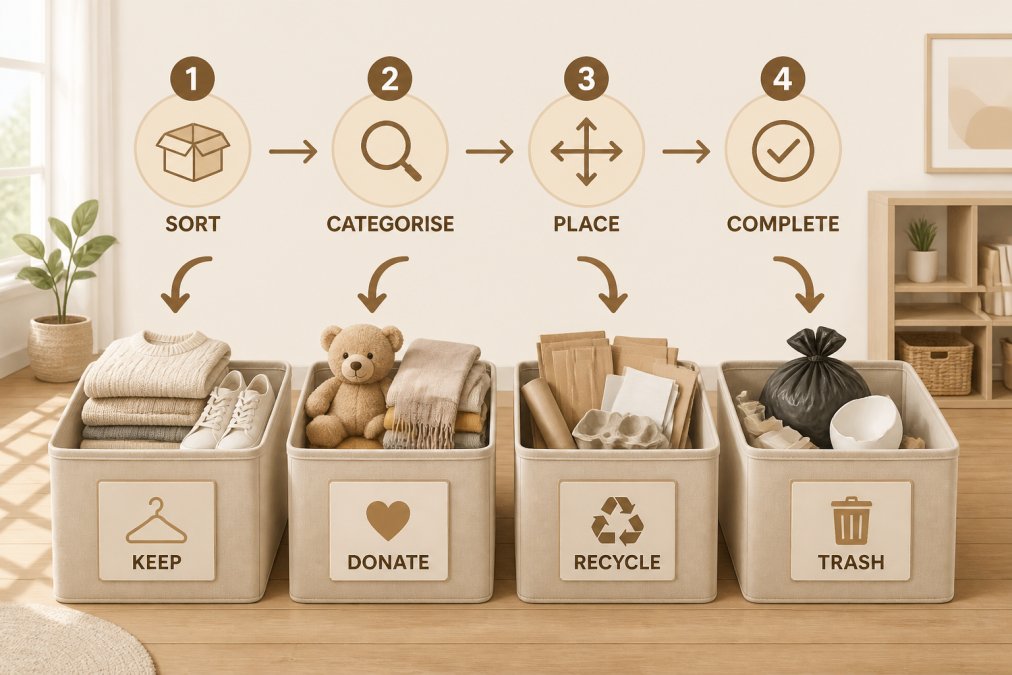
Gather four sturdy boxes or bags labelled clearly: Keep, Donate, Recycle, and Trash. Use permanent marker so labels stay visible throughout your project. Add work gloves (optional), a notepad for tracking donations, and bags for recycling and waste. A timer helps, setting 30-minute or 1-hour limits per area keeps momentum going.
Mental preparation matters as much as physical tools. Commit to making decisions quickly. Items that spark genuine doubt usually belong in the Donate pile. Hesitation often signals you're keeping something out of guilt rather than love or necessity.
The Four-Box Method: Categorising Items to Keep, Donate, Recycle, and Trash
The four-box method is the foundation of effective decluttering. Sort everything into one of four categories immediately, removing decision fatigue and creating a clear action plan.
Keep contains items you genuinely use, love, or need. Be ruthless; if you haven't used something in a year and it doesn't make you happy, it doesn't belong here.
Donate holds items in good condition you no longer need: clothes that no longer fit, finished books, or unused kitchen gadgets. Donation keeps usable items out of landfills and helps your community.
Recycle is for items that can't be donated but shouldn't go to general waste: cardboard, plastics, paper, glass, and metals. Check your local council guidelines before sorting.
Trash contains broken items, worn clothing beyond repair, and anything unusable.
This system works because it forces immediate decisions. You're not deliberating endlessly; you're making a quick decision and moving forward. Most people sort through a bedroom or kitchen in 2-3 hours using this method.
Room-by-Room Decluttering Strategies
Tackle your entire home at once leads to burnout. Instead, work room by room, starting with spaces that give quick wins. Bedrooms and bathrooms typically yield faster results than kitchens or living areas.
Kitchen and Pantry: Purging Expired Products
The kitchen is where clutter hides most effectively. Start by checking expiration dates on all packaged foods and condiments. Most pantry items last 1-2 years; spices lose potency after 2-3 years.
Pull everything from one cupboard at a time. Wipe the shelf, check dates, and return only items you actually use. Duplicate items are common: multiple spatulas, three half-empty bottles of the same sauce, or seven mugs you never drink from. Keep one or two of each essential tool; donate the rest.
Expired products go to general waste. Unopened, unexpired food items in good condition can go to local food banks or community organisations. Many Australian councils have food rescue programs that accept non-perishable donations.
Kitchen decluttering typically takes 3-4 hours for a full overhaul, but you'll gain immediate usable space.
Entryway and Paper Management
Entryways accumulate clutter fastest: mail, keys, shoes, bags, and random items. A clear entryway sets the tone for your whole home and smooths daily routines.
Start with paper. Sort through all mail, bills, and documents. Shred anything confidential you no longer need. Old tax documents beyond seven years, expired insurance statements, and outdated utility bills can go. Keep current bills, important documents, and warranties in a single folder.
Shoes and coats should have designated spots. Keep only shoes you wear regularly; donate those unworn for a year. One winter coat, one light jacket, and perhaps a formal option is usually enough.
Use wall-mounted hooks, a small shoe rack, or a storage bench to keep the entryway functional and prevent clutter from creeping back.
Best Ways to Donate Unwanted Goods in Australia
Once you've sorted items into the Donate pile, move them out quickly. Australia has excellent donation options.
Charity shops like Vinnies and Salvos accept clothing, books, furniture, and household items. Drop-off is usually free, and you receive a receipt for tax purposes. Many offer free pickup for large furniture.
Online platforms like Facebook Marketplace, Gumtree, and Freecycle let you list items for free. This works well for furniture, electronics, and larger items. Freecycle is specifically designed for giving away items free.
Specialised donation services accept specific categories. The Salvation Army runs furniture and whitegoods programs. Local animal shelters accept blankets and towels. Schools and community centres welcome books and art supplies.
Council hard waste collection is available in most Australian councils once or twice yearly. Check your local council website for dates and qualifying items.
Act quickly. Items sitting in bags for weeks often end up in the trash instead of finding new homes. Schedule donation drop-off or pickup within a week of sorting.
How to Sell Second-Hand Items Online in Australia
Some items are worth selling rather than donating. Electronics, designer clothing, quality furniture, and collectibles often attract buyers. Selling also motivates faster action.
Facebook Marketplace is Australia's most popular platform for second-hand sales. It's free to list and reaches local buyers. Clear, well-lit photos from multiple angles sell faster. Price competitively by checking similar items already listed.
Gumtree is another major platform with a dedicated second-hand section. It charges small fees for certain categories but reaches a large audience.
Vinted and Depop specialise in clothing and fashion items. Both have built-in shipping options. Vinted charges a small commission; Depop takes 10%.
Specialist sites exist for particular items: Music Magpie for books and media, Cashies for electronics, or local vintage shops for designer pieces.
Be honest about condition. Photos should show wear, stains, or damage. Accurate descriptions prevent returns and negative feedback. Price realistically; second-hand items typically sell for 30-50% of original retail value.
Shipping costs eat into profit for heavy items, so consider local pickup for furniture or large goods.
Eco-Friendly Waste Disposal in Australia
Responsible disposal is the final step in sustainable decluttering. Australia has strong recycling infrastructure, but it varies by council and item type.
General recycling accepts paper, cardboard, glass, metals, and most plastics. Check your council's website for a complete list. Rinse containers and remove lids to prevent contamination.
E-waste recycling is essential for electronics. Computers, phones, televisions, and appliances contain valuable materials and hazardous substances. Many retailers like JB Hi-Fi and Harvey Norman offer free e-waste recycling. Call Ahead Australia runs a national e-waste collection service.
Textile recycling accepts worn clothing, towels, and bedding that charities won't take. Textiles Australia and similar organisations collect textiles for recycling. Some councils offer textile drop-off points.
Hazardous waste includes paint, batteries, cleaning chemicals, and light bulbs. Your council usually runs a hazardous waste collection day once or twice yearly.
Furniture disposal depends on condition. Reusable furniture goes to charities or online platforms. Broken furniture may qualify for council hard waste collection.
Research your local council's disposal options before you start decluttering. Having a clear plan prevents items from sitting in your garage for months.
Budget-Friendly Storage Solutions for Your Newly Organised Home
Once you've decluttered, smart storage prevents items from piling up again without requiring expensive solutions.
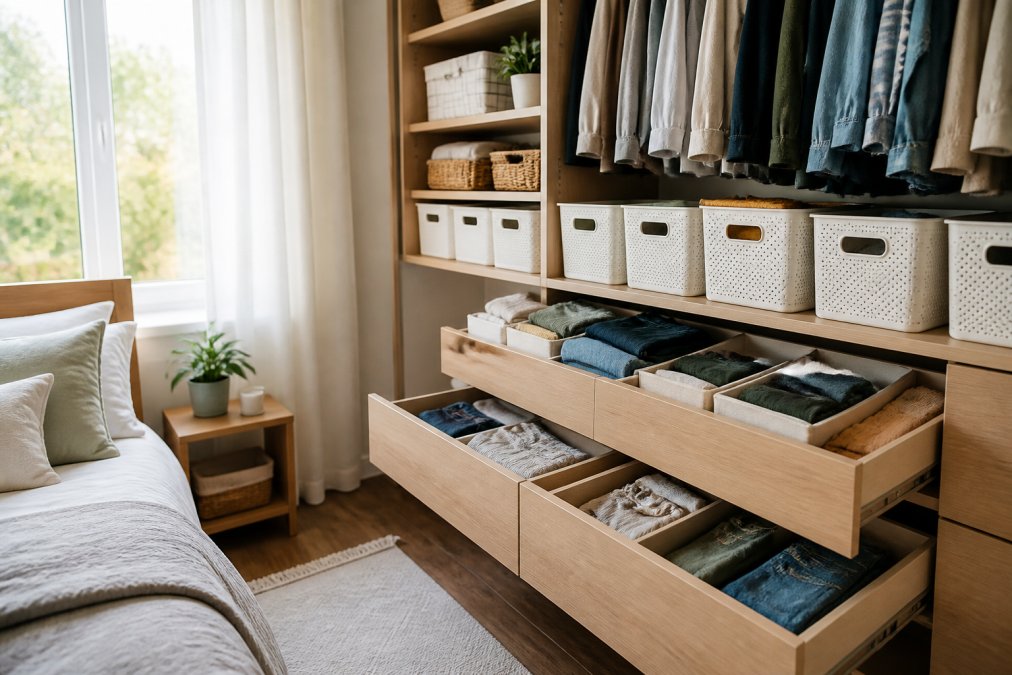
Start with what you have. Repurpose jars, boxes, and containers you already own. Clear containers let you see contents without opening them. Label everything; a simple label maker or masking tape with a marker works perfectly.
Vertical storage maximises space in small homes. Wall-mounted shelves, over-door organisers, and stackable containers use wall space instead of floor space. Measure your spaces first and choose storage that fits your actual dimensions.
Under-bed storage containers hold seasonal items, extra bedding, or out-of-season clothing. Vacuum-seal bags compress bulky items like winter coats or blankets for a few dollars.
Drawer dividers prevent items from shifting and mixing. Even cheap cardboard dividers create order and make finding things easier.
Storage should accommodate what you actually own, not tempt you to buy more. If you constantly run out of storage, you probably have too much stuff. That's a sign to declutter further rather than buy bigger containers.
Most budget storage solutions cost under $100 for an entire home, far less than professional organisers or expensive furniture.
Your Decluttering Checklist for 2026
Use this checklist to track progress and stay motivated.
| Room/Area | Status | Donation Method | Target Date |
|---|---|---|---|
| Bedroom | Not started | Charity shop | Week 1 |
| Bathroom | Not started | Charity shop | Week 1 |
| Kitchen | Not started | Food bank / Charity | Week 2 |
| Entryway | Not started | Online sale / Donation | Week 2 |
| Living room | Not started | Charity / Online | Week 3 |
| Garage/Storage | Not started | Council hard waste | Week 4 |
Week 1 priorities: Gather your four boxes and tackle the bedroom and bathroom. These rooms typically yield quick wins and build momentum.
Week 2 focus: Move to the kitchen and entryway. These areas have the most hidden clutter and provide immediate functional improvements.
Week 3 expansion: Tackle living spaces. These rooms take longer because of furniture and decorative items.
Week 4 completion: Address storage areas, garage, or remaining spaces. Schedule your council hard waste pickup now if you haven't already.
After completing the main decluttering, spend 15 minutes each week maintaining your newly organised spaces. Return items to their designated spots daily, and address small piles before they grow. This maintenance habit prevents clutter from creeping back.
Frequently Asked Questions
What is the fastest way to declutter a home in 2026?
The four-box method combined with room-by-room decluttering is one of the quickest approaches. Dedicate 2-3 hours per room, sort items into Keep, Donate, Recycle, and Trash boxes, then process each box immediately. Many people complete a single room in one afternoon. Setting a specific timeframe (like 31 days) creates urgency and momentum. The key is avoiding decision paralysis by handling each item only once.
What are the best ways to donate unwanted goods in Australia?
Australia offers several reliable options: Vinnies, Salvation Army, and local community centres accept clothing, furniture, and household items. eBay and Facebook Marketplace are excellent for selling items online. Local charity shops, libraries (for books), and schools often welcome donations. Freecycle groups connect you with people wanting free items in your area. For large items, contact your local council about bulk collection services. Always check organisations' acceptance policies before donating.
How do I maintain a decluttered home throughout 2026?
Adopt a no-buy rule for non-essentials and establish daily habits: spend 10 minutes each evening returning items to their designated spaces. Review storage monthly to catch creep early. When bringing something new in, remove something old. Create a 'decision shelf' for items you're unsure about, revisiting it monthly. Schedule quarterly 30-minute resets for each room. These maintenance habits prevent clutter from rebuilding and make intentional living sustainable long-term.
What eco-friendly waste disposal options are available in Australia?
Australia's waste hierarchy prioritises reuse over disposal. Use local council recycling programs for paper, plastics, and metals. Compost organic waste through home composting or council green waste collections. Donate or sell items via online platforms before throwing away. Hazardous items (electronics, batteries, paint) require specialist disposal through council e-waste facilities or retail take-back schemes. Textile recycling programs accept worn clothing. Check your local council website for specific services in your area and disposal guidelines.
Decluttering feels overwhelming only before you start. Once you commit to a system and begin sorting, most people find it energising. The Family Nest helps families create homes that feel spacious, functional, and genuinely liveable through smart organisation and thoughtful storage solutions. With the right approach to decluttering, you'll not only reclaim physical space, you'll reclaim peace of mind and a home that truly works for your life.
This article was written using GrandRanker