

Table of Contents
- What You'll Need Before Moving Heavy Furniture Alone
- Master Safe Lifting Techniques for Solo Moving
- Using Furniture Sliders to Move Heavy Items Effortlessly
- Leverage Lifting Straps for Heavy Loads
- How to Move a Couch Alone: Practical Strategies
- Disassemble Furniture to Reduce Weight and Improve Maneuverability
- Common Mistakes to Avoid When Moving Heavy Furniture Alone
- Post-Move Recovery: Protecting Your Body After Moving Heavy Furniture Alone
Last Updated: July 30, 2026
Moving heavy furniture alone is achievable with proper technique, the right tools, and strategic planning. At The Family Nest, we understand that many renters and homeowners face this challenge due to budget constraints or scheduling needs. Learning how to move heavy furniture alone can save hundreds of dollars and give you control over your timeline while protecting both your belongings and your body.
What You'll Need Before Moving Heavy Furniture Alone
Essential Moving Equipment and Tools
Furniture sliders are your first essential tool, they reduce friction dramatically and protect floors from scratches. For hard floors, use plastic sliders; for carpet, use felt. A furniture dolly is non-negotiable for anything over 30 kilograms, distributing weight evenly so you can roll items rather than lift them. Lifting straps transform how your body handles weight by distributing load across your shoulders and back rather than concentrating strain on your lower back. Moving blankets protect furniture and add grip. A hand truck is essential for multiple levels. Finally, work gloves, sturdy shoes with good grip, and a back support belt prevent injuries.
(https://0b0dk9-jr.myshopify.com/blogs/news/easy-to-disassemble-furniture-for-renters-a-smart-buying-guide) Heavy Furniture Alone]Budget-Friendly DIY Alternatives to Expensive Equipment
You don't need to spend a fortune. Cardboard pieces or old towels work on hard floors, though they won't protect as well as commercial sliders. Plastic storage bins or wooden pallets can substitute for a dolly. Old bed sheets serve as moving blankets. A sturdy rope looped around your shoulders distributes weight better than lifting with your hands alone. Ask friends to spot you, borrow equipment from neighbours, or check community groups online where people lend moving gear. Technique matters more than expensive tools, proper form with basic equipment outperforms premium gear with poor technique every time.
Master Safe Lifting Techniques for Solo Moving
Proper Body Mechanics and Ergonomics
Bend your knees, not your back, this prevents the majority of lifting injuries. Keep items close to your body; the farther an object is from your core, the more strain it places on your spine. Never twist while holding weight; move your feet instead. Test an item's weight by pushing it with your foot before lifting. Exhale as you lift and inhale as you lower to engage your core muscles. Keep your shoulders back and neck neutral. Move slowly and deliberately; speed increases injury risk dramatically. If you feel pain, stop immediately, pain is your body's warning system.
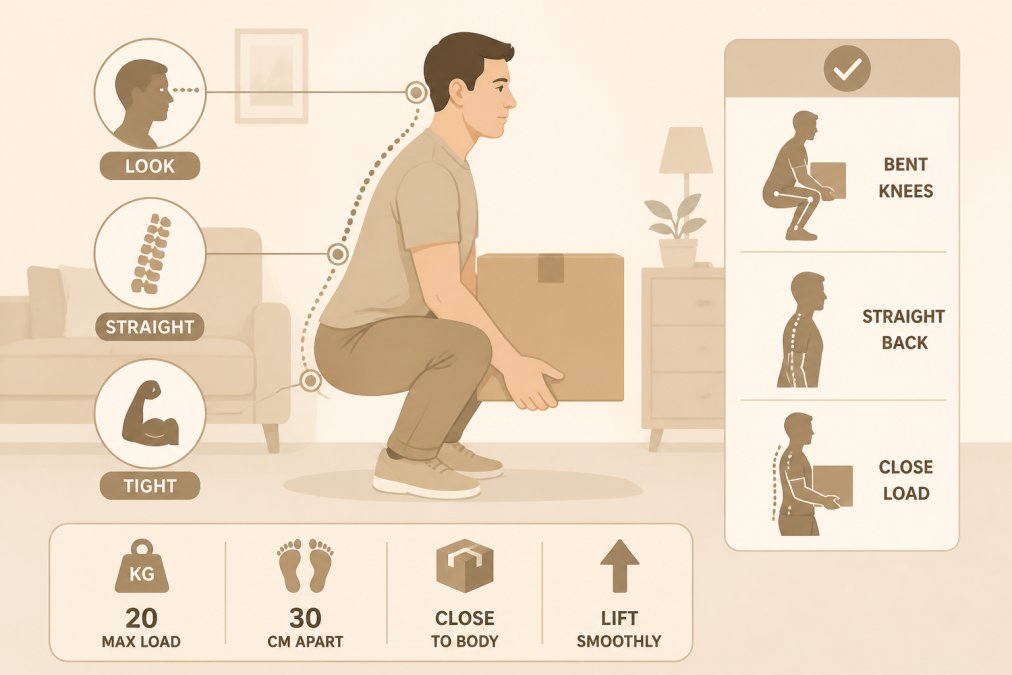
Understanding Centre of Gravity and Weight Distribution
Every object has a centre of gravity where its weight concentrates most. Grip items at or near this point; lifting from one end strains your arms and back unevenly. For a couch, the centre sits roughly in the middle; for a dresser, it's typically higher due to top drawer weight. When using equipment, position weight centrally on dollies and ensure lifting straps distribute evenly across both shoulders.
Using Furniture Sliders to Move Heavy Items Effortlessly
How Sliders Reduce Friction and Protect Floors
Friction makes heavy furniture difficult to move. Sliders create a low-friction surface between furniture legs and your floor, reducing friction by up to 80% on hard floors and achieving similar results on carpet. Beyond ease of movement, sliders protect floors from gouges and scratches by distributing furniture weight across a wider surface area, preventing concentrated pressure that causes damage.
Step-by-Step: Sliding Heavy Furniture on Carpet and Hard Floors
- Prepare the path. Clear obstacles and loose rugs to prevent tripping.
- Assess the furniture. Identify all four legs or contact points.
- Insert sliders under each leg. Lift one corner and slide a slider underneath for all four corners.
- Test the movement. Push gently; furniture should glide smoothly.
- Push or pull from the centre. Position yourself at the centre of gravity and push steadily, avoiding jerking motions.
- Navigate corners carefully. Push from one end slightly to angle the furniture, then adjust and continue with slow, deliberate movements.
- Remove sliders once in place. Lift each corner and remove sliders for storage.
Use Lifting Straps for Heavy Loads
How Lifting Straps Distribute Weight and Reduce Strain
Lifting straps redistribute weight from your back and arms to your shoulders and legs, which are much stronger. Straps loop under furniture and over your shoulders, transferring weight through your shoulders rather than forcing your arms and back to bear it. This reduces lower back strain by up to 60% compared to traditional lifting and provides psychological confidence that improves form and reduces accidents.
Proper Strap Positioning and Load-Bearing Capacity
Position straps comfortably on your shoulders without digging into your neck or slipping down your arms. Attach straps under solid furniture parts, never under drawers, shelves, or anything that might separate. For a couch, attach under the frame; for a dresser, attach under the base. Most quality lifting straps safely handle up to 150 kilograms. Test load-bearing capacity before fully committing, and never exceed manufacturer recommendations. When using straps, bend your knees and engage your core before lifting, then lift smoothly without jerking motions.
How to Move a Couch Alone: Practical Strategies
Disassembling Legs, Cushions, and Armrests
Check whether your couch disassembles. Many modern couches have removable legs, cushions, and armrests. Disassembling reduces weight dramatically, a three-seater might weigh 100 kilograms intact but only 60-70 kilograms disassembled. Remove cushions first (often 20-30% of weight), then check legs for screws or bolts. Some couches have removable armrests along seams. Take photos before removal to remember reassembly. After disassembly, the main body becomes lighter, easier to grip, and simpler to manoeuvre through tight spaces.
Navigating Doorways and Tight Corners with a Couch
Measure your couch's dimensions and doorways before moving. If the couch is wider than the doorway, try tilting it vertically so it's taller but narrower. For tight corners, use the pivot technique: push one end forward while pulling the other toward you, rotating slowly around the corner in a deliberate arc.
Disassemble Furniture to Reduce Weight and Improve Maneuverability
Which Furniture Pieces Benefit Most from Disassembly
Beds benefit greatly from disassembly, headboards, footboards, and side rails often detach easily, reducing weight significantly. A queen-size bed frame might weigh 80 kilograms intact but only 30-40 kilograms without the headboard. Dressers become much lighter when drawers are removed individually. Shelving units often have removable shelves and backs. Tables with removable legs or leaves are easier to move in pieces. Bookcases should always be emptied before moving, as books account for significant weight. The general rule: if it comes apart without tools or with just one tool, disassemble it before moving.
Tracking Hardware and Reassembly Tips
Use small plastic bags or containers, labeling each clearly. Take photos from multiple angles showing how pieces connect, and consider video recording your disassembly to play back in reverse during reassembly. Store all hardware in a single clear container. When reassembling, work in reverse order from disassembly to prevent instability during the process.
Common Mistakes to Avoid When Moving Heavy Furniture Alone
Back Safety and Injury Prevention
Never lift with your back instead of your legs, your legs are exponentially stronger. Never twist while holding weight, as this strains spinal discs. Don't lift items above shoulder height. Avoid lifting when fatigued, as tired muscles don't stabilise weight effectively. Never move furniture when angry or upset, as emotional distress impairs judgment and coordination.
Psychological and Emotional Preparation for Solo Moving
Mentally rehearse the move before starting. Visualise yourself successfully moving each piece and navigating tight spaces. Set realistic expectations, moving one or two major pieces per day is reasonable. Acknowledge when a piece is genuinely too heavy for solo moving; asking for help is better than injury. Create a positive environment with music, good lighting, and breaks.
Post-Move Recovery: Protecting Your Body After Moving Heavy Furniture Alone
Stretch gently after moving, focusing on hamstrings, hip flexors, and lower back for 30 seconds each. Apply ice to strained areas for 15 minutes; ice reduces inflammation more effectively than heat in the first 24-48 hours. Take a warm bath or shower the evening after moving. Avoid strenuous activity for at least 24 hours. Stay hydrated and eat protein-rich foods to support muscle repair. Monitor yourself for delayed pain or discomfort in the days following your move, and seek medical attention if you experience sharp pain, numbness, or tingling.
| Recovery Strategy | Timeline | Purpose |
|---|---|---|
| Gentle stretching | Immediately after moving | Improve blood flow and reduce soreness |
| Ice application | First 24-48 hours | Reduce inflammation |
| Rest | 24 hours minimum | Allow muscle repair |
| Warm bath/shower | Evening after moving | Relax muscles and improve circulation |
| Protein intake | Ongoing for 48 hours | Support muscle repair |
| Monitor for pain | Days 1-7 | Catch delayed injuries early |
Learning how to move heavy furniture alone is achievable when you prioritise safety and use the right techniques. The Family Nest understands that many people need to move without professional help, whether due to budget constraints or scheduling flexibility. Start with proper equipment like furniture sliders and lifting straps, master the fundamentals of safe lifting, and disassemble strategically. Your future self will thank you for taking the time to do this right.
Frequently Asked Questions
What equipment do you need to move heavy furniture alone?
Essential equipment includes furniture sliders to reduce friction, a furniture dolly with swivel casters for weight distribution, lifting straps to protect your back, moving blankets for floor protection, and basic tools for disassembly. Budget-friendly alternatives include cardboard under legs, old towels instead of sliders, and a sturdy hand truck. Protective gear like gloves and a back support belt adds safety. Your choice depends on the furniture type and your strength capacity.
How do furniture sliders help when moving heavy furniture alone?
Furniture sliders reduce friction between your furniture and the floor, making items easier to pivot and manoeuvre without lifting. They protect your flooring from scratches and dents whilst significantly lowering the physical effort required. Place sliders under each leg or corner, then use leverage to glide the piece across the room. They work on both carpet and hard floors, though you may need different slider types for each surface to ensure proper load-bearing and stability.
Is it safe to move heavy furniture alone, and how do you prevent injury?
Moving heavy furniture solo is possible if you prioritise safety. Bend your knees, keep your back straight, and engage your core muscles to protect your spine. Use tools like lifting straps and dollies to distribute weight properly. Take breaks, work slowly, and never rush. Assess clearance in doorways and stairwells beforehand. If an item feels too heavy or awkward, stop and reconsider your approach or seek help. Post-move recovery, including stretching and ice application to strained areas, prevents lasting injury.
How do you move a heavy couch alone without damaging it or your home?
Start by removing cushions and armrests if possible to reduce weight and improve maneuverability. Use furniture sliders under the frame's legs and pivot the couch at angles to navigate tight corners and doorways. Measure doorway clearance before attempting the move. Protect walls and floors with moving blankets. Consider disassembling legs if the frame allows. Use lifting straps if you must lift briefly. Work slowly and use leverage rather than brute force to maintain stability and prevent damage to both the furniture and your home.
This article was written using GrandRanker