

Table of Contents
- Assess Your Space and Create a Floor Plan
- Declutter and Adopt Minimalist Principles
- Multi-Functional Furniture for Small Spaces
- Maximize Vertical Storage Solutions for Apartments
- How to Zone a Studio Apartment Without Walls
- Smart Storage Hacks for Renters
- Final Steps to Maintain Your Organized Space
Last Updated: August 15, 2026
Assess Your Space and Create a Floor Plan
Before buying furniture or storage solutions, measure your studio precisely and sketch a floor plan. Note the location of windows, doors, electrical outlets, and fixed features like radiators or built-in wardrobes. A simple sketch on graph paper or a free digital app reveals your square footage, natural light, foot traffic patterns, and underutilized corners.
Consider how you actually live in the space. Do you work from home? Entertain guests regularly? Need blackout options or maximum morning light? These habits shape every furniture purchase and storage decision. Your floor plan becomes your reference point for all choices moving forward.
Declutter and Adopt Minimalist Principles
Before organizing, you must reduce what you own. You cannot organize clutter into submission; you have to remove it first.
Sort everything into three categories: keep, donate, and discard. Be honest about what you actually use. That bread maker untouched for two years? Gone. Clothes that don't fit or don't make you feel good? Out. The money is already spent; keeping unused items just wastes your space and mental energy.
Once decluttered, adopt a minimalist mindset going forward. Before buying anything new, ask: Do I use this regularly? Does it serve multiple purposes? Will it still be useful in a year? A clutter-free environment feels larger psychologically because there's less visual noise competing for attention.
Multi-Functional Furniture for Small Spaces
In a small studio, every piece of furniture must serve multiple purposes. Single-function items are a luxury you can't afford.
A bed with built-in storage underneath holds seasonal clothing, extra bedding, or infrequently used items. Some designs include a headboard with shelving, turning your bed into a storage wall. The Family Nest offers space-saving bed frames specifically designed to maximize the area underneath while maintaining a clean aesthetic.
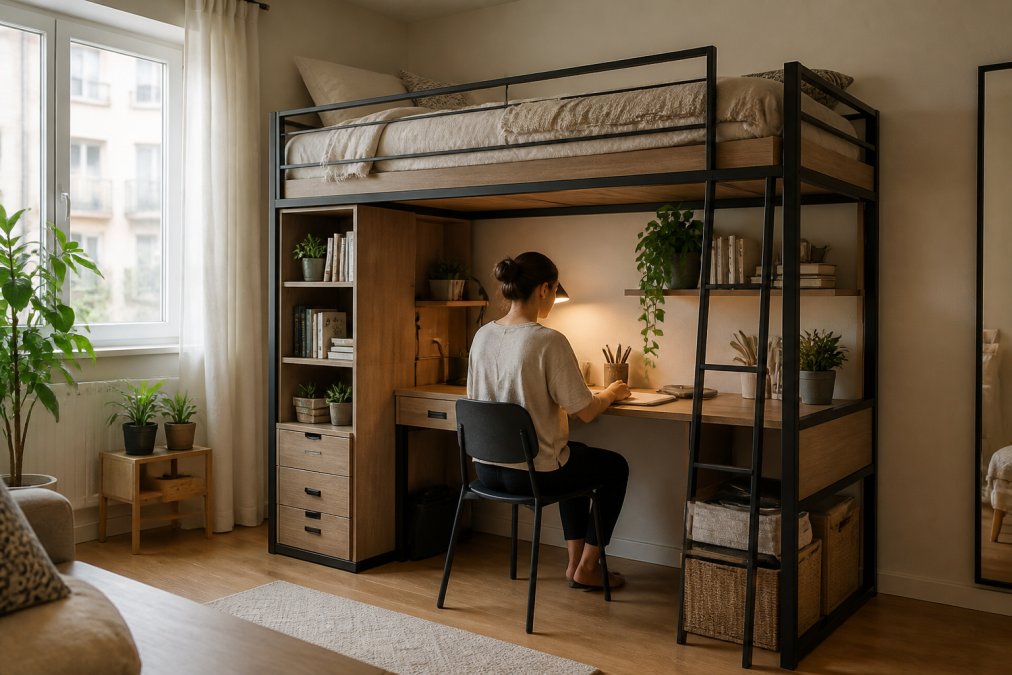
A desk that doubles as a dining table works brilliantly for renters who work from home. During the day it's your office; in the evening it's where you eat. Look for designs with built-in storage shelves or drawers. Ottoman storage serves as a coffee table or extra seating with a hollow interior for blankets, books, or off-season items. Wall-mounted shelves that fold down create temporary desk or dining surfaces without taking up permanent floor space.
The key is avoiding furniture that does only one thing. When every piece pulls double duty, your small studio suddenly feels less cramped.
Maximize Vertical Storage Solutions for Apartments
Vertical storage is your secret weapon in a small studio apartment. Walls go all the way up to the ceiling, and most people miss this obvious opportunity.
Floating shelves are the rental-friendly option that works almost everywhere. Install them above your desk, bed, or entryway to hold books, plants, decorative items, and everyday essentials. The Family Nest stocks floating shelf systems that are easy to install and come with clear guides for renters.
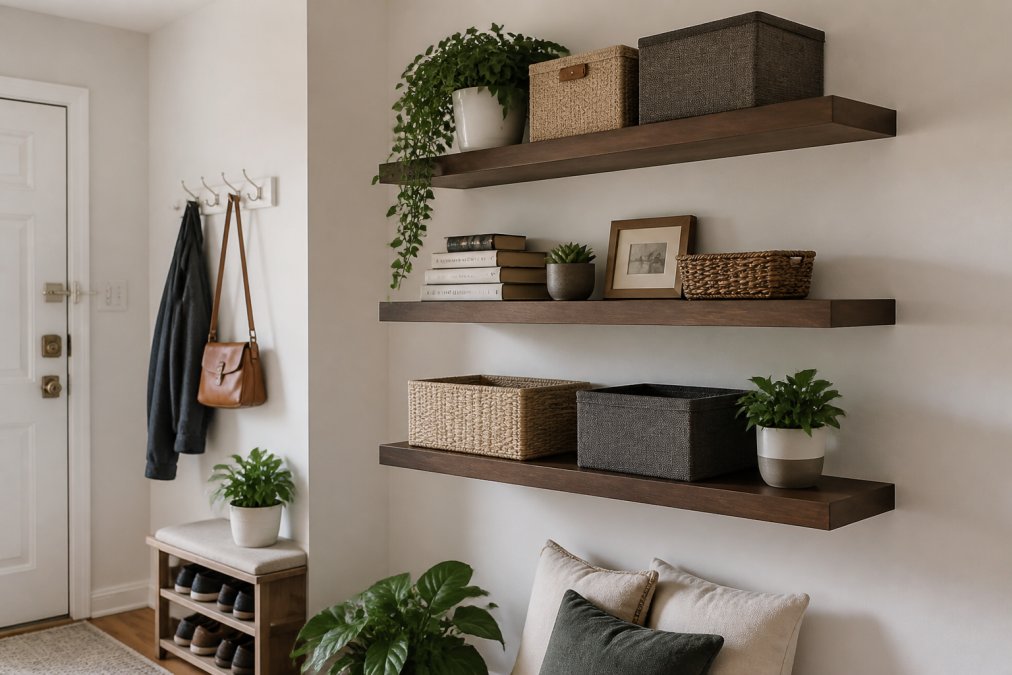
Over-the-door organizers hang on existing doors without damaging walls and hold shoes, bags, cleaning supplies, or pantry items. A tension rod installed inside a closet creates extra hanging space for bags, scarves, or light clothing. Wall-mounted pegboards let you customize storage with hooks for bags, shelves for small items, or baskets for miscellaneous clutter.
Corner spaces often go unused. A tall, narrow shelving unit in a corner maximizes vertical space without protruding into the room. When items are stored up high rather than spread across surfaces, your studio feels less cluttered and more spacious.
How to Zone a Studio Apartment Without Walls
Without permanent walls, you need visual and functional zoning to create distinct areas. This makes your studio feel larger while giving each zone a sense of purpose.
Furniture arrangement is your primary zoning tool. Position your bed against one wall to define the sleeping zone. Angle your sofa to face away from the bed, creating a separate living area. Use a console table or low shelving unit as a subtle boundary between your kitchen and living space.
Rugs are powerful zoning tools that cost far less than you'd expect. A rug under your bed anchors the sleeping area. A different rug under your sofa defines the living zone. A third rug in your entryway creates a welcoming transition. Rugs also absorb sound, making your studio feel less echoey.
Lighting zoning adds another layer. Install bright overhead light in your workspace, soft ambient lighting near your bed, and a separate lamp for your living zone. When you turn on different lights for different activities, you psychologically shift between zones. This is especially important if you work from home.
A room divider or folding screen creates a visual barrier without permanent installation. Position it between your bed and living area to hide your sleeping space when you have guests.
Smart Storage Hacks for Renters
Renters face unique constraints: you can't drill holes in walls, you can't paint permanent colours, and you need to leave the space as you found it.
Adhesive hooks and command strips hold surprisingly heavy items without damaging walls and leave no residue when removed. Use them for hanging bags, coats, and lightweight shelves. Over-the-door hooks multiply your hanging storage instantly.
Under-bed storage containers slide beneath your bed frame and hold off-season clothing, extra bedding, or rarely accessed items. Clear containers let you see what's inside without opening them. Stackable storage bins are modular and flexible; you can add or remove bins as your needs change. The Family Nest offers storage solutions designed specifically for renters that install easily and move with you when you relocate.
Hanging shoe organizers aren't just for shoes. Use them on the back of your bathroom or bedroom door to store cleaning supplies, personal care items, small tools, or office supplies. A tension rod installed inside your closet creates a second hanging rail, instantly doubling your hanging capacity.
Everything should be removable, and nothing should damage the walls. This approach also means you can take your storage system with you when you move.
Final Steps to Maintain Your Organized Space
Organizing your studio apartment is a project, but maintaining it is a habit. Without a maintenance system, clutter creeps back in.
Establish a weekly 15-minute tidy routine. Set a timer and put items back where they belong. This prevents small messes from becoming big problems. Make it part of your Sunday evening ritual or Friday afternoon wind-down.
Create a "one in, one out" rule for new items. If you buy something new, something old leaves your space. This keeps your total volume stable and forces intentional purchasing decisions.
Designate a home for every item you own. If something doesn't have a specific place, it becomes clutter. Once everything has a designated spot, putting things away becomes automatic.
Review your organization system quarterly. What's working? What feels awkward? Small adjustments prevent your system from becoming stale. Take progress photos to remind yourself of the transformation when motivation dips.
Organizing a small studio apartment requires honest assessment of your space, ruthless decluttering, and strategic furniture choices that work harder than traditional pieces. The difference between a cramped studio and a functional one often comes down to whether you've implemented vertical storage, zoning strategies, and multi-functional solutions. At The Family Nest, we understand the specific challenges renters face, that's why our space-saving furniture and organization systems are designed for easy installation, simple relocation, and genuine impact. Start with your floor plan, declutter ruthlessly, and invest in pieces that serve multiple purposes. Small space living guides from interior design experts confirm that intentional organisation transforms how people experience compact homes. The Family Nest offers free installation guides and a 30-day return policy so you can test solutions risk-free. Get started with The Family Nest today and create a studio apartment that actually works for how you live.
Frequently Asked Questions
How can I organize a small studio apartment when I'm renting and can't make permanent changes?
Focus on rental-friendly modifications like over-the-door organisers, tension rods, removable adhesive hooks, and freestanding storage units. Multi-functional furniture on wheels lets you reconfigure your layout without damage. Avoid drilling or painting. When you relocate, everything disassembles cleanly, leaving no trace, perfect for studio apartments where landlords require the space returned to original condition.
What's the psychological benefit of organizing a small studio apartment?
A clutter-free environment reduces mental fatigue and anxiety. Small spaces amplify visual weight, so every item matters. Organised storage and clear zones create psychological separation between work, sleep, and relaxation areas, even in one room. This helps your brain shift modes and makes your tiny living space feel larger and more habitable, improving overall wellbeing.
Should I invest in expensive storage furniture or use budget-friendly DIY solutions?
Start with budget-friendly basics: storage bins, drawer organisers, and tension rods deliver immediate results. Invest in multi-functional pieces, like a bed with built-in drawers or a storage ottoman, that earn their cost through daily use. Quality modular units justify higher prices because they adapt as your needs change. Mix both: DIY solutions for temporary fixes, investment pieces for long-term functionality.
How do I organize a small studio apartment if I have pets?
Use elevated storage to keep pet supplies, food, and toys off the floor, maximising habitable space. Closed storage bins prevent pets from accessing items. Install floating shelves out of reach for fragile or dangerous items. Choose washable, durable storage solutions. Keep a designated pet zone using room dividers or zoning techniques to contain mess. Under-bed storage works well for pet blankets and toys if your pet doesn't burrow.
This article was written using GrandRanker