

Table of Contents
- Assess Your Space and Current Storage Situation
- Decluttering Tips for Compact Homes
- Vertical Storage Solutions for Renters
- Multi-Functional Furniture for Small Apartments
- Implement Organizing Systems That Work
- Maintain Your Organized Space
- Conclusion
Last Updated: August 11, 2026
Assess Your Space and Current Storage Situation
The first step in learning how to organize small apartment storage is understanding what you're actually working with. Before buying a single organizer or rearranging furniture, walk through your space and take inventory. Measure your rooms, closets, and alcoves. Note where natural light enters, where outlets are positioned, and which walls could handle shelving without blocking movement.
This assessment matters because small apartments demand precision. A storage solution that works in one corner might completely block traffic flow in another. The Family Nest recommends starting with a simple sketch, nothing fancy, just rough dimensions and a note of what currently occupies each zone. This gives you a baseline to work from and prevents expensive mistakes later.
Look at what's currently taking up space. Are there items you haven't used in months? Furniture that serves no real function? Decorative pieces that just collect dust? This is your clue that decluttering comes before organizing. Many people skip this step and end up with beautifully organized storage full of things they don't actually need, which defeats the entire purpose.
Decluttering Tips for Compact Homes
Decluttering is not optional when you live in a small space. Every item that stays takes up real estate you don't have to spare. The key is being ruthless without being wasteful.
Start by sorting everything into three categories: keep, donate, and discard. Keep only items you use regularly or genuinely love. If something hasn't left the back of your cupboard in a year, it's taking up valuable space for no reason. A common mistake is keeping things "just in case", that theoretical future scenario rarely arrives, and meanwhile your apartment stays cramped.
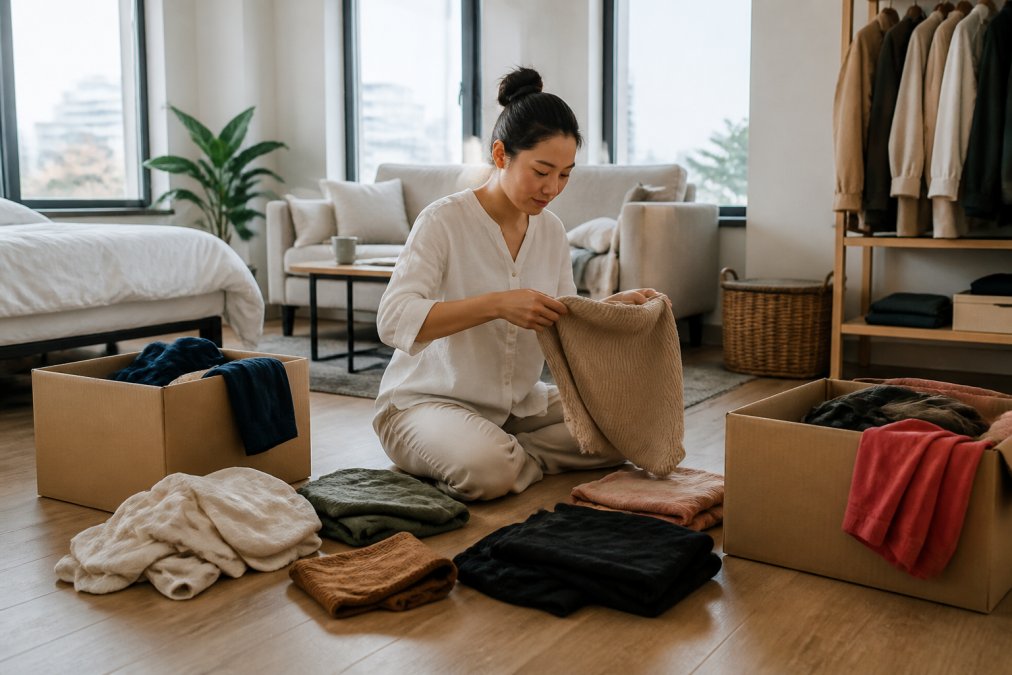
Be specific about what stays. Instead of "I might wear this someday," ask "Have I worn this in the past six months?" Instead of "This could be useful," ask "When was the last time I actually used it?" This clarity prevents the creep of unnecessary items back into your home.
Donate items in good condition to local charities or op shops. Discard broken items responsibly. The psychological benefit of removing clutter is genuine, your space feels larger, your mind feels clearer, and organizing what remains becomes manageable rather than overwhelming.
Vertical Storage Solutions for Renters
When floor space is limited, vertical storage solutions become essential. Look up, most small apartments have empty wall space that can be transformed into functional storage without permanent damage.
Wall-mounted shelving is the workhorse of small-space organization. Floating shelves, corner shelves, and ladder-style shelving all work well. The advantage for renters is that many options use adhesive strips or damage-free mounting systems rather than permanent fixtures. Install shelves above your desk, beside your bed, or along any wall that isn't blocking windows or doors. Stack books, display plants, store baskets, vertical space multiplies your storage capacity without eating into your floor plan.
Tension rods are underrated storage tools. Mount them inside cupboards or between walls to create hanging space for scarves, belts, or lightweight items. They're cheap, easy to install, and completely removable. Over-the-door organisers hang on existing doors and hold everything from shoes to cleaning supplies. Wall-mounted pegboards let you customize your storage layout and adjust it as your needs change.
The golden rule: measure twice, install once. Vertical storage only works if it's positioned where you actually access items. Shelving above your head is awkward to use regularly. Shelving at eye level is ideal for things you reach for often. Lower shelves work better for heavier items or things you need less frequently.
Multi-Functional Furniture for Small Apartments
Multi-functional furniture is the backbone of small-apartment living. Every piece should earn its place by doing more than one job.
A bed with storage drawers underneath gives you a sleeping surface and hidden storage in one footprint. Ottoman benches provide seating, a footrest, and often a lift-top compartment for blankets or seasonal items. A desk that folds against the wall gives you a workspace without consuming floor space all day. Shelving units that double as room dividers create zones in open-plan spaces while providing storage on both sides.
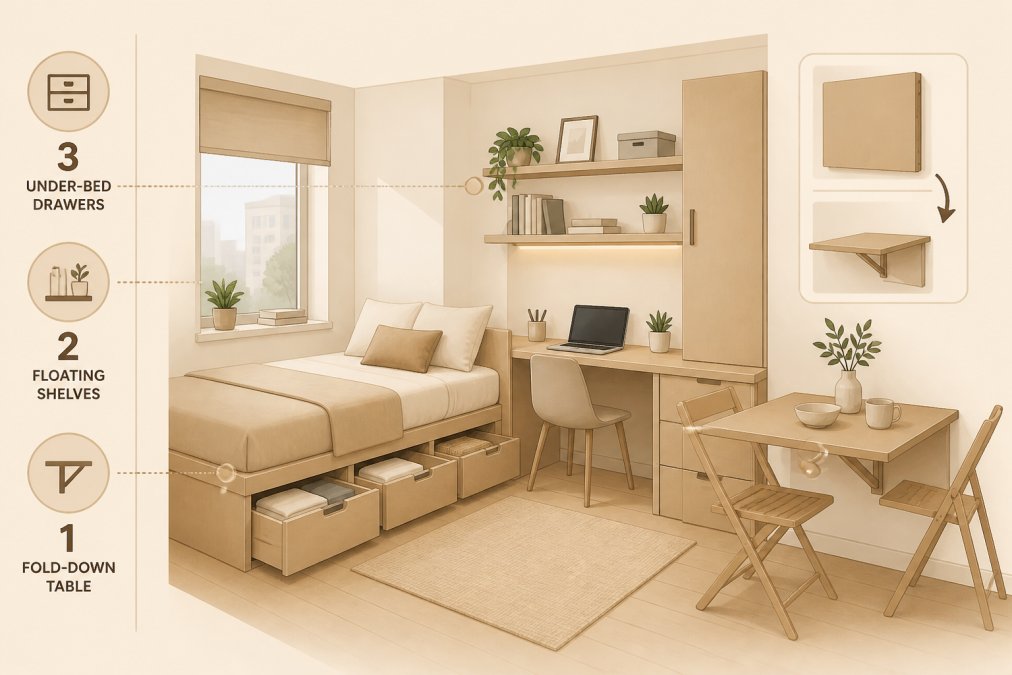
The Family Nest offers space-saving furniture designed specifically for compact living. Look for pieces with clean lines, built-in storage, and adjustable components. A dining table with drop leaves expands when you need it and shrinks to save space when you don't. A sofa with a pull-out bed handles guests without requiring a separate bedroom.
When choosing multi-functional furniture, prioritise quality construction. Flimsy pieces that wobble or break easily will frustrate you daily and end up in landfill within months. Invest in items built to last, with smooth-operating mechanisms and sturdy materials.
Implement Organizing Systems That Work
Once you've decluttered and chosen your furniture, the final step is creating organizing systems that actually stick. The best system is one you'll maintain consistently, not one that looks perfect in a magazine but collapses within weeks.
Start simple. Use clear containers so you can see what's inside without opening them. Label everything, shelves, drawers, boxes. This sounds basic, but it's the difference between an organized space and one that slowly descends into chaos. When everyone in your household knows where things belong, they're more likely to put them back.
Group items by category and keep categories together. All your office supplies in one zone. All your cleaning products in another. All your seasonal items in a third. This reduces the time you spend hunting for things and makes it obvious when you've run out of something.
The key to maintaining your system is making it easy to use. If returning something to its place requires moving three other items, you won't do it. If your organizing system is too complex, it will collapse. Aim for simplicity, a system a tired person at the end of the day can follow without thinking.
Under-Bed Storage Solutions
Under-bed storage is prime real estate in a small apartment. The space is already there; you're just using it intentionally rather than letting it become a dust-filled void.
Flat storage containers slide easily under most beds and hold seasonal clothing, extra bedding, or rarely-used items. Choose containers with wheels for easier access. Label them clearly so you know what's stored without pulling everything out. Keep frequently needed items in front and seasonal items further back.
Some beds come with built-in drawers, which is ideal. If yours doesn't, affordable under-bed storage boxes are available in various sizes. Measure the height clearance under your bed before buying, you need enough space for the container plus a few centimetres for airflow to prevent moisture buildup.
Avoid storing anything under the bed that requires regular access. This space works best for items you need occasionally: winter coats in summer, summer clothes in winter, extra pillows, spare blankets, or items you're keeping for future use.
Closet Organization Hacks
Closets are often the most poorly utilised storage in small apartments. A few simple changes multiply your usable space dramatically.
Use slim hangers instead of bulky wooden ones. This alone can increase your hanging capacity by 30-40%. Swap wire hangers for velvet hangers that prevent clothes from slipping. Hang items in the same direction for a neater appearance and easier browsing.
Double-hanging rods let you hang short items like shirts and jackets on one rod and longer items like dresses and coats on another, using the same vertical space twice. Install a second rod about 90 centimetres below the first.
Shelving above hanging rods stores folded items, bags, or boxes. Hooks on the inside of closet doors hold belts, scarves, or jewellery organisers. A small shelf or caddy on the floor holds shoes or bags. The goal is using every inch of your closet, not just the hanging rail.
Fold items using the vertical filing method, stand them upright in drawers so you can see everything at a glance. This prevents the "I forgot I had this" problem and makes getting dressed faster.
Wall-Mounted Storage and Shelving
Wall-mounted storage is the workhorse of vertical space-saving. It's visible, accessible, and transforms blank walls into functional zones.
Floating shelves look clean and modern while providing open storage. They work best for items you want to display or access frequently. A kitchen wall with floating shelves holds cookbooks, jars, and decorative items. A bedroom wall with floating shelves displays books, plants, and personal items. Avoid overcrowding shelves, negative space is part of good design.
Wall-mounted cabinets with doors hide clutter while keeping items accessible. These work well in kitchens, bathrooms, and bedrooms. They're especially useful for items you want stored but not on display.
Pegboards are customisable and work in any room. Hang hooks, baskets, and shelves to create a personalised storage system. Pegboards work brilliantly in home offices, kitchens, and craft spaces. You can rearrange them as your needs change.
Install shelving at appropriate heights for your needs. Eye-level shelving is ideal for frequently accessed items. Higher shelves work for lighter items or things you reach for less often. Lower shelves are better for heavier items or things you access while sitting.
Door-Back Organizers and Hidden Storage
Doors are often-forgotten storage real estate. Over-the-door organisers hang on existing doors and hold a surprising amount.
Shoe organisers with clear pockets hold shoes, but also scarves, belts, small accessories, or cleaning supplies. Fabric organisers with multiple compartments store everything from craft supplies to office items. Metal hooks hold bags, belts, or lightweight items.
Hidden storage compartments work well in small apartments where every square centimetre counts. A bench seat with a lift-top lid stores blankets or seasonal items. A bed skirt with pockets around the perimeter holds flat items like files or magazines. A headboard with built-in shelves provides storage without taking up additional floor space.
Look for furniture that disguises storage. An ottoman that opens. A side table with a drawer. A mirror with a hidden shelf. These pieces maintain a clean aesthetic while hiding clutter.
Maintain Your Organized Space
Organization isn't a one-time project, it's a habit you build. The difference between spaces that stay organized and those that descend into chaos is consistent maintenance.
Set a weekly 15-minute tidying routine. Put things back where they belong. Wipe down shelves. Reorganise anything that's drifted. This small habit prevents the buildup that requires another major decluttering session.
Adopt a one-in-one-out rule. When you bring something new into your apartment, remove something old. This prevents slow accumulation of clutter and keeps your space at a manageable level.
Review your system quarterly. What's working? What's not? If you're not using a storage solution, adjust it. If something is always messy, it probably needs a different approach. Small tweaks prevent frustration and keep your system functional.
The Family Nest recommends taking photos of your organized space. When things get messy, looking at the photo reminds you what the space looks like when it's functioning well. It's a small psychological trick that helps maintain motivation.
Small-apartment living requires intentional choices about what you keep and how you store it. The strategies in this guide, decluttering ruthlessly, using vertical space, choosing multi-functional furniture, and maintaining simple systems, work because they're based on the constraints of compact living, not wishful thinking about having more space than you do.
Start with assessment and decluttering. Choose one or two storage solutions that address your biggest pain points. Build from there. The Family Nest offers space-saving furniture and organizing solutions specifically designed for small apartments, with easy installation and flexible returns, so you can experiment with what works for your unique space without long-term commitment. A well-organized small apartment feels larger, functions better, and becomes a space you actually enjoy spending time in.
Frequently Asked Questions
How do you store things in a tiny apartment without taking up floor space?
Focus on vertical storage and multi-functional furniture. Use wall-mounted shelves, over-the-door organizers, and tension rods in cupboards to maximize vertical space. Choose furniture with built-in storage like beds with drawers or ottomans that open. Under-bed storage containers and adhesive hooks on walls keep items accessible without consuming precious floor space. The key is thinking upward rather than outward.
What are the best rental-friendly storage solutions for small apartments?
Renters should prioritize damage-free installation methods. Adhesive hooks, tension rods, and over-the-door organizers require no drilling or permanent installation. Freestanding modular shelving units can be moved when you relocate. Avoid anything requiring wall anchors or paint removal. Storage bins, baskets, and under-bed containers are portable and protect your bond. These solutions are easy to disassemble and take with you, making them ideal for temporary living situations.
How can I declutter effectively in a compact home?
Start by removing everything from one area, then sort into keep, donate, and discard piles. Be honest about what you actually use. In small spaces, every item must earn its place. Create an inventory of what you own so you avoid duplicate purchases. Set a rule: one item in means one item out. Focus on removing visual noise first, clutter-free surfaces make spaces feel larger. Small homes demand ruthless decision-making about what adds value to your daily life.
Will space-saving furniture and organization actually make a noticeable difference in my small apartment?
Yes, when approached strategically. The combination of decluttering, vertical storage, and multi-functional furniture typically frees up 20-30% more usable floor space. The real benefit is functional design, you'll find items faster, access storage more easily, and create distinct zones within your apartment. Beyond floor space, organized storage reduces visual clutter, making your apartment feel calmer and more spacious psychologically. The difference is both practical and aesthetic.
This article was written using GrandRanker