

Table of Contents
- Understanding the Lulu and Georgia Aesthetic
- The High-Low Design Framework for Budget Shopping
- Affordable Interior Design Hacks to Elevate Your Space
- How to Mix Textures in Interior Design for Visual Depth
- Layered Lighting and Sculptural Elements on a Budget
- Best Budget-Friendly Furniture Stores and Shopping Strategies
- DIY Upcycling and Material Quality Choices
- Creating Your Curated Space: Putting It All Together
- Frequently Asked Questions
Last Updated: September 26, 2026
Understanding the Lulu and Georgia Aesthetic
The Lulu and Georgia aesthetic blends high-end design with accessible pricing. Think sculptural lighting, layered textures, and curated spaces that feel intentional rather than cluttered. This style prioritises visual depth through mixed materials, neutral palettes, and statement pieces that anchor a room.
You don't need a six-figure budget to achieve the Lulu and Georgia aesthetic budget. The key is understanding the framework behind the aesthetic, then applying it strategically to your own space.
The aesthetic works because it mixes investment pieces with budget finds, a sculptural pendant light paired with affordable textiles, designer-inspired furniture next to upcycled treasures.
The High-Low Design Framework for Budget Shopping
Invest in pieces that anchor your space and last years, sculptural pendant lights, quality sofas, solid wood tables. Spend less on items you'll refresh seasonally: throw pillows, artwork, seasonal decor.
Your budget allocation should look something like this:
- Anchor pieces (furniture, lighting): 60% of budget
- Mid-range textiles and accessories: 25% of budget
- Affordable seasonal finds: 15% of budget
Identify your room's anchor pieces: in a bedroom, the bed frame and lighting; in a living room, the sofa and overhead fixture. Once you've allocated budget to those, everything else becomes negotiable.
Affordable Interior Design Hacks to Elevate Your Space
Layering is everything. Combine pendant lights, table lamps, wall sconces, and floor lamps. Each layer adds warmth and visual interest.
Choose neutral bases, then add personality. Neutral walls, furniture, and rugs form your canvas. Add colour and texture through smaller, swappable pieces: velvet cushions, geometric throws, sculptural vases.
Use architectural details you already have. Crown moulding, exposed brick, built-in shelving add visual richness. Highlight them with paint or lighting to create depth.
Mix old and new. Pair vintage wooden chairs with modern tables, antique mirrors with contemporary art. This contrast creates visual interest.
Invest in textiles strategically. Quality rugs define seating areas; linen drapes add softness and movement. These pieces need to be intentional.
How to Mix Textures in Interior Design for Visual Depth
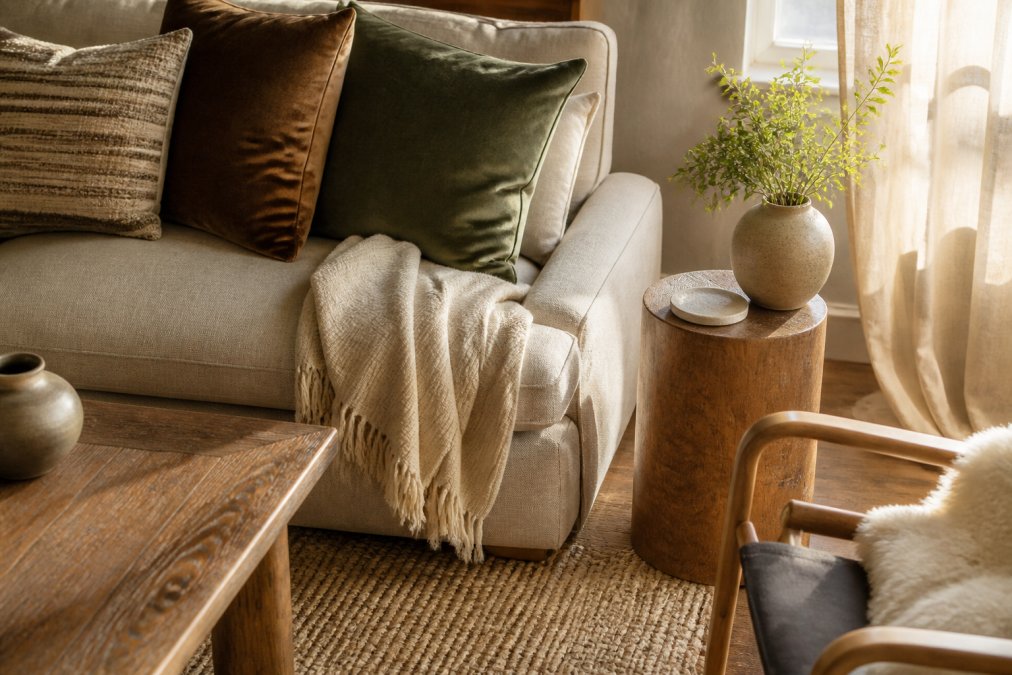
Mixing textures separates a flat room from one that feels alive.
Start with a base texture, your largest piece: sofa, rug, or wall treatment. Smooth linen feels refined; chunky knit feels cosy.
Add contrasting textures: smooth leather with soft velvet, rough jute with polished wood, matte ceramic with shiny brass.
Here's the framework:
| Texture Type | Examples | Best For |
|---|---|---|
| Soft | velvet, linen, wool | cushions, curtains, throws |
| Hard | wood, metal, ceramic | furniture frames, lighting, accessories |
| Rough | jute, sisal, linen | rugs, wall hangings, baskets |
| Shiny | brass, glass, mirrors | lighting, hardware, accents |
| Matte | concrete, plaster, unfinished wood | walls, larger furniture pieces |
Never use the same texture twice in the same visual space. If your sofa is velvet, your throw should be linen.
Layered Lighting and Sculptural Elements on a Budget
Lighting transforms how a space feels. Sculptural elements are functional and beautiful at once.
Layered lighting combines three types: ambient (overhead), task (desk or reading), and accent (decorative).
Start with affordable ambient lighting, then add sculptural pendants as focal points, and finish with task lighting.
Sculptural elements don't need to be expensive. Look for:
- Geometric pendant lights with interesting silhouettes
- Brass or matte black fixtures with architectural detail
- Candles in glass holders (creates soft shadows)
- Mirrors that reflect light and expand the space
- Textured lampshades that cast interesting shadows
Light hitting sculptural elements creates drama: a brass pendant becomes a statement, a textured shade casts intricate shadows.
End-of-season sales mark down statement pieces 40-60%. Shop strategically to build a designer-curated lighting collection.
Best Budget-Friendly Furniture Stores and Shopping Strategies
Finding affordable pieces requires a strategic framework: deciding what to buy new, what to buy secondhand, and when to wait for a sale.
The spend-versus-save framework by furniture category:
Invest new (durability matters more than cost):
- Sofas and beds: A quality sofa lasts 7-10 years; cheap ones look worn in 2-3 years. Invest 35-45% of your furniture budget here. Look for solid wood frames, eight-way hand-tied springs, and natural fabric blends.
- Dining tables: Solid wood or quality veneer ages beautifully; cheap laminate peels easily.
- Bed frames: A quality frame supports a mattress properly and won't creak or wobble.
Buy secondhand (character and savings outweigh minor wear):
- Wooden chairs and side tables: A 1970s wooden dining chair costs £15-30 secondhand and outperforms a new particle-board version at £40-60.
- Mirrors and artwork: Secondhand mirrors often have character new budget mirrors lack. Cost savings: 50-70%.
- Shelving and storage: Vintage wooden pieces are often solid construction; paint or refinish as needed.
- Lighting fixtures: Vintage brass, ceramic, or glass fixtures often have better design than new budget equivalents. Rewiring costs typically £30-60 per fixture.
Buy new on sale (timing matters, quality is secondary):
- Textiles: Buy during end-of-season sales when markdowns reach 40-60%.
- Seasonal decor: Shop clearance sections aggressively.
- Artwork and prints: Wait for sales and buy multiple pieces to layer.
Strategic shopping timeline:
Timing purchases around sales cycles saves 20-40%. Key windows: January-February (post-holiday clearance), May-June (end-of-year sales), August-September (end-of-summer), November-December (Black Friday, Cyber Monday, Boxing Day). Set price alerts to catch drops.
For anchor pieces, shop sales strategically but don't compromise on quality. For textiles and accessories, aggressive sale shopping is the right approach.
Where to source each category:
New furniture: Mid-range retailers offer better construction than budget chains at slightly higher prices. Compare frame construction, fabric content, and return policies.
Secondhand furniture:
- Charity shops: Lowest prices (£10-50), stock changes weekly.
- Online marketplaces: Larger selection; inspect photos carefully and ask about damage before committing.
- Local antique dealers: Higher prices but vetted quality, good for statement pieces.
- Facebook Marketplace and Gumtree: Direct from sellers, often negotiable.
Clearance and seasonal sales: Set up price alerts to catch drops before stock runs out.
One well-timed purchase of a quality sofa during a sale beats five regular-price purchases of cheaper alternatives, which is why the Lulu and Georgia aesthetic budget approach works so well. The Lulu and Georgia aesthetic works because every piece is chosen intentionally. Shopping strategy matters as much as where you shop.
DIY Upcycling and Material Quality Choices
Project 1: Paint and hardware refresh (4-6 hours)
- Source a wooden chair or small table (£15-40).
- Sand lightly, apply primer, then two coats of quality matte or satin paint in neutral or jewel tones.
- Replace hardware with brass or matte black knobs (£5-15 per piece).
- Total cost: £25-70. Designer equivalent: £200-400.
Project 2: Reupholster a chair seat or ottoman (6-8 hours)
- Choose a chair with removable seat pad (£10-30).
- Select quality fabric: linen, wool blend, or cotton canvas (£15-25 per metre).
- Remove seat, cut fabric with 5 cm excess, staple taut from centre outward, mitre corners, reattach.
- Total cost: £30-60. Designer equivalent: £150-300.
Project 3: Create an upholstered headboard (4-6 hours)
- Cut plywood to size (120-180 cm wide, 100-120 cm tall).
- Add 5 cm high-density foam with spray adhesive.
- Stretch quality fabric over foam and staple to back, pulling taut.
- Add decorative nails if desired. Mount with French cleat or brackets.
- Total cost: £60-120. Designer equivalent: £400-800.
The Lulu and Georgia aesthetic works because every piece, whether new or upcycled, is made from materials that photograph well and last. Upcycling on a budget doesn't mean cutting corners on materials; it means being strategic about where you source the base piece and investing in quality finishes and fabrics that transform it.
Creating Your Curated Space: Putting It All Together
Now you have the framework. Time to apply it to your actual space.
Frequently Asked Questions
What is the high-low design framework and how does it help create a Lulu and Georgia aesthetic on a budget?
The high-low framework pairs investment pieces (high) with budget-friendly finds (low) to create an elevated look without spending a fortune. Invest in statement items like a quality sofa or sculptural pendant light, then fill in with affordable textiles, rugs, and accessories. This approach gives you the curated, designer-inspired aesthetic while keeping costs manageable and allowing flexibility when you move or redecorate.
How can I use textures to make my space look expensive without spending more?
Layering different textures creates visual interest and depth that reads as intentional design. Combine velvet cushions with linen curtains, add a woven rug, incorporate wooden or metal accents, and use soft throws. These textural elements don't need to be expensive, affordable retailers stock quality basics. The combination of varied textures tricks the eye into perceiving sophistication, making budget pieces feel more curated and high-end.
What should I prioritise when allocating a limited budget for interior design?
Prioritise items you see and touch daily: your bed, sofa, and lighting. These anchor your space and deserve investment. Secondary priorities include rugs and window treatments, which define the room's aesthetic. Fill remaining budget with affordable accessories, textiles, and decor that can change seasonally or as trends shift. This strategy ensures your core pieces feel quality whilst allowing flexibility in smaller elements that cost less to replace.
Where can I find affordable furniture and decor that matches a designer aesthetic?
Look beyond traditional budget retailers, explore clearance sections, seasonal sales, and online marketplaces for designer-inspired alternatives. Many budget-friendly furniture stores now offer pieces styled after high-end brands. Mix new purchases with secondhand finds from local markets or online platforms. The key is patience: shop strategically across multiple sources rather than buying everything from one place, and wait for sales on investment pieces.