

Table of Contents
- Why Quality Furniture Is Worth the Investment
- Durability and Longevity: The Real Cost Difference
- How to Identify High Quality Furniture Before You Buy
- Cost Per Use Furniture Calculation: The Financial Case
- Australian Consumer Law Furniture Warranty and Protection
- Resale Value and Long-Term Financial Returns
- Sustainability and Environmental Impact
- Maintenance and Care: Protecting Your Investment
Last Updated: August 5, 2026
Why Quality Furniture Is Worth the Investment
Quality furniture delivers genuine long-term value through durability, comfort, and financial returns that cheap alternatives cannot match. When you calculate cost per use over years rather than months, premium furniture becomes the more economical choice.
The difference between a $300 sofa lasting three years and a $1,200 sofa lasting fifteen years isn't just longevity, it's how you live in your space. A frame that doesn't wobble, cushioning that maintains support, and upholstery that resists wear fundamentally change your daily experience. This guide explores why quality furniture represents one of the smartest investments for your home and how to identify genuine quality before committing your money.
Durability and Longevity: The Real Cost Difference
Quality furniture lasts longer because of materials and manufacturing. Solid wood construction with mortise-and-tenon joinery creates structural integrity that particleboard cannot replicate. Quality upholstery features higher density foam (typically 1.8 pounds per cubic foot or higher) that resists compression and maintains support for years. Budget pieces use staples and glue that fail gradually, staples pull loose, glue breaks down, and frames develop wobbles within years.
The real cost difference emerges over replacement cycles. A $400 bed frame lasting five years costs roughly $80 per year. A $1,200 frame lasting twenty years costs $60 per year. The premium piece is actually cheaper over time, plus you avoid the hassle and environmental cost of disposing of broken furniture multiple times.
Quality pieces develop character as they age, patina on wood, settled-in comfort in upholstery. Budget pieces simply deteriorate. You're more likely to care for and repair something worth maintaining.
How to Identify High Quality Furniture Before You Buy
Check the Frame and Joinery
The frame determines longevity more than anything else. Flip a chair or sofa upside down and examine construction. Look for solid wood rather than plywood or particleboard. Run your hand along joints, quality joinery shows no gaps. The wood should feel smooth and finished, not rough.
Check for mortise-and-tenon joints (where one piece of wood has a protruding section fitting into a cavity) or dowel joints (wooden pegs aligning two pieces). These indicate craftsmanship. Cheap construction relies on corner blocks screwed on afterward, a patch, not a solution.
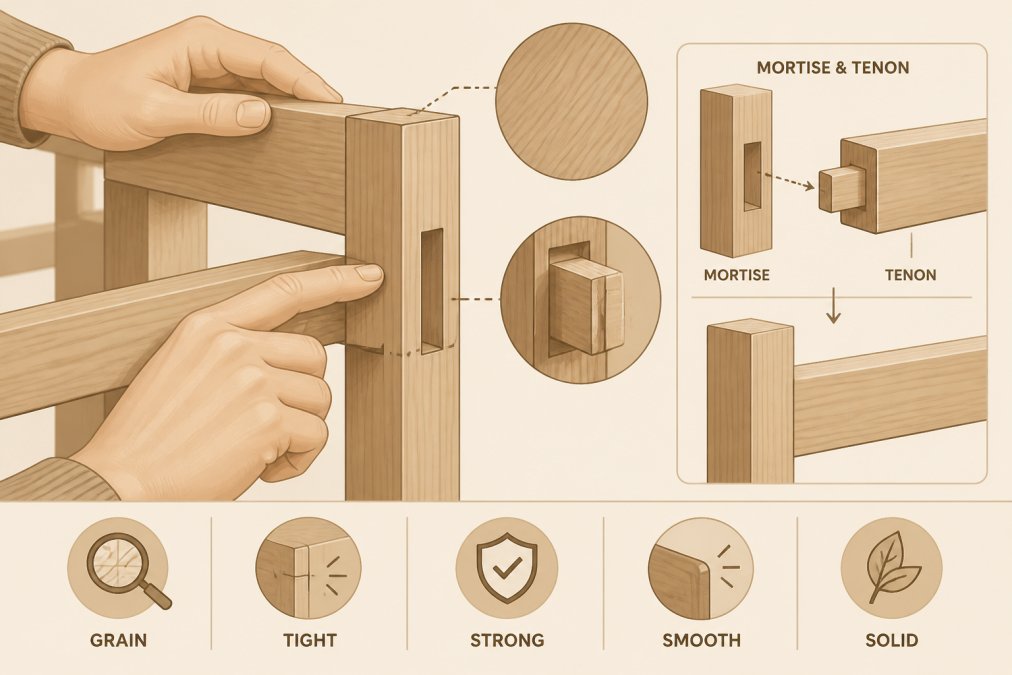
Press on different parts of the frame. Quality frames feel immovable. Flex indicates weak joinery or insufficient wood thickness. Creaking often means joints are already failing.
Examine Materials and Construction
Upholstery density is measurable. If you can press your hand into a cushion and feel the frame immediately beneath, the foam is too thin. Quality cushioning resists compression and springs back.
Run your fingers along seams. Quality upholstery features tight, even stitching. Loose seams start splitting within months. Check whether fabric is stapled or tacked, tacking is more secure and easier to repair.
For wood finishes, look at depth. Quality finishes show wood grain and natural colour variation. Cheap finishes are thin, uniform, and plastic-looking. They also chip and peel easily.
Feel the Structural Integrity
Sit on a chair or sofa and notice how it feels. Quality pieces feel confident and stable. Cheap pieces feel uncertain and shift. Push down on armrests, they should have some give, but not excessive flex. Try to move the piece slightly. Does the frame feel unified, or do different sections move independently?
Open drawers and test movement. Quality drawers glide smoothly and close with a satisfying click. Budget drawers stick, rattle, or have loose joints.
Cost Per Use Furniture Calculation: The Financial Case
Understanding cost per use transforms how you evaluate furniture investment. The formula is straightforward: total cost divided by years of use equals annual cost.
Consider a dining chair. A budget option costs $80 and lasts four years. A quality option costs $320 and lasts twenty years.
Budget chair: $80 ÷ 4 years = $20 per year, or $0.05 per day Quality chair: $320 ÷ 20 years = $16 per year, or $0.04 per day
The premium chair is cheaper per day. The real advantage appears when you factor in replacement hassle. You'll buy the budget chair five times over two decades. Each purchase involves research, shopping, delivery, disposal, and setup. The quality chair requires one purchase and occasional maintenance.
Most households underestimate how long they keep furniture. A sofa is a ten to fifteen year commitment if it's quality. A bed frame lasts even longer. When you calculate based on realistic timelines, the financial advantage of quality becomes undeniable.
Australian Consumer Law Furniture Warranty and Protection
When you invest in quality furniture in Australia, consumer protection laws provide important safeguards. Under the Australian Consumer Law, furniture must be of acceptable quality and fit for purpose. This applies regardless of whether you purchase from a retailer or manufacturer. Acceptable quality means the furniture must be safe, durable, and free from defects.
The Consumer Guarantees apply for a reasonable period of time, which for furniture typically extends several years depending on type and price. A $2,000 sofa has different durability expectations than a $200 side table. If a frame fails within a reasonable timeframe, you have the right to repair, replacement, or refund.
Documentation matters. Keep your receipt and warranty information. Most quality furniture makers honour their warranties because their products rarely fail. Budget manufacturers often refuse warranty claims by arguing damage resulted from misuse.
The Australian Consumer Law also protects you against misleading claims. If a retailer claims furniture is "handcrafted" or "solid wood" when it's actually particleboard, you have legal recourse. Purchasing from reputable sellers matters, they have more to lose by making false claims.
Resale Value and Long-Term Financial Returns
Quality furniture retains value in ways cheap furniture never will. A budget sofa depreciates to near-zero value within five years. A quality sofa from a respected maker often retains 40-60% of its original value after a decade, particularly if well-maintained.
Certain furniture styles and makers hold value exceptionally well. Classic designs from established manufacturers become more desirable over time. A twenty-year-old sofa from a quality maker often sells for more than a five-year-old budget piece.
The second-hand furniture market in Australia has expanded significantly. Many buyers specifically seek quality furniture because they've learned that cheap furniture isn't worth buying at any price. If you purchase a $1,200 sofa and use it for ten years, then sell it for $500, your actual cost is $700 over a decade. Quality furniture has effectively subsidised itself through resale value.
Sustainability and Environmental Impact
Quality furniture represents a more sustainable choice. Manufacturing furniture generates environmental cost through resource extraction, energy use, and transportation. When you replace furniture every five years instead of every twenty, you multiply that environmental impact fourfold.
Quality furniture enters a circular economy. When you eventually replace it, someone else purchases it second-hand. If it becomes unrepairable, solid wood can be recycled or repurposed. Quality upholstery can be reupholstered rather than discarded.
Quality makers typically source solid wood from managed forests with sustainability certifications. They select fabrics and finishes with environmental impact in mind. A piece lasting fifty years and passing through multiple owners has a dramatically lower environmental footprint per year of use than a piece lasting five years and becoming waste.
Maintenance and Care: Protecting Your Investment
Quality furniture requires maintenance, but this maintenance is straightforward and inexpensive. Wooden furniture benefits from occasional dusting with a soft, dry cloth. For deeper cleaning, use furniture oil or wax appropriate to the finish type. This takes minutes and costs minimal money.
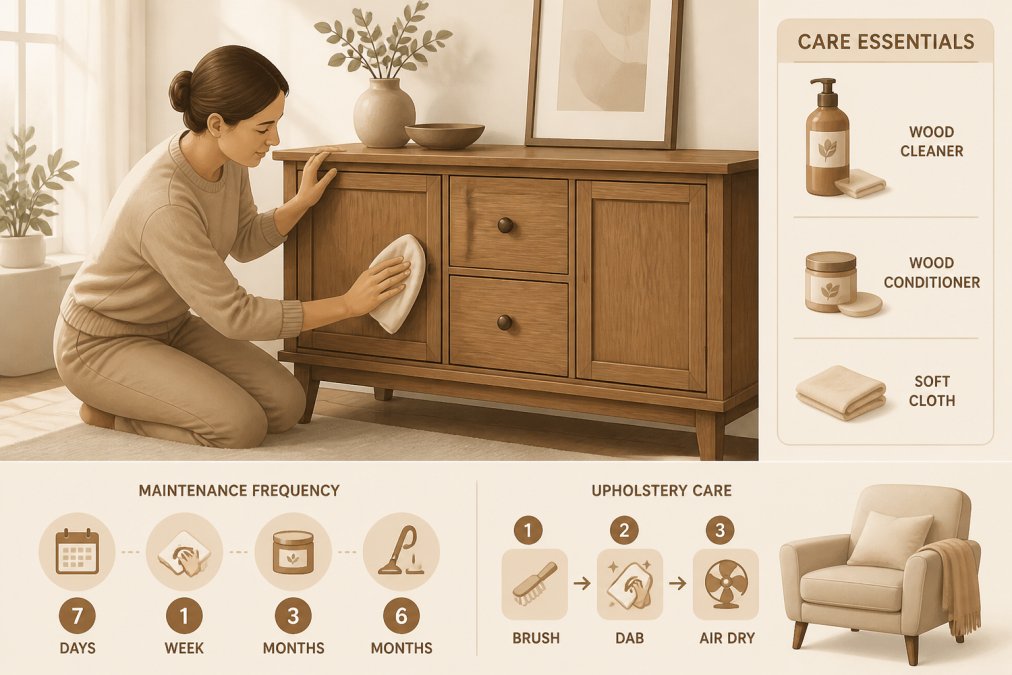
Upholstered pieces require vacuuming with an upholstery attachment every few months. Address spills immediately by blotting with a clean cloth. Professional upholstery cleaning every two to three years keeps fabric looking new.
Leather furniture requires regular dusting and occasional conditioning with leather-specific products. Quality leather actually improves with age, developing character and patina.
Preventative maintenance prevents expensive repairs later. A reupholstered sofa costs $1,500-3,000. Regular vacuuming and stain prevention costs nearly nothing. Most quality furniture makers provide care instructions, follow them.
Investing in quality furniture is investing in your daily comfort and your home's future. The financial case is clear: cost-per-use calculations reveal that premium pieces are cheaper over realistic timescales. The durability case is equally compelling: quality construction simply lasts longer and performs better. At The Family Nest, we understand that your home should reflect thoughtful choices, not impulse purchases. When you select furniture with durability, craftsmanship, and long-term value in mind, you're making decisions that improve your life for years to come. Start by identifying one investment piece and apply the inspection techniques covered here. You'll immediately notice the difference quality makes.
Frequently Asked Questions
Is it worth investing in quality furniture?
Yes, quality furniture delivers better value over time through durability, comfort, and resale potential. A well-made sofa or bed may cost more initially but lasts 10-15 years versus 3-5 years for budget alternatives. When you calculate cost per use, premium pieces often cost less per year of ownership. Quality furniture also maintains structural integrity, supports proper ergonomics, and holds resale value far better than fast furniture.
How can you tell if furniture is high quality before buying?
Inspect the frame construction: solid wood joinery is superior to stapled frames. Check for hardwood or engineered wood with proper support. Feel the cushioning density and structural stability by pressing and moving the piece. Examine finish quality for consistency and durability. Look at hardware and fasteners, quality furniture uses substantial hinges and screws, not cheap plastic. Read warranty terms; manufacturers confident in durability offer longer guarantees. Ask about material sourcing and manufacturing techniques.
How does cost per use of quality furniture compare to fast furniture?
A £3,000 sofa used daily for 12 years costs about £0.68 per use. A £800 budget sofa lasting 4 years costs about £0.55 per use initially, but replacement costs and disposal add hidden expenses. Over a 12-year period, buying three budget sofas totals £2,400 plus replacement hassle. Quality furniture spreads its higher upfront cost across many more years of use, making the per-use cost competitive while avoiding the environmental and financial burden of repeated replacements.
Does quality furniture hold its resale value in Australia?
Yes, quality furniture typically retains 40-60% of its value in the Australian second-hand market, particularly solid wood pieces and designer brands. Fast furniture depreciates rapidly and is often unsaleable. Heirloom-quality furniture with timeless design appreciates in value or holds steady. Australian Consumer Law protects your purchase, and pieces with proper documentation and minimal wear sell well. Building a collection of quality pieces creates a valuable home asset over time.
This article was written using GrandRanker