

Table of Contents
- Small Apartment Design: Making Every Square Metre Count
- Small Apartment Furniture Ideas That Deliver Real Results
- Space-Saving Interior Design Tips for Compact Living
- How to Style a Small Apartment on a Budget
- Choosing the Right Rug and Textiles
- Hidden Storage Hacks for Small Spaces
- Frequently Asked Questions
Last Updated: September 24, 2026
Small Apartment Design: Making Every Square Metre Count
Creating a functional and beautiful space in a small apartment requires intentional choices. Small apartment design isn't about cramming in more furniture, it's about selecting pieces that work harder and spaces that feel larger than they are. At The Family Nest, we help renters and first-time buyers transform compact living spaces into homes that feel both spacious and inviting.
The challenge most people face is treating a small apartment like a miniature version of a larger home. It isn't. Small spaces demand a different approach: multi-functional furniture, strategic use of vertical space, and a clear visual hierarchy that prevents visual clutter. These principles apply whether you're working with a studio or a one-bedroom flat.
Below, we'll walk you through seven proven ideas that actually move the needle, from furniture selection to styling tricks that create the illusion of space without requiring a renovation.
Small Apartment Furniture Ideas That Deliver Real Results
The foundation of any small apartment design starts with furniture choices. Not every piece needs to do double duty, but the ones you invest in should earn their place.
Multi-functional pieces that earn their place
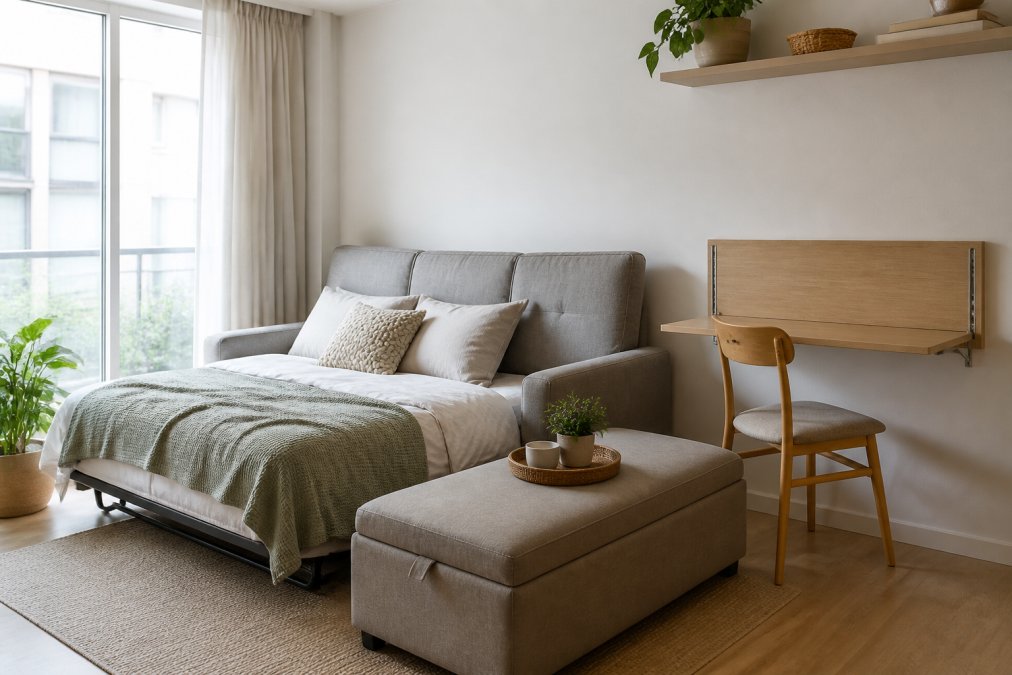
Multi-functional furniture is the most practical investment you can make in a small space. A storage ottoman serves as seating, a footrest, and hidden storage in one compact footprint. A sofa bed transforms your living room into a guest bedroom without needing a dedicated space. Wall-mounted desks fold up when you're not working, reclaiming floor space instantly.
The key is choosing pieces that don't feel like compromises. A quality storage bench at the foot of your bed provides seating, storage, and visual balance, it doesn't feel like you're "making do." Look for furniture with clean lines and proportional scale; oversized pieces overwhelm small rooms even if they're technically multi-functional.
Vertical storage and shelving to reclaim floor space
Floor space is your most valuable real estate in a small apartment. Vertical storage transforms walls into functional storage without consuming the square footage you need for movement and living.
Floating shelves are the most obvious choice, but they work best when styled deliberately. Three shelves above a desk or sofa create visual rhythm without feeling cluttered. Open shelving works best for items you actually use regularly, books, decorative objects, everyday kitchen items. Closed storage (cabinets, wardrobes) handles the rest and keeps visual noise down.
The most overlooked vertical storage opportunity is the space above doorways and windows. Tall, narrow bookcases fit perfectly in corners. Wall-mounted coat racks and hooks eliminate the need for a coat stand. Even the wall space behind your bedroom door can hold a narrow shelving unit or pegboard for organisation.
Space-Saving Interior Design Tips for Compact Living
Beyond furniture selection, how you design the overall space determines whether it feels cramped or intentional.
Strategic lighting that opens up the room
Lighting is one of the most underrated tools in small apartment design. Poor lighting makes spaces feel smaller and more claustrophobic. Good lighting makes them feel larger and more intentional.
Layered lighting is essential. A single overhead light creates harsh shadows and flattens the room. Combine ambient lighting (ceiling fixture or wall sconces), task lighting (desk lamp, reading light), and accent lighting (string lights, candles, or decorative lamps) to create depth and visual interest.
Avoid heavy floor lamps that consume floor space. Instead, use wall-mounted sconces beside your bed or sofa, clip-on reading lights, and pendant lights hung from the ceiling. Light-coloured lampshades diffuse light more evenly than dark ones. Mirrors placed strategically opposite windows or light sources bounce light around the room, making it feel airier.
Colour palettes and visual weight
Colour choice directly impacts whether a small space feels open or confined. Light, neutral base colours (soft whites, warm greys, pale greiges) make walls recede and feel further away. This creates the illusion of more square footage.
That doesn't mean your apartment has to feel sterile. Layer in colour through textiles, art, and accent pieces that you can change seasonally. A jewel-toned throw pillow, a colourful rug, or artwork with deeper tones add personality without overwhelming the space. The rule: keep walls and large furniture neutral, and introduce colour through smaller, replaceable items.
Visual weight matters as much as colour. A dark, heavy sofa visually anchors a room and can make it feel smaller. A lighter-coloured or leggy sofa (one with visible legs rather than a skirted base) feels less heavy and allows sight lines to continue underneath, making the room feel more open.
Acoustic management for peace and quiet
Small apartments often mean thin walls and proximity to neighbours. Acoustic management isn't just about comfort, it's about whether your space feels like a retreat or a noisy, stressful environment.
Soft furnishings absorb sound. Layering rugs, adding curtains or heavy drapes, and using upholstered furniture reduces echo and muffles outside noise. A bookshelf filled with books acts as a sound barrier. Even strategically placed plants and textiles help. Avoid hard surfaces like bare wood or tile, which reflect sound and make spaces feel noisier.
For renters, acoustic panels designed to look like art or decor can be hung without damaging walls. Heavier curtains work better than sheer ones for sound dampening. These modifications create a quieter, more peaceful environment without requiring permanent changes.
How to Style a Small Apartment on a Budget
Good design doesn't require a large budget. Strategic choices and intentional curation matter more than spending heavily.
Curating a cohesive aesthetic without overspending
The biggest mistake people make is buying one-off pieces that don't connect. A cohesive aesthetic comes from choosing a consistent colour palette, style direction, and material palette, then sticking to it.
Start by identifying your style: minimalist, bohemian, mid-century modern, industrial, or something in between. Every piece you bring in should align with that direction. This doesn't mean everything matches, it means it speaks the same visual language. A minimalist space uses clean lines, neutral colours, and functional pieces. A bohemian space layers textures, patterns, and warm, earthy tones.
Shop secondhand and vintage first. Thrift stores, online marketplaces, and vintage shops offer unique pieces at a fraction of retail cost. A vintage side table or bookshelf often has more character than a new one. The Family Nest offers well-designed pieces that don't require compromise on quality, you get durability without overpaying for brand names.
Invest in foundational pieces (bed, sofa, dining table) and spend less on items you'll replace seasonally (throw pillows, artwork, plants). This approach keeps your budget flexible and lets you evolve your space over time.
Rental-friendly modifications that don't damage walls
If you're renting, you need design solutions that don't require permanent changes. Removable wallpaper, peel-and-stick decals, and command hooks let you personalise without losing your deposit.
Furniture arrangement matters more than you might think. Floating furniture away from walls (rather than pushing everything to the perimeter) creates intimacy and makes the space feel intentional. A sofa pulled 30 centimetres from the wall creates a defined seating area without needing walls or dividers.
Curtain rods and tension rods can hang without drilling. Removable adhesive strips hold lightweight shelves and artwork. Even a large area rug defines zones and adds warmth without permanent installation. These modifications transform a blank rental into a home that feels like yours.
Choosing the Right Rug and Textiles
A rug anchors a room and defines space. In small apartments, rug size matters significantly.
A rug that's too small makes the room feel fragmented. In a living room, the rug should be large enough that at least the front legs of your sofa sit on it, ideally, all four legs. This creates visual cohesion and makes the space feel intentional.
| Textile Element | Best For Small Spaces | Why It Works |
|---|---|---|
| Lightweight throws | Sofa layering | Adds texture without visual weight |
| Linen curtains | Windows | Diffuses light while maintaining airiness |
| Wool rugs | Grounding spaces | Durable and sound-absorbing |
| Cotton cushions | Seating areas | Breathable and easy to wash |
| Velvet accents | Statement pieces | Adds luxury with minimal square footage |
Hidden Storage Hacks for Small Spaces
Storage is the difference between a cluttered small apartment and an organised one. Visible clutter makes spaces feel smaller.
Frequently Asked Questions
How can I make a small apartment look more luxurious without spending a fortune?
Focus on texture layering, quality over quantity, and curated accent pieces rather than filling every corner. Choose one or two statement pieces in natural materials like wood or metal, add soft textiles with depth, and use strategic lighting to create ambiance. Decluttering is free and instantly elevates any small space. A few well-chosen home decor items, a quality rug, vintage mirror, or plant, create a more intentional, luxurious feel than many cheaper pieces.
What are the best space-saving furniture pieces for small apartments?
Multi-functional furniture is essential: ottomans with hidden storage, nesting tables, wall-mounted desks, and sofa beds. Vertical storage solutions like floor-to-ceiling shelving maximise square footage without eating floor space. Look for pieces with slim profiles and exposed legs rather than solid bases, they create visual lightness. The Family Nest specialises in compact designs, with easy installation guides so you can rearrange as your needs change.
How do I know if furniture will actually fit and work in my small apartment?
Measure your floor plan carefully, including doorways and any obstacles. Consider the visual weight of each piece, darker, bulky furniture overwhelms small rooms more than lighter, open designs. Check return policies before ordering online; The Family Nest offers a 30-day return period and free returns, so you can test pieces in your space. Take photos of your layout and bring measurements when shopping to avoid costly mistakes.
What interior design styles work best for compact homes?
Minimalist, Scandinavian, and contemporary styles naturally suit small spaces because they prioritise clean lines and reduce visual clutter. Boho and eclectic styles can work if you curate carefully, choose textured, patterned pieces strategically rather than layering too many. Avoid overly ornate or dark aesthetics that close in a room. The key is choosing a cohesive colour palette and sticking to it, so your small apartment feels intentional rather than cramped.