

Table of Contents
- Why Smart Organization Solutions Matter for Families
- Digital Family Command Centres: The Hub of Your Household
- Physical Storage Systems: Toy Storage Solutions Australia Families Trust
- Meal Planning for Families Australia: Streamline Your Kitchen
- Laundry Room Organisation Ideas Australia: Routines That Reduce Chaos
- Vertical Space Maximization: Making Small Homes Work Harder
- Neurodivergent-Friendly Organization: Systems That Reduce Overwhelm
- Sustainable Organization: Decluttering Without Waste
Smart Organization Solutions for Families: 12 Systems That Work
Last Updated: August 2, 2026
Why Smart Organization Solutions Matter for Families
Smart organization solutions for families reclaim time, reduce stress, and create systems that work with how families actually live. Research from Harvard Business Review's study on household management shows that families with structured organization systems report 34% less daily stress and significantly fewer arguments about household responsibilities.
The families who succeed combine digital tools with physical systems matching their actual behaviour. The difference between thriving and chaos often comes down to whether the organizational approach is reactive or proactive.
This guide covers 12 proven smart organization solutions: digital coordination, physical storage, meal planning, laundry routines, and neurodivergent-friendly systems.
Digital Family Command Centres: The Hub of Your Household
A digital family command centre is the nervous system of organized family life. One central location becomes the source of truth for schedules, tasks, and household information instead of information scattered across multiple apps and sticky notes.
The best digital command centres combine three core functions: a shared calendar where every family member can see commitments, task management that assigns chores without constant reminders, and a communication layer so messages don't get lost.
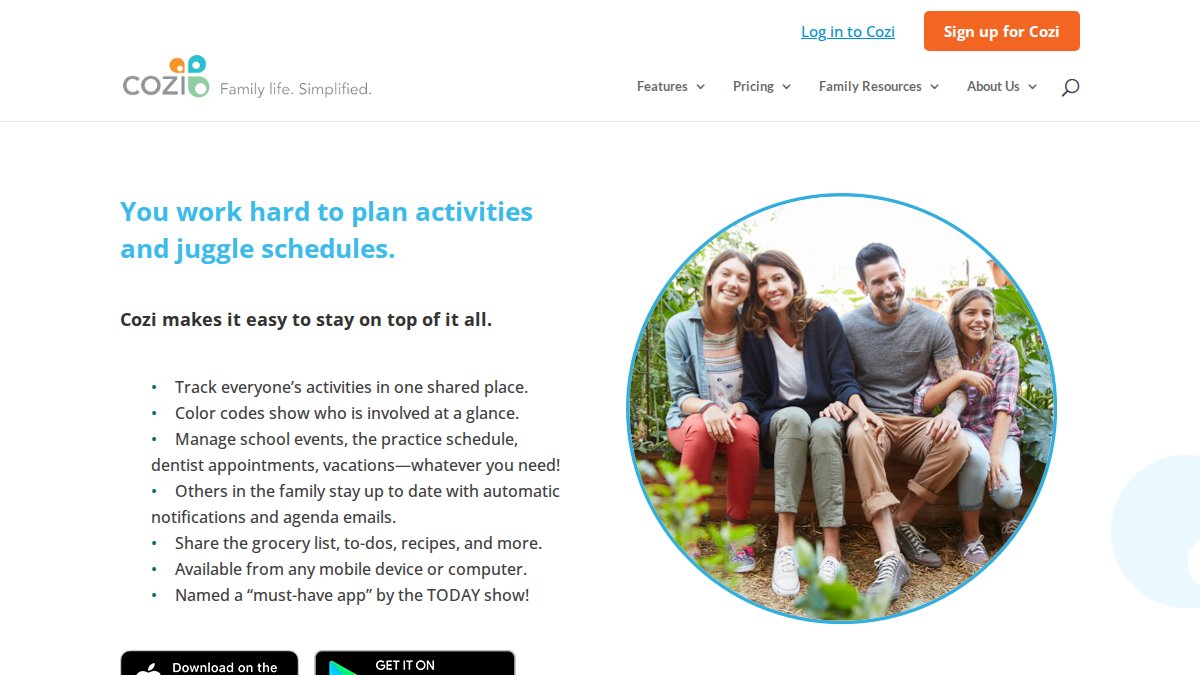
Cozi Family Organizer is purpose-built for this need. The app provides a colour-coded shared calendar where each family member gets their own colour, making commitments instantly visible. It integrates shopping lists and meal planning into the same interface, so ingredients flow directly from recipes into your shopping list. The free tier covers basic calendar and list functionality, while Cozi Gold ($39 per year) removes ads and adds recipe storage.
Shared Calendars and Scheduling Tools
Shared calendars solve the "who's picking up who" problem that derails afternoons. Colour-code by person: when Dad's commitments are blue, Mum's are green, and each child has their own colour, you can scan a week and instantly see load balancing.
Google Calendar handles this for tech-forward families, but requires manual setup. Any.do's personal life management features includes a unified calendar with task integration, showing both scheduled events and pending tasks in one view. For families with mixed tech comfort levels, Cozi remains the simplest entry point.
Task and Chore Management Apps
Assigning chores verbally fails because memory is unreliable. Digital task assignment works because notifications reach people where they actually pay attention: their phones.
Chores Done is Australian-made specifically for family chore management. It separates parent and child logins, allowing kids to log completed tasks for parents to approve, then automatically updates pocket money based on approved work.
For comprehensive tools, Any.do includes task assignment with cross-device sync at $4.99 USD per user per month (billed annually).
Physical Storage Systems: Toy Storage Solutions Australia Families Trust
Digital systems manage the schedule; physical systems manage the stuff. Effective toy storage solutions share three characteristics: clear visibility, accessibility for children, and honest capacity.
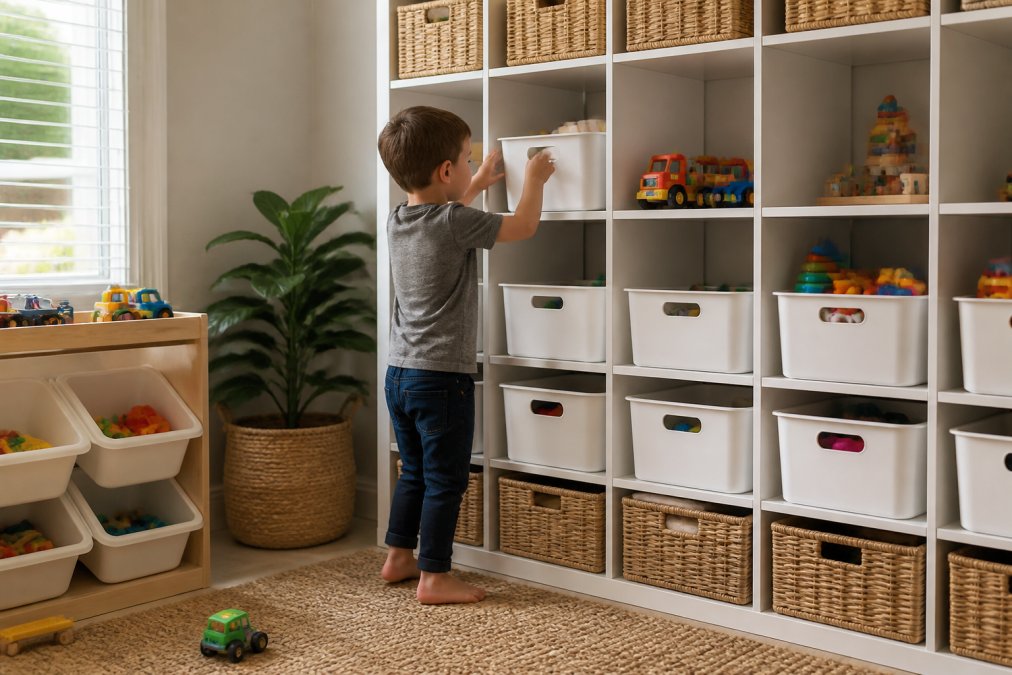
Audit what you actually have, decide what stays, then choose containers that fit the volume. A child with 200 toys in a bedroom designed for 80 will always live in chaos, regardless of container quality.
Creating Functional Zones for Different Items
Functional zones assign each category of items a specific location. Toys live in the playroom, school supplies in the study, art materials in the kitchen, sports equipment in the garage. This creates predictability so children can find and return items without asking.
Vertical space maximization is essential. Wall-mounted shelving holds far more than floor-based storage and keeps items visible. Open shelving with labeled containers works better than drawers for toys.
High-traffic zones (entryway, kitchen) should contain items used daily. Seasonal or occasional items belong in less-prime real estate. Items children use independently should be at child height.
Labeling Systems That Stick
Labels solve the "where does this go" problem that causes clutter to accumulate. Effective labels include both pictures and words so children who can't read yet can match a picture of Lego to a Lego picture on a bin.
The Brother P-touch Cube Pro label printer specifications produces durable, laminated labels that survive water, fading, and repeated peeling. At approximately $299 AUD, it's a one-time investment that prevents "what goes where" arguments.
Colour-coding works alongside labelling. Red containers for art supplies, blue for building toys, green for outdoor equipment. This visual system works for children too young to read and speeds up tidying for everyone.
Meal Planning for Families Australia: Simplify Your Kitchen
Meal planning transforms the kitchen from daily crisis into a manageable routine. When meals are planned a week in advance, shopping becomes a checklist rather than improvisation.
Plan meals you actually cook rather than ambitious recipes requiring specialty ingredients.
From Recipes to Shopping Lists
Plan to Eat bridges recipe collection and grocery shopping. The app lets you import recipes or enter family recipes manually, then build a meal plan by dragging recipes into a calendar. Once your week is planned, the app generates a shopping list automatically, combining ingredients across recipes so you don't buy duplicates. At $5.95 USD per month or $49 USD per year (after a 14-day free trial), it justifies the time saved.
Cozi Family Organizer includes a recipe box and meal planner that feeds directly into shopping lists. The advantage is consolidation: your calendar, shopping list, and meal plan all live in one app.
The Thermomix TM6 includes Cookidoo integration, providing access to thousands of recipes with step-by-step guidance and automatic shopping list generation. At $2,579 AUD, it's a significant investment, but for families cooking regularly, it consolidates multiple appliances into one device.
Laundry Room Organisation Ideas Australia: Routines That Reduce Chaos
Laundry chaos stems from unclear routines, not laziness. When each family member's laundry follows a predictable schedule, wash Monday, dry Tuesday, fold Wednesday, the task becomes automatic rather than overwhelming.
Assigning each person a laundry day works well. Monday is the seven-year-old's clothes, Tuesday is the teenager's, Wednesday is parents' clothes, Thursday is towels and sheets. This prevents chaos from washing everything together and sorting for hours.
Vertical space in the laundry room matters. Shelving above the washing machine holds detergent and folding baskets. A hanging rod for clothes straight from the dryer prevents wrinkling. Labelled bins for each person's clean clothes prevent confusion.
A shared calendar event on laundry day reminds family members to check if their clean clothes have been returned to their room.
Vertical Space Maximization: Making Small Homes Work Harder
Australian homes, particularly in urban areas, often have limited floor space. Vertical space maximization is the difference between a home feeling cluttered and one feeling functional.
Wall-mounted shelving holds significantly more than floor-based furniture. Items used frequently should be at arm height; items used occasionally can be higher; items rarely used can be in hardest-to-reach spots.
Multi-functional furniture maximizes space in small homes. A bed with drawers underneath stores off-season clothes or toys. A storage ottoman provides seating and hidden storage. A desk with shelving above combines workspace with storage. The Family Nest specializes in space-saving furniture designed for families.
Under-bed storage containers hold items not needing frequent access: spare bedding, seasonal decorations, off-season clothes. Clear containers let you see contents without opening each one.
Neurodivergent-Friendly Organization: Systems That Reduce Overwhelm
Standard organization advice fails for neurodivergent brains. Systems relying on memory, complex decision-making, or sustained focus create failure points. Neurodivergent-friendly organization removes decision-making, automates routines, and uses external systems instead of willpower.
Reduce the number of decisions required daily. When a child with ADHD must decide where to put their backpack each morning, it becomes friction. When the backpack has one designated spot and a visual reminder, the decision vanishes.
Visual systems work better than verbal instructions. A checklist with pictures and words beats a parent saying "get ready for school." A colour-coded calendar beats a written schedule. A timer showing time passing visually beats a parent saying "you have ten minutes."
Task breakdown is essential. "Clean your room" is overwhelming; "put all clothes in the hamper, then make your bed, then put books on the shelf" is manageable. Digital task apps like Chores Done or Any.do break tasks into steps.
Sensory considerations matter. Some neurodivergent individuals are overwhelmed by visual clutter, so minimalist storage with closed bins works better. Others need to see options, so open shelving with clear containers works better. The system must match the person's sensory profile.
Routine automation removes the need for executive function each day. If laundry happens on the same day each week, the brain learns the pattern.
Sustainable Organization: Decluttering Without Waste
Decluttering typically means discarding items, creating waste and guilt. Sustainable organization keeps useful items in circulation rather than landfill.
Audit honestly. Many families hold onto items "just in case" without using them. Ask: "Am I using this now, and is it in good condition?"
Items in good condition have multiple paths: donate to local charities, sell via Facebook Marketplace or Vinted, gift to friends with younger children, or pass to siblings. This keeps items in use rather than in landfill.
Every item you keep requires storage space, mental energy, and maintenance time. Keeping less means more space, less clutter, and lower household maintenance burden. Sustainable organization also means buying less going forward.
Smart organization solutions for families aren't about perfection or Pinterest-worthy aesthetics, they're about systems that reduce daily friction and create space for what matters. The families who succeed combine one digital hub (like Cozi or Any.do) with 2-3 physical systems tailored to their home and routines. The Family Nest provides the furniture and storage solutions that make these systems work in real homes, with easy installation, free returns, and 30-day guarantees so you can adjust your setup as your family's needs evolve. Start with one system, prove it works, then build from there.
| System | Purpose | Time to Set Up | Best For |
|---|---|---|---|
| Shared Calendar (Cozi) | Schedule coordination | 30 minutes | Families with multiple commitments |
| Chore App (Chores Done) | Task assignment & tracking | 20 minutes | Families wanting automated pocket money |
| Meal Planning (Plan to Eat) | Recipe & shopping integration | 45 minutes | Families cooking regularly |
| Toy Storage Zones | Physical organization | 2-3 hours | Families with limited space |
| Labeling System (Brother Printer) | Item identification | 1 hour setup + ongoing | All families |
| Laundry Routine | Predictable schedules | 10 minutes to establish | Families with multiple people |
| Vertical Shelving | Space maximization | 1-2 hours installation | Small homes & apartments |
| Neurodivergent Adaptations | Reduced decision-making | Varies | Families with ADHD, autism, or similar |
Frequently Asked Questions
What are the best smart organization solutions for families in Australia?
The most effective smart organization solutions combine digital tools (shared calendars, chore apps, meal planners) with physical storage systems (labeled bins, functional zones, vertical shelving). Apps like Cozi Family Organizer and Chores Done help coordinate schedules and tasks, while multi-functional furniture and labeling systems maximize space. The best approach tailors these tools to your family's specific needs, whether managing school routines, toy storage, or laundry workflows.
How do I create a family command centre in Australia?
A family command centre combines a shared digital calendar, task list, and meal plan accessible to all family members. Start with a digital hub using apps like Cozi or Any.do, then add a physical touchpoint, a wall-mounted calendar, whiteboard, or bulletin board where family members can see at-a-glance information. Include sections for weekly schedules, upcoming appointments, meal plans, and chore assignments. Keep it visible in a high-traffic area like the kitchen.
What's the best way to organize toy storage for Australian families?
Divide toys into functional zones based on type (building blocks, dolls, vehicles, art supplies) and store each in labeled, clear containers. Use vertical space with wall-mounted shelves or under-bed storage to maximize room. Rotate toys monthly to reduce overwhelm and maintain engagement. Label containers with both text and pictures so young children can identify contents. Multi-functional furniture like storage ottomans or benches doubles as seating while keeping toys accessible.
How can I organize my laundry room to manage a family's washing routine?
Create designated zones for sorting (darks, lights, delicates), washing, drying, and folding. Use labeled hampers for each family member or clothing type. Install shelving for detergents, softeners, and supplies, keeping frequently used items at eye level. Consider a folding table or wall-mounted drying rack to streamline the process. Establish a weekly laundry routine, assigning specific days for washing, folding, and returning items to bedrooms, to prevent pile-up and distribute the workload.
What digital tools help families stay organized in Australia?
Popular Australian-friendly options include Cozi Family Organizer (shared calendars, meal planning, shopping lists), Chores Done (chore tracking and pocket money management designed in Australia), Plan to Eat (meal planning and recipe storage), and Any.do (task management across devices). Google Nest Hub Max works as a central family display for reminders and video calls. Choose tools that integrate with your existing devices and match your family's communication style.
This article was written using GrandRanker