

Table of Contents
- Why Floor Lamps Work for Small Bedrooms
- Best Floor Lamps for Small Bedrooms
- Floor Lamp Placement in Your Bedroom
- Small Bedroom Lighting Ideas Beyond the Basics
- Layered Lighting for Bedrooms: Combining Floor Lamps with Other Light Sources
- Practical Considerations: Safety, Renter-Friendly Options, and Budget
- Frequently Asked Questions
Last Updated: October 10, 2026
Why Floor Lamps Work for Small Bedrooms
Floor lamps give you complete control over light placement, angle them toward dark corners, position them beside your bed for reading, or tuck them between furniture without installation hassle.
Small bedrooms often lack adequate overhead lighting, and renters can't install new ceiling fixtures. Using floor lamps to brighten small bedrooms adds warmth, creates functional task lighting, and makes your space feel larger by directing light exactly where you need it.
Floor lamps are flexible; move them as your needs change, making them ideal for renters and anyone who wants stylish lighting without permanent commitment.
Best Floor Lamps for Small Bedrooms
The right design matters. Slim, vertical lamps take up minimal floor space; arc lamps reach over furniture; column lamps draw the eye upward, making rooms feel taller.
Slim and Skinny Designs
Slim floor lamps occupy minimal floor space while delivering excellent light output, fitting corners or beside beds without dominating the room.
Look for lamps with a footprint under 30 centimetres wide. Many slim lamps have adjustable heads or swivel features for precise light direction, giving you focused task lighting without visual bulk.
The best slim designs combine function with aesthetics; a white shade or natural timber finish complements most bedroom décor while adding statement-piece quality.
Arc and Tripod Styles
Arc lamps curve light over furniture, extending the light source away from the base so you get brightness without the lamp taking up floor space directly beneath the light.
Tripod lamps offer similar advantages with three legs spread for stability while keeping the footprint small, with adjustable height and angle for light control.
Both arc and tripod styles function as statement pieces while solving your lighting challenge. Choose finishes like matte black, brushed gold, or natural wood that complement your décor.
Column Lamps for Vertical Space
Column lamps draw the eye upward, making small bedrooms feel taller. These sleek, vertical designs take minimal floor space while adding ambient light and a sense of height.
Position column lamps beside your bed, in a corner, or next to a desk. Many feature dimmer switches, letting you adjust brightness from soft evening glow to brighter reading light.
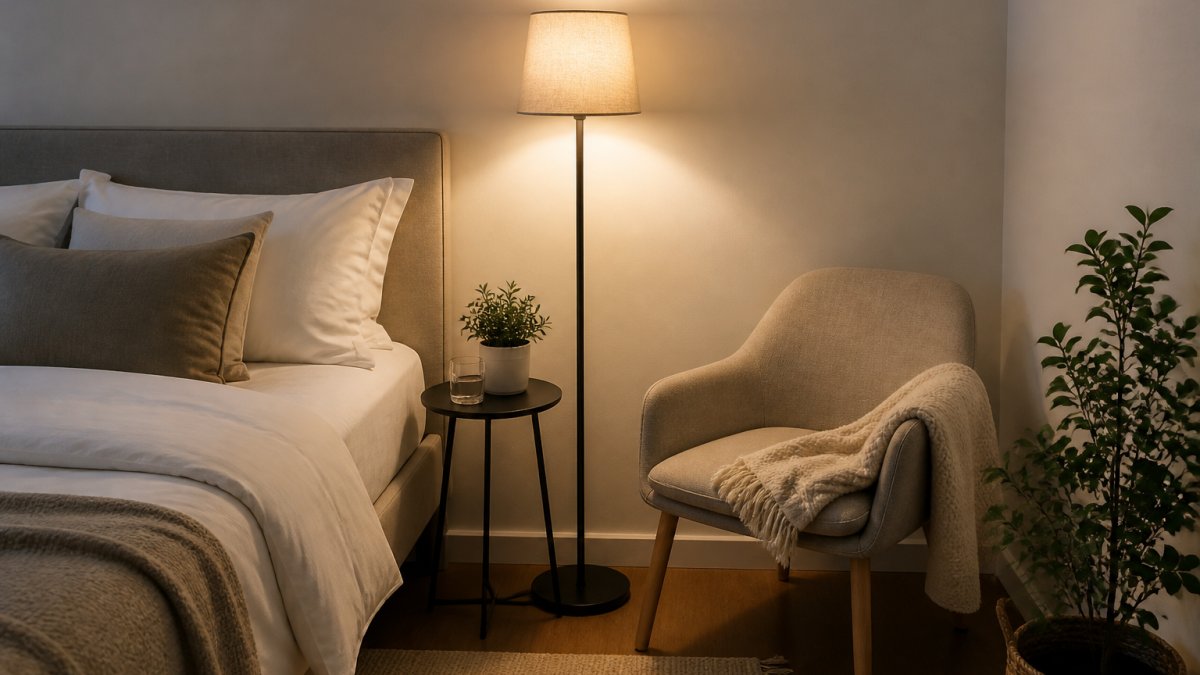
Floor Lamp Placement in Your Bedroom
Where you position your lamp matters as much as which style you choose. Smart placement brightens dark areas, supports reading and work, and makes your small bedroom feel larger.
Beside the Bed for Reading Light
Positioning a floor lamp beside your bed creates dedicated reading light for comfortable reading without waking a partner. An adjustable head gives you control over light direction.
Place the lamp on the side where you typically read, close enough for clear light but far enough back to not block movement. Slim or arc lamps work well here.
Pair a bedside floor lamp with a dimmer switch to reduce brightness for a soft evening glow before sleep, making reading comfortable without harsh overhead lights.
In Dark Corners to Brighten Shadows
A floor lamp in a shadowy corner fills that space with ambient light, brightening the whole room and making the corner feel less like wasted space.
Position the lamp in the corner where you need light most, angling the shade so light spreads across the room. A tall lamp or arc design reaches above furniture and distributes light broadly.
Corner placement works when you don't have much floor space elsewhere, providing ambient light without interfering with other furniture, especially useful in studio apartments.
Between Furniture When Space Is Tight
In very small bedrooms, position a lamp between your bed and desk, or in the gap beside a wardrobe. This tucked-away placement keeps your layout functional while adding light.
Ensure the lamp is stable with a flat base that won't tip. Avoid blocking doorways or walking paths; the goal is adding light without creating obstacles.
Slim and column lamp designs fit tight spaces where wider lamps would be impractical. Renters love this approach because it requires no installation.
Small Bedroom Lighting Ideas Beyond the Basics
Bulb specifications, glare management, and light distribution affect how well your lamp works. These practical details make the difference between a lamp that looks nice and one that genuinely improves your space.
Choosing the Right Brightness and Bulb Specifications
For small bedrooms, aim for a lamp that produces between 400 and 800 lumens, enough light for reading and work without being harsh or energy-intensive. According to industry benchmarks, this lumen range is ideal for task lighting in smaller spaces Lumens explained.
Check the lamp's specifications before buying. Look for the maximum wattage it accepts and the lumen output at that wattage. LED bulbs are more efficient than older incandescent types, so you get more brightness using less power. This matters if you use your lamp frequently.
Colour temperature also matters. Warm light (around 2700 Kelvin) creates a cosy, relaxing atmosphere. Cool light (above 4000 Kelvin) feels more energetic and is better for reading or work. Many people use warm light in the evening and cooler light during the day.
Avoiding Glare and Shadows
Glare happens when light shines directly into your eyes. Shadows form when light doesn't reach certain areas. Both problems make a small bedroom feel uncomfortable. Positioning your lamp and choosing the right shade helps avoid both issues.
Use a shade that diffuses light evenly. A white or cream shade spreads light broadly rather than creating a bright spot. Avoid clear glass shades unless the lamp is positioned where you won't look directly at the bulb.
Shadows appear when a single light source leaves parts of your room dark. Using multiple lamps or combining floor lamps with other light sources solves this problem. A floor lamp in one corner plus ambient light from another source creates more even brightness throughout your small bedroom.
Layered Lighting for Bedrooms: Combining Floor Lamps with Other Light Sources
Professional designers use layered lighting to make rooms feel balanced and functional. A small bedroom benefits from this approach. Combining a floor lamp with other light sources creates flexibility and improves how your space looks and feels.
Ambient Light for Evening Comfort
Ambient light is soft, general illumination that makes a room feel inviting. This might come from a ceiling fixture, wall sconces, or a floor lamp positioned to bounce light around the room.
A floor lamp with a warm shade creates excellent ambient light. Position it to reflect light off walls and ceilings. This indirect lighting is gentler on your eyes than direct overhead lights. Many people find that ambient light from a floor lamp helps them wind down before sleep.
Combine your floor lamp's ambient light with dimmer switches or smart bulbs. This gives you control over brightness without moving the lamp. You might use full brightness during the day and reduce it to 30 per cent in the evening.
Task Lighting for Reading and Work
Task lighting is bright, focused light for specific activities like reading, studying, or working on a laptop. A floor lamp positioned beside your bed or desk provides excellent task lighting. This concentrated brightness lets you see clearly without illuminating your entire bedroom.
Choose a lamp with an adjustable head or swivel arm for task lighting. This lets you direct light exactly onto your book, desk, or project. A lamp that produces 500 to 800 lumens works well for reading.
Many people use one lamp for both ambient and task lighting. During the day, position it for bright task lighting. In the evening, move it slightly or reduce brightness for softer ambient light. This dual-purpose approach makes sense in small bedrooms where space is limited.
Using Dimmer Switches for Flexibility
A dimmer switch gives you complete control over your lamp's brightness. You can adjust light from barely visible to full brightness without changing bulbs or moving the lamp. This flexibility is especially valuable in small bedrooms where one lamp often serves multiple purposes.
Most modern floor lamps work with standard dimmer switches. Check your lamp's specifications to confirm compatibility. Some smart bulbs have built-in dimming that works without a dimmer switch; you control brightness from your phone.
Dimmers also extend bulb life and reduce energy use. When you run a bulb at lower brightness, it lasts longer and uses less electricity. This is a practical benefit beyond just improving how your bedroom feels at different times of day.
Practical Considerations: Safety, Renter-Friendly Options, and Budget
Before buying a floor lamp, consider practical factors. Safety matters in small spaces where furniture sits close together. Renters need options that don't require installation. Budget influences which styles and features you can afford.
Renter-Friendly Lamps and Easy Installation
Renters need lamps that require zero installation. A floor lamp is perfect; it plugs into an outlet and sits on the floor. No drilling, no permanent changes to your rental.
Look for lamps with sturdy bases that won't tip easily. In a small bedroom, you might position a lamp between furniture or in a tight corner. A weighted base keeps it stable. The Australian Competition and Consumer Commission (ACCC) advises consumers to choose products that are safe and stable Product Safety Australia.
Our lamps come with clear assembly guides and require no tools. Free returns mean you can try a lamp in your space and send it back if it doesn't work. This removes the risk from buying lighting for a small bedroom you're still figuring out.
Safety and Stability in Tight Spaces
A tipping floor lamp is a hazard, especially in small bedrooms where furniture sits close together. Check the base weight and design. A wider, heavier base is more stable than a narrow one.
Keep cords out of walking paths. In a small bedroom, a trailing cord becomes a tripping hazard. Position your lamp where the cord runs along the wall rather than across your walking route.
Check that your lamp doesn't block emergency exits or create obstacles. In small bedrooms, every centimetre of floor space matters. A well-positioned lamp adds light without creating safety issues.
Using floor lamps to brighten small bedrooms solves a common design challenge. The right lamp, positioned thoughtfully, transforms how your space looks and functions.
Frequently Asked Questions
Where should you place a floor lamp in a small bedroom?
The best placement depends on your needs. Position a floor lamp beside the bed for reading light, in dark corners to brighten shadows, or between furniture when space is tight. Arc lamps work well for reaching over chairs, whilst tripod designs fit snugly in corners. Avoid placing lamps directly in walkways, and ensure the cord doesn't create a trip hazard. Test different spots before settling on one that provides the light you need without cluttering your floor space.
What type of floor lamp is best for a small bedroom?
Slim, skinny, and column designs take up minimal floor space whilst providing effective lighting. Arc lamps are excellent for directing light over seating areas, and tripod lamps offer stability in compact layouts. Look for lamps with adjustable brightness or dimmer switches so you can control the light level. Choose designs that complement your existing décor rather than compete for visual attention. The ideal lamp balances your space constraints with your lighting needs for reading, ambiance, or task work.
How do you layer floor lamps with bedside and ceiling lights?
Layered lighting combines ambient, task, and accent light for comfort and flexibility. Use your ceiling light for general room brightness, a bedside lamp or floor lamp for reading light, and a second floor lamp in a corner for soft ambient glow during evenings. Dimmer switches on each layer let you adjust the mood without switching lights on and off. This approach makes your small bedroom feel larger and more welcoming whilst giving you control over light direction and intensity for different times of day.
Can you use a floor lamp in a small bedroom without taking up too much space?
Yes, when you choose the right design. Slim and skinny floor lamps have narrow bases that occupy minimal floor space, and arc lamps pivot over furniture without needing extra room. Tripod designs are compact and stable. Place your lamp between furniture or in a corner to maximise usable floor area. Ensure the lamp's height and shade don't obstruct sightlines or create visual clutter. The key is selecting a style suited to your layout and positioning it strategically so it enhances rather than constrains your room.