

Table of Contents
- Understanding the Lulu and Georgia Aesthetic
- How to Style Throw Pillows Like a Designer
- Mixing Patterns in Interior Design
- Selecting Durable Upholstery Fabrics for Families
- Building a Cohesive Colour Palette
- Layering Soft Furnishings for Visual Interest
- Textile Care and Maintenance for Longevity
- Bringing It All Together
- Frequently Asked Questions
Last Updated: September 27, 2026
Understanding the Lulu and Georgia Aesthetic
The Lulu and Georgia aesthetic combines rich textures, bold patterns, and warm colour palettes to create inviting, intentional spaces. Decorating with Lulu and Georgia inspired textiles means blending designer-curated pieces with accessible home essentials to craft rooms that tell your story.
This philosophy prioritises quality soft furnishings over quantity, layered rugs, mixed patterns, and textural contrast that work harmoniously. It celebrates luxury finishes without a luxury budget, selecting pieces that resonate with your style whilst maintaining visual cohesion.
This approach is flexible: decorating with Lulu and Georgia inspired textiles lets you build gradually, starting with foundational pieces and neutral upholstery, then layering pattern and colour through swappable accessories as your taste evolves.
How to Style Throw Pillows Like a Designer
Styling throw pillows like a designer requires understanding proportion, pattern placement, and colour balance. The trick isn't adding more pillows, it's arranging them with intention using a framework that creates visual interest without chaos.
Start with odd numbers: three or five pillows work better than two or four. Place your largest pillow in a corner, then layer smaller ones in front for depth. Vary heights and shapes, combine square pillows with rectangular lumbar ones for visual rhythm.
Pattern mixing is where the magic happens. Pair large-scale geometric patterns with smaller-scale stripes or solids. Use a 60-40 pattern-to-solid ratio, with patterns dominating but solids grounding the arrangement.
Texture matters as much as colour. Mix linen, velvet, and performance weaves together, a soft velvet pillow next to crisp linen creates tactile interest and a curated feel.
| Pillow Arrangement | Best For | Visual Effect |
|---|---|---|
| Odd numbers (3-5) | Most sofas | Creates natural balance |
| Large + small layering | Standard seating | Adds depth and dimension |
| Pattern + solid mix | Any space | Prevents visual overwhelm |
| Varied textures | All aesthetics | Increases tactile appeal |
Mixing Patterns in Interior Design
Pattern mixing works when patterns share scale variation and colour. When patterns share at least two colours, they harmonise even if styles seem opposite, a botanical print and geometric pattern both in navy and cream work naturally together.
Identify your dominant pattern (usually your area rug or upholstery), then add secondary patterns smaller in scale. One strong pattern, one medium, and one small pattern creates rhythm without chaos; three competing dominants exhaust the eye.
Colour is your anchor. Pull your palette from your largest pattern first, then select other patterns that echo those same hues in different proportions, this makes choices feel intentional rather than random.
Texture amplifies pattern mixing. Combine smooth velvet with textured linen, the contrast makes patterns feel less busy. Performance weaves add visual texture whilst remaining practical for families.
The rule of three works well: include three pattern types (geometric, botanical, stripe) in different scales, repeating your colour palette across all three for a cohesive look.
Selecting Durable Upholstery Fabrics for Families
Durability needn't sacrifice style. Performance weaves revolutionised family-friendly decorating by offering luxury finishes whilst resisting stains and wear.
Linen is breathable and softens with age but stains easily; velvet offers richness but shows wear. For families with young children or pets, performance linen or velvet provides the look with enhanced durability.
Cotton blends offer a middle ground, more forgiving than pure linen whilst maintaining natural aesthetics. Look for 300+ thread count for tighter weaving and better durability.
Check the rub count: fabrics rated 15,000+ rubs work well for high-traffic sofas; lower counts suit accent chairs.
Darker tones and busy patterns hide wear better than light solids. A patterned performance linen in charcoal and cream looks fresher longer than pale grey. Decorating with Lulu and Georgia inspired textiles often incorporates darker, richer tones that are both beautiful and forgiving.
Building a Cohesive Colour Palette
A cohesive colour palette is the foundation of decorating with Lulu and Georgia inspired textiles. Start by choosing three to four core colours that will appear throughout your space. These become your anchors. Everything else, accent colours, patterns, textures, flows from these foundational hues.
The 60-30-10 rule provides structure. Use your primary colour in 60% of the space, your secondary colour in 30%, and an accent colour in just 10%. If your primary colour is warm cream, your secondary might be deep charcoal, and your accent could be a jewel tone like emerald or terracotta. This ratio creates visual balance without monotony.
Warm neutrals work beautifully with this aesthetic. Cream, beige, warm grey, and soft taupe provide sophisticated backdrops for layered textiles. These neutrals allow your patterns and textures to shine without competing for attention. Layer in deeper tones through upholstery and larger soft furnishings, then use lighter neutrals for walls and larger pieces.
Undertones matter more than you'd think. Warm neutrals have golden or peachy undertones. Cool neutrals lean grey or blue. Mixing warm and cool neutrals in the same space creates visual tension. Decide whether your palette leans warm or cool, then stay consistent.
Consider how natural light affects your colour choices. Rooms with abundant north-facing light can handle deeper, richer tones. South-facing spaces with intense sunlight might feel overwhelming with very dark colours. Test paint samples and fabric swatches in your actual space before committing.
Layering Soft Furnishings for Visual Interest
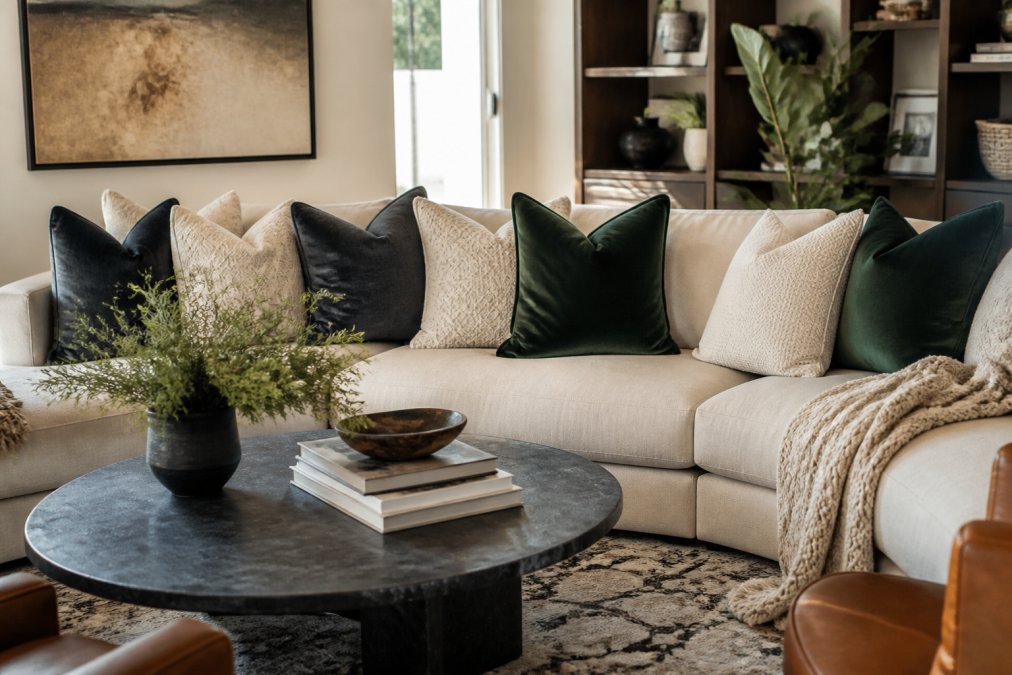
Layering is the signature technique of decorating with Lulu and Georgia inspired textiles. It transforms a basic room into a space that feels thoughtfully designed and inviting. Layering means combining multiple textile elements, rugs, throws, pillows, curtains, in a way that creates visual interest without clutter.
Start with your foundation layer: a quality area rug in a neutral tone or subtle pattern. This anchors the space and defines the seating area. Layer a second, smaller rug on top if you're feeling adventurous. This creates visual interest and can help define different zones within an open space.
Add a throw blanket draped casually over your sofa or chair. This introduces texture and invites comfort. Choose a different texture from your upholstery, if your sofa is smooth linen, select a chunky knit or textured wool throw. The contrast makes both elements more visually interesting.
Curtains and drapery deserve attention too. Heavy linen or performance weave drapes frame windows beautifully and add softness to hard architectural lines. Layer sheer curtains underneath for light control and added dimension. The layering creates depth even when windows are closed.
Throw pillows are your final layering element. After establishing your rug, upholstery, and throws, arrange pillows to tie everything together. Use pillows to echo patterns from your rug or introduce complementary patterns. This creates visual cohesion across all your soft furnishings.
The magic of layering is that it allows you to build your aesthetic gradually. You don't need to purchase everything at once. Start with basics, then add layers as your budget and vision evolve. This approach works perfectly for renters or anyone hesitant about making permanent changes.
Textile Care and Maintenance for Longevity
Protecting your textile investment ensures your decorating efforts remain beautiful for years. Different fabrics require different care approaches, but the fundamental principle is the same: address spills immediately and follow fabric-specific guidelines.
For linen pieces, vacuum regularly with an upholstery attachment to remove dust and prevent it from settling into the weave. Blot spills immediately with a clean, dry cloth. Avoid rubbing, which pushes liquid deeper into the fabric. Most linen can be spot-cleaned with a mild soap solution, but always test on a hidden area first.
Velvet requires gentler handling. Use a soft brush to restore the nap if it becomes flattened. Vacuum with a gentle hand or use a soft cloth. Spills on velvet should be blotted carefully. Because velvet shows water marks easily, professional cleaning is often the best option for significant stains.
Performance weaves are designed for easy maintenance.
Bringing It All Together
Creating a home decorated with Lulu and Georgia inspired textiles is about combining intention with accessibility. You don't need a designer budget or perfect taste to achieve this aesthetic. You need an understanding of how patterns, textures, and colours work together, plus the willingness to layer and refine your space over time.
Frequently Asked Questions
What defines the Lulu and Georgia interior design aesthetic?
Lulu and Georgia's aesthetic blends eclecticism with curated, characterful decorating. It emphasises layered textures, rich colour palettes, and designer-inspired soft furnishings that feel inviting and lived-in rather than sterile. The style celebrates pattern mixing, quality upholstery, and bespoke finishes that tell a personal story whilst maintaining a cohesive visual narrative throughout the home.
How can I incorporate designer-inspired textiles into a family home without sacrificing durability?
Choose performance weaves and durable upholstery fabrics specifically designed for high-traffic areas. Look for materials like performance linen blends, crypton-treated fabrics, and solution-dyed synthetics that resist staining and fading. Balance aesthetic appeal with practicality by reserving delicate fabrics for low-use spaces like bedrooms, whilst using hardwearing options for sofas, chairs, and high-touch areas where children and pets spend time.
What are the best ways to mix patterns and textures in soft furnishings?
Start with a dominant pattern, then layer complementary patterns in different scales, pair large geometric prints with smaller florals or stripes. Vary textile composition by mixing linen, velvet, and woven materials to create textural contrast. Anchor mixed patterns with solid-coloured pieces and ensure your colour palette remains cohesive across all textiles. This approach creates visual interest whilst keeping the room from feeling chaotic or overwhelming.
How do I care for delicate textiles like linen and velvet to keep them looking new?
Linen benefits from regular vacuuming and spot-cleaning with mild detergent and cool water; avoid excessive heat drying. Velvet requires gentle brushing to restore pile and should be professionally dry-cleaned when needed. Check manufacturer care labels for specific guidance, and consider fabric protectant treatments for high-use pieces. Rotating cushions and throws regularly helps prevent uneven wear and fading from sunlight exposure.