

Table of Contents
- Understanding the Foundation: Mattress Toppers and Fitted Sheets
- Selecting the Right Flat Sheet and Base Layer
- Best Bedding Materials for Comfort and Durability
- Building Your Duvet and Cover System
- How to Style Decorative Pillows on a Bed
- Styling a Bed with a Throw Blanket for Texture and Visual Weight
- Choosing Your Colour Palette and Adding Final Touches
- Bedding Maintenance and Longevity Tips
Last Updated: August 28, 2026
Understanding the Foundation: Mattress Toppers and Fitted Sheets
A quality mattress topper adds cushioning, protects your mattress, and extends its lifespan. Fitted sheets anchor everything above, and their elastic corners must grip securely to prevent wrinkles and discomfort. When selecting fitted sheets, measure your mattress depth carefully; deeper pockets (typically 38-40 cm) accommodate thicker toppers without slipping. Higher thread count sheets (400-600) feel softer and last longer, though breathability varies by fibre type. Neutral-toned fitted sheets won't compete visually with decorative layers above.
Selecting the Right Flat Sheet and Base Layer
Your flat sheet serves as the primary sleeping layer and visual bridge between foundation and decorative elements. It should be large enough to tuck properly at the foot of the bed, creating clean mitered corners that signal a well-made bed.
Material selection matters considerably. Cotton blends offer durability and easy care, while pure cotton provides superior breathability. Linen creates a relaxed aesthetic but requires more maintenance. Polyester blends are budget-friendly and wrinkle-resistant. Thread count in the 300-600 range offers excellent balance between softness and durability; beyond 600, you're often paying for diminishing returns. More important than the number itself is consistent quality.
Colour strategy depends on your overall palette. Soft whites or warm creams work universally for neutral foundations. For bolder schemes, consider a sheet colour that echoes an accent colour, perhaps a muted sage or soft blue that appears again in your throw blanket or pillow arrangement.
Best Bedding Materials for Comfort and Durability
Cotton remains the gold standard for bedding because it's breathable, durable, and improves with washing. Egyptian cotton and Pima cotton are premium varieties that feel softer and resist pilling better than standard cotton (peer-reviewed research). For decorative elements like pillowcases and shams, cotton blends offer practical advantages, they resist wrinkles better than pure cotton while maintaining a crisp appearance.
Linen brings texture and visual interest to layered bedding, though it requires more care and wrinkles easily. Down and down-alternative materials fill pillows and duvets; real down offers superior insulation but costs more, while down-alternative synthetics provide similar warmth at lower cost and suit people with allergies. Microfibre and fleece work well for throws and decorative blankets because they're soft, affordable, and easy to clean.
Building Your Duvet and Cover System
Your duvet is the visual centrepiece of your bed, and its cover dictates the entire colour story of your space. A quality duvet cover has button or zip closures that keep the insert in place; avoid cheap covers with loose ties that let the duvet shift.
Duvet inserts come in different warmth ratings (tog values). Lighter togs (around 4.5-7) suit warmer climates or summer use. Medium togs (10-13) work for year-round comfort in most homes. Heavy togs (15+) are designed for winter or very cold sleepers. Choose based on your climate and sleep preferences.
The cover material influences both aesthetics and practicality. Cotton covers feel soft and breathe well but wrinkle easily. Linen covers create a relaxed, textured look. Sateen covers offer a subtle sheen that catches light beautifully. Microfibre covers are affordable and easy to care for but can feel plasticky and trap heat.
A solid-coloured cover in a rich tone, charcoal, navy, sage, or warm terracotta, provides a sophisticated base. Geometric patterns add visual interest without overwhelming the space. The size of your duvet matters; one that's too small leaves gaps at the sides and foot of the bed. Standard duvets should overhang by at least 30 cm on all sides for proper coverage and visual proportion.
How to Style Decorative Pillows on a Bed
Decorative pillows transform a functional sleeping surface into an intentionally styled focal point. Start with a base of sleeping pillows (standard or queen-size) positioned against the headboard. Layer euro shams (65 cm square pillows) in front of sleeping pillows to add height and create visual depth.
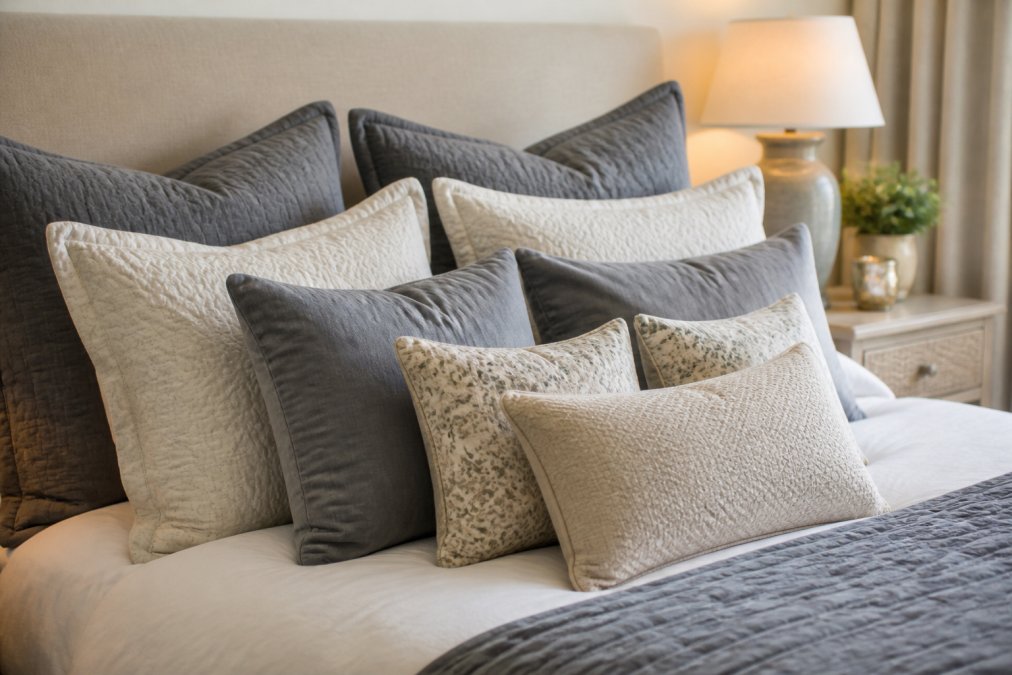
In front of the euro shams, add smaller decorative pillows (50 cm or smaller) in contrasting textures and colours. Pair a smooth velvet pillow with a chunky knit one, or combine solid colours with subtle patterns. Odd numbers work better than even ones; three or five pillows create better visual balance than two or four.
Texture mixing is essential. If your duvet cover is smooth cotton sateen, add pillows with visible texture: linen, chunky weave, or faux fur. Pillow arrangement follows a simple principle: largest to smallest, front to back, creating a pyramid effect that feels balanced and intentional. Avoid perfectly straight rows; angle some slightly or nest smaller pillows between larger ones for a more relaxed appearance.
Styling a Bed with a Throw Blanket for Texture and Visual Weight
A throw blanket adds the final layer of texture and visual warmth. The most common placement is draped across the foot of the bed, creating a casual, inviting appearance while remaining accessible for actual use.
Material selection determines how the throw reads visually. A chunky knit throw in cream or grey adds tactile interest and reads as cosy. Faux fur throws introduce luxury and softness. Linen throws create a relaxed, undone aesthetic. Cotton blends offer practicality for actual use.
Colour choices should either complement or contrast intentionally with your duvet cover. A neutral throw works with any colour scheme. A throw in a jewel tone, deep emerald, sapphire, or burgundy, adds drama and sophistication. Size matters for visual proportion; a standard throw (approximately 130 cm × 170 cm) works for most beds.
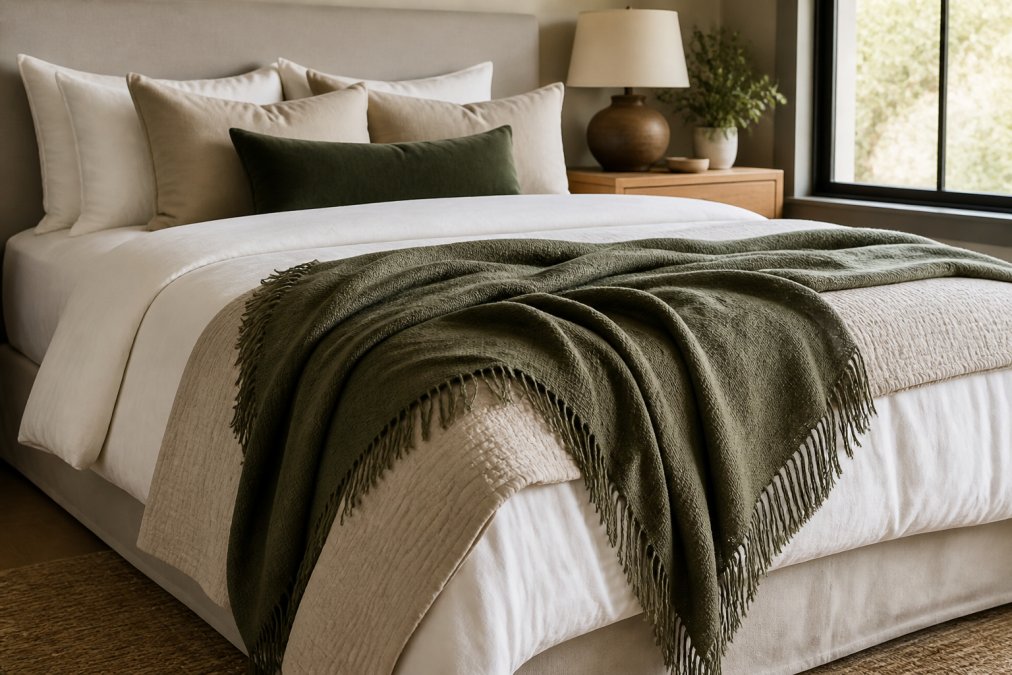
The accordion fold creates a polished, intentional look, while a casual drape feels more approachable and liveable. Choose based on your overall aesthetic.
Choosing Your Colour Palette and Adding Final Touches
Your colour palette unifies all layered elements into a cohesive whole. Start by selecting a primary colour, the dominant tone in your duvet cover or largest visual element. This might be a soft neutral like warm white, cool grey, or a deeper tone like navy or charcoal.
Add secondary colours through pillows, throws, and smaller decorative elements. A two-colour palette feels clean and modern. A three-colour palette offers more visual richness without becoming overwhelming. Stick to colours that appear together naturally: sage green with warm cream, navy with soft gold, charcoal with blush pink.
Pattern works best when it echoes your colour palette. One patterned element provides interest without visual chaos. Lighting dramatically affects how colours appear; consider your bedroom's lighting when finalising your palette.
The Family Nest offers curated bedding collections that simplify colour coordination. Their collections pair complementary textures and colours, removing the guesswork from palette selection. Final touches include small decorative elements like a decorative tray on the nightstand or framed artwork above the headbed, echoing your colour palette and reinforcing your overall aesthetic.
Bedding Maintenance and Longevity Tips
Wash sheets and pillowcases every 7-10 days using cool to warm water to prevent premature fading and shrinkage. Separate whites from colours to avoid dye transfer. Duvet covers should be washed every 2-3 weeks, while duvets themselves need washing only every 6-12 months depending on use.
Decorative pillows vary by material; removable pillow covers can be washed regularly, while pillow inserts should be washed only occasionally. Spot-clean visible stains rather than full washing when possible. Throws and blankets should be washed according to their material; cotton and linen tolerate regular washing, while faux fur and delicate knits need gentler treatment.
Rotation extends the life of your entire bedding ensemble. Alternate between two sets of sheets, giving each time to rest between uses. Store clean, completely dry bedding in breathable cotton bags rather than plastic containers, which trap moisture and encourage mildew. Address stains immediately; fresh stains are easier to remove than set-in ones. Pilling happens naturally with wear; use a fabric shaver or lint roller to remove pills without damaging the underlying material.
Layering bedding for a cosy look isn't complicated once you understand how each element contributes to comfort and aesthetics. The process starts with a solid foundation, quality sheets and a supportive mattress topper, then builds through thoughtful colour selection, texture variation, and intentional arrangement. The Family Nest provides ready-made collections that take the guesswork out of coordinating colours and materials, allowing you to create a polished, inviting bed without extensive design knowledge. Start with their curated bedding sets, then personalise with decorative pillows and throws that reflect your style. A well-layered bed becomes the retreat you look forward to each evening.
Frequently Asked Questions
What is the correct order for layering bedding?
Start with a mattress topper for comfort and protection, then add your fitted sheet. Layer a flat sheet on top, followed by your duvet and cover. Add decorative pillows at the head, then style with a throw blanket across the foot. This sequence creates a cohesive, cosy look while protecting your mattress and ensuring comfort. Adjust based on your climate and personal preference for warmth.
How many pillows should be on a bed for a layered look?
For a luxe, layered appearance, use at least three to four pillows. Start with two sleeping pillows at the back, add one or two euro shams in front of those, then layer smaller decorative pillows in the foreground. This creates visual depth and texture. In smaller spaces, you can achieve the same effect with two sleeping pillows and two decorative pillows positioned strategically.
What fabrics are best for a cosy, layered bed?
Cotton with a thread count of 300-600 offers breathability and comfort. Linen adds texture and durability. Microfibre provides softness and warmth. For throws and decorative elements, consider wool blends, cotton knits, or velvet to add visual and tactile interest. Mix textures across your bedding layers, pairing smooth cotton sheets with a plush duvet cover and a knitted throw creates a truly cosy aesthetic.
How do I make a bed look more cosy on a budget?
Layer affordable basics strategically: use a quality fitted sheet and flat sheet as your foundation, add a duvet cover in a warm colour, then introduce texture with a budget-friendly throw blanket. Incorporate decorative pillows from high-street retailers rather than designer brands. Focus on colour coordination and mixing textures rather than expensive materials. A cohesive colour palette and thoughtful arrangement create visual luxury without premium pricing.
This article was written using GrandRanker