

Table of Contents
- Why Small Bedrooms Feel Cramped and How to Fix It
- Best Lighting for Small Bedrooms
- How to Arrange Furniture in a Small Bedroom
- Small Bedroom Storage Ideas That Actually Work
- Colour Palette and Paint Choices
- Textiles and Layered Bedding
- Window Treatments and Sightlines
- Wall Decor and Creating a Focal Point
Last Updated: August 28, 2026
Why Small Bedrooms Feel Cramped and How to Fix It
A small bedroom doesn't have to feel cramped. The difference between a suffocating space and a cosy retreat comes down to how you layer light, arrange furniture, and choose colours and textures. The real strategy is to make the space feel intentionally designed, not squeezed.
At The Family Nest, we've helped many renters and homeowners transform compact bedrooms into sanctuaries. The common thread? They stopped thinking about square footage and started thinking about flow, light, and psychological comfort. A small bedroom requires deliberate choices across five key areas: lighting, furniture placement, storage, colour, and soft furnishings.
When sightlines are clear, light is layered, and textures invite touch, your brain registers the room as larger and more inviting. This guide walks you through the exact steps to flip that perception.
Best Lighting for Small Bedrooms
Lighting is the single most powerful tool for making a small bedroom feel cosy. Most people rely on a single overhead fixture, which creates harsh shadows and kills warmth. A small bedroom requires layered light sources you can adjust based on mood.
Warm vs Cool Light: Choosing the Right Colour Temperature
Colour temperature, measured in Kelvin (K), describes how warm or cool light appears. Warm light (2700K-3000K) feels inviting and relaxing (peer-reviewed research). Cool light (4000K and above) feels clinical.
For a bedroom, aim for bulbs in the 2700K range, which mimics candlelight and natural sunset, signalling your body it's time to wind down (the NIH). Check packaging for "soft white" or "warm white" labels. Avoid "daylight" (5000K+) or "cool white" (4000K).
Layering Light Sources for Depth
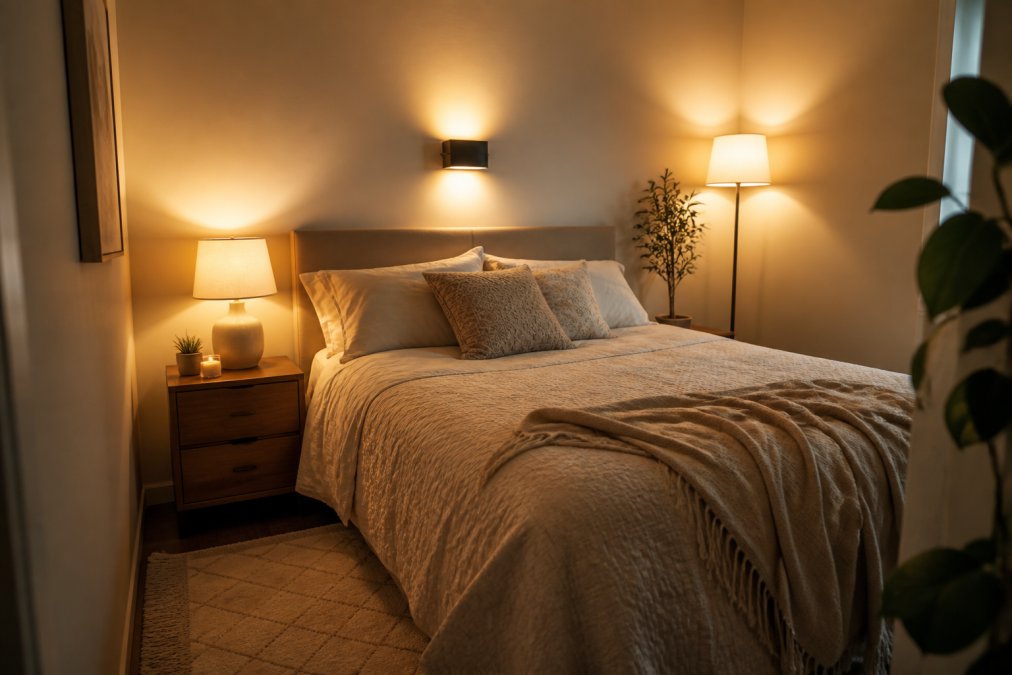
Layered lighting creates depth and makes a small space feel larger. Combine three types: ambient (overall), task (specific activities), and accent (atmosphere).
Ambient light should come from sources other than the ceiling. A low-level floor lamp, uplighting behind furniture, or soft bedside glow all work. Task lighting might be a reading light above your headboard. Accent lighting could be string lights, a wall sconce, or candle. None should be bright; each source should be dimmable or low-wattage.
For a small bedroom, consider:
- Bedside table lamp (warm, 40-60W equivalent)
- Wall-mounted reading light above headboard (dimmable, 20-40W)
- Corner floor lamp with uplighting (creates illusion of height)
- One accent light (string lights, wall sconce, or candle)
This setup takes minimal floor space while creating genuine cosiness. The Family Nest stocks dimmable bedside fixtures and compact floor lamps designed for small spaces.
How to Arrange Furniture in a Small Bedroom
Furniture placement determines whether a small bedroom feels open or cramped. The wrong arrangement wastes precious floor space; the right one makes the room feel intentional and spacious.
Choosing Low-Profile and Space-Saving Pieces
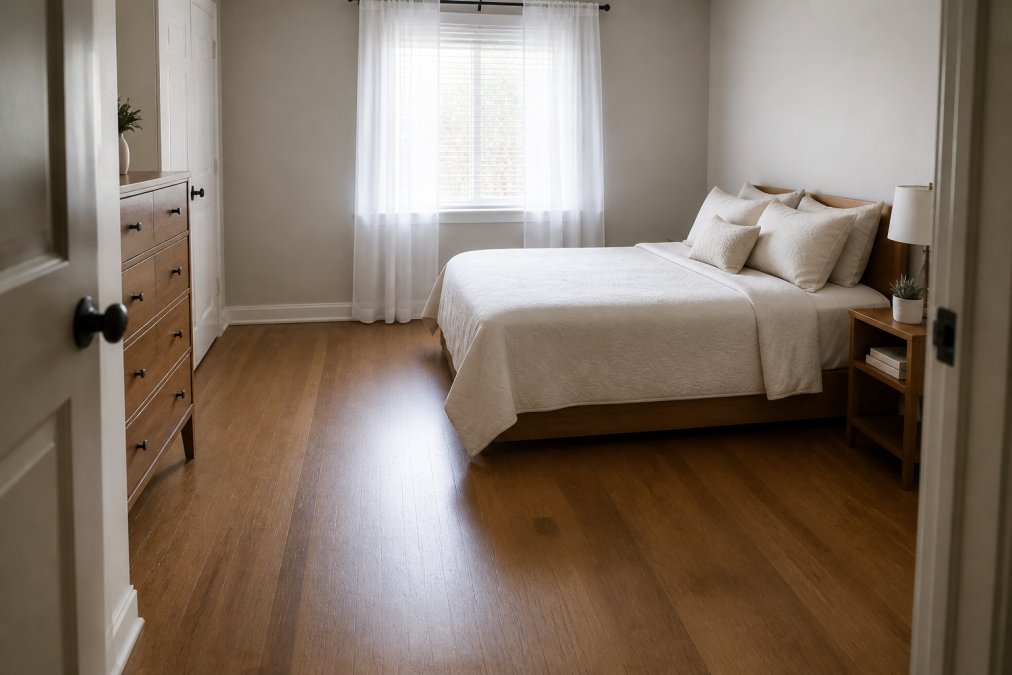
A low-profile bed is essential. High bed frames with heavy footboards consume visual space and make the room feel smaller. A low-profile bed with minimal clearance and a simple headboard keeps sightlines clear and makes the room more expansive.
Platform beds work brilliantly because they don't require a box spring. Beds with built-in storage drawers underneath maximise functionality without adding visual bulk. The Family Nest offers platform beds and low-profile frames designed for compact rooms with integrated storage and easy assembly.
Every piece of furniture should serve multiple purposes. A bedside table with drawers stores more than a simple shelf. A bench at the foot of the bed provides seating and storage. A wall-mounted desk folds down when not in use. Furniture with open legs lets you see the floor beneath, feeling less heavy than pieces that sit flush to the ground.
Creating Clear Sightlines and Flow
Sightlines are unobstructed views across your room. When clear, your brain perceives the space as larger. When blocked, the room feels cramped.
Position your bed against the longest wall, leaving maximum floor space open and creating a clear sightline from the door. Keep the path from door to bed clear; you should walk straight through without stepping around obstacles. This signals the space is organised and intentional.
Place secondary furniture along the walls, leaving the centre open. This creates spaciousness and allows light to travel unobstructed.
Small Bedroom Storage Ideas That Actually Work
A small bedroom requires smart storage. Poor storage forces items onto the floor or bed, instantly making the space feel cluttered and smaller.
Vertical Storage and Under-Bed Solutions
Vertical storage is your best friend. Walls are free real estate. Floor-to-ceiling shelving, wall-mounted cabinets, and hanging organisers store items without consuming floor space.
Under-bed storage is equally valuable. Flat storage boxes on wheels slide easily and keep seasonal items or extra bedding out of sight. Beds with built-in drawers are ideal, but even basic frames accommodate rolling containers.
Wall space above the bed, beside the headboard, and in corners can hold floating shelves, pegboards, or fabric organisers. Avoid bulky wardrobes or cabinets; instead use vertical solutions that don't consume floor space.
Decluttering as a Design Strategy
Decluttering is essential to making a small bedroom feel cosy. Every item you remove makes the space feel larger and more peaceful.
Remove anything you don't use regularly. Books you've finished, clothes that don't fit, decorations you don't love all create visual noise. A small bedroom can't absorb clutter the way a larger space can.
Keep surfaces clear. Your nightstand should hold only a lamp and perhaps a book. Your dresser should be mostly empty. When surfaces are clear, the room feels calm and intentional.
Colour Palette and Paint Choices
Colour profoundly affects how large or small a bedroom feels. Light, neutral colours make a space feel more expansive. Dark, saturated colours make it feel smaller and more enclosed.
For a small bedroom, stick to a cohesive palette of soft, neutral tones: warm whites, soft greys, warm beiges, and gentle creams. These reflect light and create calm.
An accent wall can work if chosen carefully. A deep colour on one wall creates a focal point without overwhelming the space. Warm accent colours like soft sage, warm terracotta, or muted ochre add personality without cramping the room. Avoid bright primary colours or very dark shades.
Paint finish matters. Matte finishes absorb light and make small rooms feel darker (peer-reviewed research). Semi-gloss or satin finishes reflect light gently and make the space feel brighter. A soft satin finish on walls creates a subtle sheen that enhances spaciousness.
Painting the ceiling the same colour as the walls, or slightly lighter, makes the room feel taller. A darker ceiling makes the space feel lower and more enclosed.
Warm colours feel inviting and cosy. Cool colours feel calm but can feel cold in a small space. For a bedroom meant to feel like a retreat, warm neutrals are almost always the better choice.
Textiles and Layered Bedding
Textiles transform a small bedroom from functional to cosy. Soft furnishings add warmth and texture without consuming floor space.
Natural Textures and Soft Furnishings
Natural textures, linen, cotton, wool, raw silk, feel more inviting and luxurious than synthetics. Layered bedding with natural fabrics creates depth and visual interest while remaining cohesive.
A good layered bedding setup includes:
- A fitted sheet (cotton or linen, warm-toned)
- A flat sheet (same material, same colour or slightly lighter)
- A quilt or duvet in a complementary neutral tone
- A throw blanket draped across the foot
- 2-3 pillows with soft pillowcases and a textured cushion
Each layer should be a slightly different shade or texture within the same warm colour family, creating cohesion without monotony.
A throw blanket is essential. Drape it across the foot of the bed or fold it over a chair. The tactile quality makes the bedroom feel more like a sanctuary.
Window treatments should be soft and natural. Linen curtains or roman shades in neutral tones diffuse light beautifully and add texture. Avoid heavy velvet or thick fabrics, which make small spaces feel more enclosed.
Adding Warmth Without Clutter
Choose 3-4 complementary textures and stick to them. A small area rug under the bed or in a corner adds warmth and defines the space. Keep it relatively small so it doesn't overwhelm the room.
One or two throw pillows add texture without clutter. Choose pillows with different textures, a linen pillow, a knitted cushion, a smooth cotton pillow, to create visual interest while maintaining consistent warm neutrals.
A single piece of wall hanging, textile art, or woven wall decor adds warmth without consuming floor space.
Window Treatments and Sightlines
Windows are critical to making a small bedroom feel cosy and spacious. The right window treatments control light, add texture, and maintain clear sightlines.
Roman shades or simple linen curtains work better than heavy drapes. They add softness without consuming visual space. Avoid curtains that puddle on the floor or extend far beyond the window frame.
Mount curtains or shades high and wide. This draws the eye upward and makes the window and room feel larger. If your window is small, extending the rod beyond the frame on both sides makes it appear wider.
Use a sheer linen curtain paired with a simple roller shade or roman shade in neutral tones. This gives flexibility to filter light during the day and darken the room at night without heavy fabric consuming visual space.
Keep the window area clear. A single plant or small object is enough. Clear sightlines through the window make the room feel more open and connected to the outside.
If your bedroom is small and dark, prioritise light over privacy. Sheer curtains that filter light while maintaining a view are better than heavy blackout curtains. The connection to the outside world makes a small space feel less claustrophobic.
Wall Decor and Creating a Focal Point
Wall decor in a small bedroom should be intentional and minimal. Too many pieces create visual chaos.
Choose one focal point, usually the wall behind the bed. A single piece of art, a simple headboard, or a subtle accent colour creates a visual anchor without overwhelming the space.
Framed art works beautifully, but choose quality over quantity. One or two well-chosen pieces are more impactful than a gallery wall. Larger single prints feel less cluttered than multiple small frames.
Keep art simple and cohesive. Soft, muted tones that complement your colour palette make the space feel calm and intentional.
A simple headboard, even just fabric or a painted accent, creates definition without consuming floor space. This anchors the bed visually without requiring additional furniture.
Wall-mounted shelves can display a few meaningful items, a small plant, favourite book, framed photo, but keep them sparse. Empty space on shelves is as important as filled space.
Consider the psychological effect of your wall decor. Calming, nature-inspired art or simple geometric prints feel more restful than busy patterns. In a small bedroom, every visual element should contribute to peace.
The Family Nest stocks wall art, headboards, and decor specifically chosen for small spaces. Easy to install and designed to complement neutral palettes, they help you create a focal point without clutter.
Making a small bedroom feel cosy isn't about expensive furniture or trendy decor. It's about layering warm light, choosing furniture that creates clear sightlines, and selecting soft textures that invite relaxation. The Family Nest specialises in helping you do exactly this, with space-saving furniture designed for easy assembly, curated bedding in natural fibres, and ambient lighting that transforms a small room into a sanctuary. Start with lighting and furniture placement, then layer in textiles and colour. The result is a bedroom that feels intentional, peaceful, and genuinely cosy.
Frequently Asked Questions
What colour temperature lighting makes a small bedroom feel cosiest?
Warm white lighting between 2700K and 3000K creates the most inviting atmosphere in a small bedroom. This range mimics candlelight and sunset, triggering relaxation. Avoid cool white (5000K+) which feels clinical and can make small spaces feel colder. Layer warm ambient light with softer task lighting near your bedside to build depth and make the room feel less stark.
How can small bedroom storage ideas help create a cosy feel?
Clutter makes small spaces feel cramped and stressful. Smart storage, vertical shelving, under-bed drawers, and wall-mounted organisers, removes visual noise, making your bedroom feel more tranquil. When you can't see piles of clothes or boxes, the space breathes. Decluttering also makes room for the soft furnishings and decor that actually create cosiness, like throw blankets and layered bedding.
What's the best way to arrange furniture in a small bedroom to maximise space?
Position your bed against the longest wall to anchor the room and keep the centre open. Use low-profile furniture to maintain sightlines and prevent the space feeling boxed in. Float your bedside table or wall-mount a small shelf to avoid blocking floor space. Keep pathways clear between the door and bed. This arrangement creates spatial awareness and makes the room feel larger while maintaining an intimate, cosy focal point around the bed.
Can I make a small bedroom feel cosy on a budget?
Absolutely. Focus on inexpensive, high-impact changes: paint an accent wall in a warm neutral, layer affordable cotton or linen bedding, add string lights or a simple table lamp for warm lighting, and use a budget-friendly area rug to define the space. Decluttering costs nothing and immediately makes the room feel more inviting. Thrift stores often have throw blankets and wall art that add personality without breaking the bank.
This article was written using GrandRanker