

Table of Contents
- Why Studio Dwellers Are Choosing Hidden Beds
- The Core Benefits of Hidden Bed Furniture for Studio Living
- Wall Bed vs Sofa Bed Comparison: Which Suits Your Studio?
- How to Choose a Murphy Bed for a Studio Apartment
- Multifunctional Furniture Ideas to Maximise Your Studio
- Installation, Maintenance, and Ergonomics for Daily Use
- Conclusion: Making the Transition to a Hidden Bed
- Frequently Asked Questions
Last Updated: September 6, 2026
Why Studio Dwellers Are Choosing Hidden Beds
Studio living forces a constant negotiation between sleeping and living areas. Hidden bed furniture solves this by letting one room perform two jobs without compromise, making it a defining feature of modern compact interiors.
The core appeal is simple: a hidden bed furniture system folds away during the day, freeing the floor for work or entertaining. This guide covers the practical benefits, the wall bed vs sofa bed comparison, and how to choose a murphy bed for your studio.
These pieces are not a luxury or gimmick; they are one of the most effective ways to increase usable square footage without renovating.
The Core Benefits of Hidden Bed Furniture for Studio Living
Hidden bed furniture is a wall-mounted or cabinet-enclosed bed system that folds vertically or horizontally into a unit when not in use. The primary benefit is reclaiming daytime floor space while retaining a full-size, comfortable mattress at night.
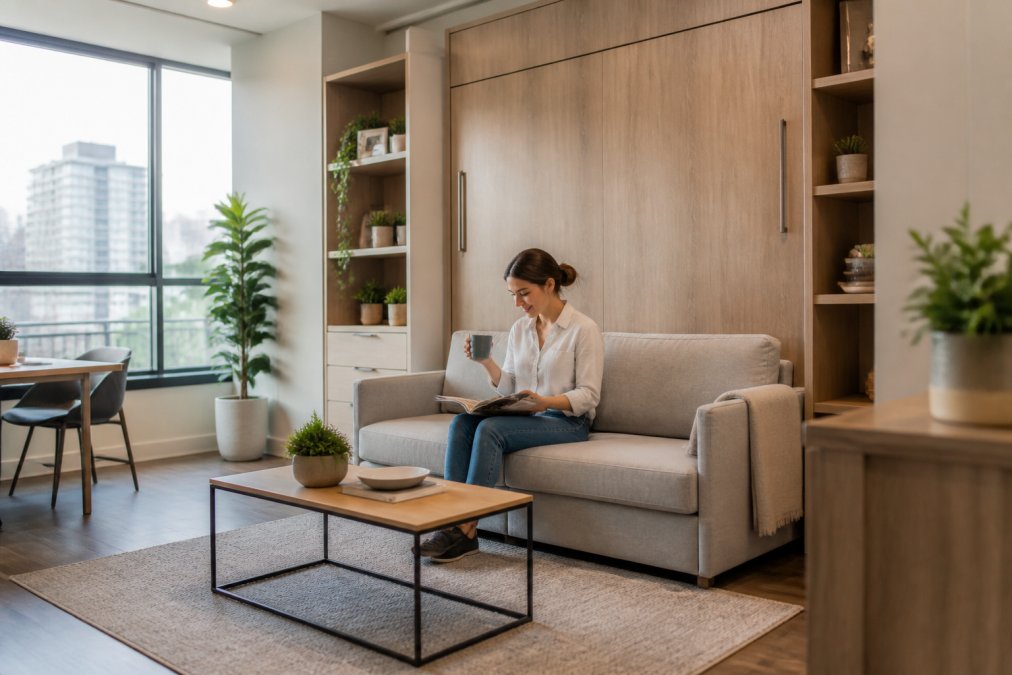
Owners typically report that their studio feels larger, stays tidier, and functions better for both socialising and remote work.
Reclaiming Your Floor Plan
A permanent bed consumes roughly 3 to 4 square metres of prime real estate (archdaily.com). Folding it into the wall instantly recovers that footprint for a dining table, home office, or open walking space. This spatial efficiency is the most cited reason people switch.
Creating Distinct Living and Sleeping Areas
A closed wall bed creates a clean visual break: by day, a living area; by night, a sleeping area. This psychological separation improves relaxation and makes the space feel more organised than a room with a permanent mattress in the corner.
Wall Bed vs Sofa Bed Comparison: Which Suits Your Studio?
The most common decision buyers face is choosing between a fold-down wall bed and a pull-out sofa bed. Both save space, but they serve different priorities. The table below summarises the headline differences, but the real decision hinges on the details beneath it.
| Feature | Wall Bed | Sofa Bed |
|---|---|---|
| Daytime footprint | Zero (folds flush to wall) | Occupies sofa footprint |
| Mattress quality | Full-size standard mattress | Thin fold-out mattress |
| Daily transition | 30-60 seconds to lower | Requires clearing cushions |
| Best for | Sleeping comfort and dual-purpose rooms | Occasional guests and lounging |
| Installation | Requires wall mounting | Free-standing, no mounting |
The Comfort and Support Gap
A wall bed accepts a standard mattress up to roughly 25 cm thick, letting you match the sleep surface to your preferred firmness. Sofa beds rely on a folding mattress typically 10-15 cm thick, sitting directly over a metal or slat mechanism and creating pressure points for most side sleepers. Sleeping on it nightly shows up as morning stiffness within a fortnight.
The Daily Transition: Ergonomics and Friction
A wall bed transition is a single motion: clear the floor, grip the handle, and lower it with the counterbalance doing the heavy lifting. A sofa bed demands more steps: remove cushions, pull the frame out, unfold the mattress, then reverse. For daily use, the wall bed is lower-friction, though it requires a clear landing zone, whereas a sofa bed tolerates a coffee table because its pull-out motion is horizontal.
Mechanism Quality and Longevity
The mechanism is the single most important determinant of longevity. Look for gas pistons rated for at least 10,000 cycles, roughly 27 years of daily use. Cheaper spring-loaded mechanisms lose tension over time. Sofa bed mechanisms are simpler and less prone to failure, but the mattress foam degrades faster because it is compressed and folded repeatedly. A quality wall bed mechanism outlasts two or three sofa bed mattresses.
The Cost of Ownership Over Five Years
A reasonable entry-level wall bed and a decent sofa bed have varying costs. The gap narrows with mattress replacement: a sofa bed mattress needs replacing every two to three years at $200-$400, while a standard mattress lasts seven to ten years. Over five years, the wall bed's total cost of ownership is often comparable to or lower than a sofa bed.
The Verdict for Studio Living
For daily sleeping, a wall bed wins on comfort with a proper mattress and solid base. A sofa bed suits guest rooms where convenience matters more. If you live in the studio every night, the wall bed is the more practical long-term investment. If you are a renter who cannot get wall-mounting approval, a high-quality sofa bed with a thick replacement mattress is the pragmatic fallback.
How to Choose a Murphy Bed for a Studio Apartment
Choosing the right unit comes down to orientation, mechanism quality, and honest installation planning.
Vertical vs. Horizontal Orientation
Vertical units fold down from the ceiling line and suit rooms with standard ceiling height. Horizontal units fold out sideways and work better with low ceilings or wide, shallow walls. Measure your wall height and width first; a vertical bed needs roughly 2.1 metres of clearance when open, while a horizontal unit needs lateral space for the mattress to swing out.
Mechanisms, Mattress Support, and Installation
Look for piston or spring-loaded systems that counterbalance the mattress weight, allowing one hand to lower the bed safely. Cheaper units rely on manual force and wear out faster. Ensure the frame provides solid mattress support, and confirm the wall is load-bearing before installation. For renters, many leases require landlord approval for wall mounting, so check your agreement first.
Multifunctional Furniture Ideas to Maximise Your Studio
A wall bed works best when paired with other convertible furniture pieces, so every item serves at least two purposes.
- Fold-down desks: Mount a compact desk that tucks away when you need floor space for yoga or guests.
- Storage headboards: Choose a unit with built-in shelving or compartments to eliminate the need for a separate bookshelf.
- Ottoman storage: Use seating that doubles as hidden storage for bedding and seasonal items.
- Room dividers: Use a slim shelving unit on castors to separate the sleeping area from the entry without permanent walls.
This approach maximises your studio by eliminating single-purpose items. Each piece should contribute to both storage and interior design, keeping the space uncluttered and visually calm.
Installation, Maintenance, and Ergonomics for Daily Use
Installation, maintenance, and daily ergonomics are where wall beds succeed or fail in a studio. This section covers the practical decisions that determine whether your hidden bed lasts five years or fifteen.
Installation: What Actually Goes Into the Wall
A loaded wall bed weighs 100-130 kg, and that load shifts as the bed pivots on its hinges (hud.gov). The mounting points must be secured to structural studs (timber or steel) or solid masonry. Plasterboard alone cannot support this load, regardless of the anchor type.
For renters, the first question is not 'which bed' but 'will my landlord approve it'. Most Australian tenancy agreements require written consent for any fixture that penetrates the wall structure (consumer.vic.gov.au). Professional installation leaves only a few small bolt holes if you remove the unit, far less damage than a poorly anchored DIY attempt. Offer the landlord a condition report with the installer's details and a commitment to patch and repaint on exit.
Professional Installation vs. DIY: The Real Cost Picture
Professional installation typically includes a structural assessment, correct hardware, and a warranty. DIY costs $80-$150 in tools and hardware, but the risk is misjudging the wall structure. A failed installation can damage the wall, the bed, or injure someone. Most practitioners recommend professional installation for any unit over 80 kg, and DIY only for lightweight, vertically-oriented beds on exposed timber stud walls.
The Maintenance Schedule That Keeps Mechanisms Alive
The mechanism needs regular attention. A practical maintenance schedule:
- Every 6 months: Lubricate the piston hinges and pivot points with a silicone-based spray. Avoid petroleum-based lubricants, which attract dust and gum up the mechanism.
- Every 12 months: Check all mounting bolts for tightness. Use a torque wrench if you have one; hand-tightening is not enough. Re-tighten any bolt that has worked loose.
- Every 12 months: Inspect the gas pistons for oil leaks. A small amount of oil film is normal, but active dripping means the piston seal has failed and the unit needs replacement.
- Every 2 years: Test the counterbalance by lowering the bed halfway and releasing. It should stay in position. If it drops or rises on its own, the pistons need adjustment or replacement.
Ergonomics: Designing for Your Body, Not Just Your Space
The daily transition is a physical act, and poor positioning turns a convenience into a back injury risk. Key ergonomic principles:
- Clear landing zone: The bed needs a clear floor area equal to its full length plus 60 cm of walking space. If you are stepping around furniture to lower the bed, you are bending and twisting in ways your lower back will not forgive.
- Handle height: The pull handle should sit at hip height when the bed is closed. If it is higher, you are reaching overhead to start the lowering motion, which puts strain on your shoulders.
- Lowering technique: Use your legs, not your back. Grip the handle, step back with one foot, and let the counterbalance do the work. Guide the bed down with a straight spine.
- Morning routine: Position the bed so you can sit on the edge and stand up naturally, without crawling out from a corner. This matters more than you think at 6:30 am.
When to Call a Professional
If the bed makes grinding noises, the lowering motion becomes jerky, or you notice visible play in the hinges, stop using the unit and call a professional. These symptoms indicate worn bearings or loose mounting hardware, both fixable, but dangerous if ignored. A $150 service call is cheaper than a $2,000 replacement or a trip to the emergency room.
Conclusion: Making the Transition to a Hidden Bed
Switching to a hidden bed changes how your studio feels every day. You gain a flexible floor plan, clearer separation between rest and living, and a space that accommodates both work and social life without compromise.
The Family Nest stocks a curated range of space-saving furniture designed for Australian apartments, with easy installation guides and free returns if the fit is not right. Explore our collection to find a wall bed that matches your studio layout, and take the first step toward a home that works as hard as you do. Get started with The Family Nest and reclaim your floor space today.
Frequently Asked Questions
Are hidden beds comfortable for daily use?
Yes, a quality hidden bed is comfortable for daily use. The key is the mattress support system and the mattress itself. Many modern wall beds use a premium box spring or a slatted base that provides support comparable to a traditional bed frame. Pair this with a good-quality mattress of the right thickness, and you have a sleeping surface that supports proper spinal alignment and restful sleep every night.
Do hidden beds require professional installation?
It depends on the model and your own skill level. A wall bed is heavy and mounts to structural wall studs, so installation is more involved than assembling a standard bed frame. Many people hire a professional to ensure it is mounted safely and operates smoothly. The Family Nest provides easy-to-follow installation guides, but if you are not confident working with tools, professional help is a worthwhile investment for peace of mind.
How do wall beds compare to sofa beds for small apartments?
Wall beds are generally better for daily sleep comfort and freeing up floor space, as they fold completely away into the wall. Sofa beds offer a dual-purpose seating area without needing to be folded up, but they often compromise on mattress comfort and can be heavy to convert. Your choice depends on whether you prioritise a dedicated living area during the day or want to avoid the daily transition of putting the bed away.