

Table of Contents
- What Makes a Minimalist Master Bedroom Work
- 1. Platform Beds and Clean-Lined Bed Frames
- 2. Neutral Bedroom Colour Schemes That Calm
- 3. Space-Saving Bedroom Storage Ideas That Actually Work
- 4. Minimalist Bedroom Lighting Trends for Ambience
- 5. Textural Elements and Soft Furnishings
- 6. Nightstand and Bedside Table Selection
- 7. Psychological Benefits and Budget-Friendly Implementation
- Frequently Asked Questions
What Makes a Minimalist Master Bedroom Work
A minimalist master bedroom strips away excess to create a sanctuary focused on calm, functionality, and intentional design. Rather than filling space with decorative items, you're selecting each piece for both aesthetic and practical purpose. This philosophy doesn't mean sterile or cold; instead, it prioritises clean lines, neutral palettes, and thoughtful spatial flow that makes the room feel larger and more restful.
A clutter-free bedroom reduces visual noise, which directly impacts how your mind settles at night. When your surroundings are intentional rather than accumulated, you're not unconsciously processing dozens of objects competing for attention. At The Family Nest, we understand that creating this kind of space doesn't require expensive designer pieces. It requires understanding what works: the furniture that serves your needs, the colours that calm your nervous system, and the storage that hides clutter without taking up visual real estate.
1. Platform Beds and Clean-Lined Bed Frames
The bed is the largest visual element in any bedroom, so choosing the right frame sets the tone for your entire minimalist aesthetic. A platform bed with clean lines and no ornamental details is the gold standard for minimalist design. It sits closer to the floor, creating an open, spacious feel that makes the room appear larger.
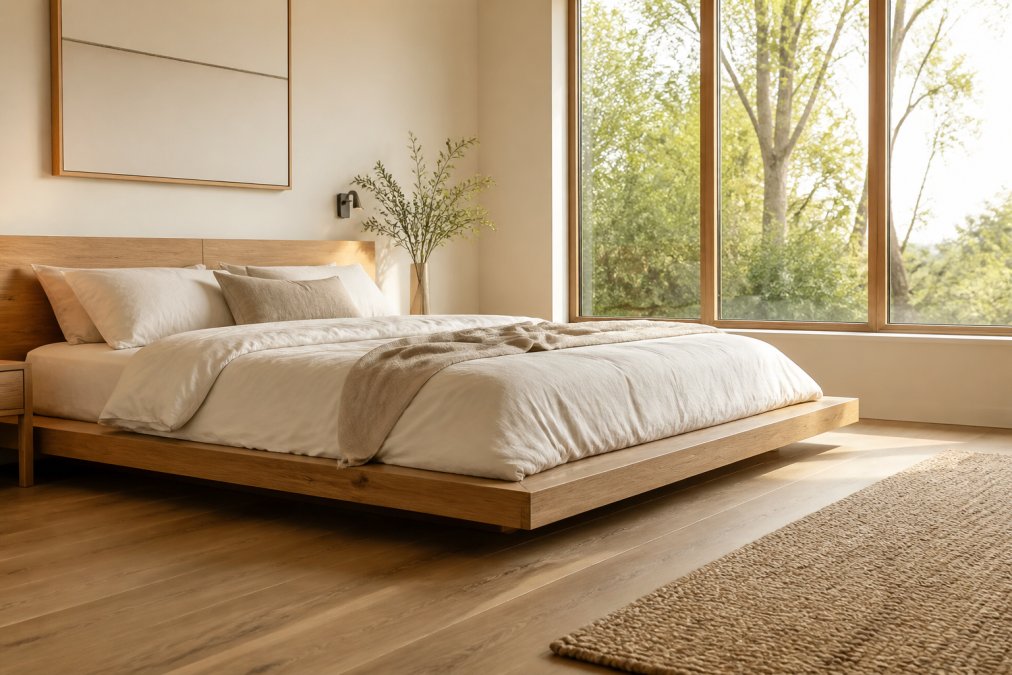
Platform beds also eliminate the visual clutter of a traditional bed skirt or the gap underneath where dust collects. Look for frames in natural wood tones, warm timber accents against soft neutrals, or matte black for a contemporary feel. The IKEA MALM bed frame offers clean minimalist lines and under-bed storage boxes that slide in seamlessly. For premium options, Australian-made pieces like Koala's bedside-integrated designs or Jardan's handcrafted options offer superior materials and finishes.
Avoid bed frames with high headboards or upholstered panels, which draw the eye upward and add visual weight. A simple platform with a low profile keeps the spatial flow open and calm.
2. Neutral Bedroom Colour Schemes That Calm
Neutral palettes, soft whites, warm greys, soft beiges, and muted taupes, create the calming foundation every minimalist master bedroom needs. These colours recede visually, making the space feel larger and less cluttered while providing a stable backdrop for texture and intentional accent pieces.
Monochromatic Palettes for Visual Calm
A monochromatic approach uses varying shades of a single colour family to create depth without introducing competing hues. By layering different tones of the same colour, you create visual interest while maintaining the serene atmosphere that makes minimalism work. Soft white walls with grey-toned bedding and slightly darker grey throws create visual movement without jarring contrast.
Monochromatic schemes are also forgiving: new furniture or bedding blends rather than clashes.
Warm Wooden Accents Against Soft Neutrals
Pure white or cool grey can feel clinical without warmth. Introduce warm wooden accents, a timber bedside table, natural wood platform bed, or timber flooring, to ground the space emotionally. This Scandinavian influence blends minimalism with cosiness, preventing your bedroom from feeling sterile. A natural timber bedside table in warm honey or walnut tones against crisp white walls creates visual balance without clutter.
3. Space-Saving Bedroom Storage Ideas That Actually Work
Storage is where minimalism becomes practical. A clutter-free bedroom is created through intentional storage solutions that keep daily-use items accessible and everything else out of sight.
Built-In Storage and Under-Bed Solutions
Built-in storage is the ideal solution for space-saving bedroom design. If you're renting or can't install permanent solutions, under-bed storage boxes use dead space and keep seasonal items and extra bedding hidden from view. The IKEA MALM bed frame with integrated under-bed storage boxes is practical and affordable. Wooden storage boxes that slide smoothly are more durable and aesthetically aligned with minimalist spaces than plastic alternatives.
For those able to invest in built-ins, floor-to-ceiling cabinetry on one wall maximises vertical space without eating floor area. Plyroom's Cabine storage solution combines display space with hidden compartments, ideal for smaller bedrooms.
Bedside Organisation Without Visual Clutter
Your bedside table should contain only items you use daily: a lamp, perhaps a book, maybe a small plant. Everything else goes into a drawer or closed container. Koala's and Jardan's bedside tables prioritise drawers and practical storage. A table with at least one closed drawer keeps nighttime essentials hidden while remaining accessible. If your table lacks drawers, a small wooden box serves the same function while maintaining the aesthetic.
When you wake up and see a clear surface, your morning starts calmer. When you reach for something at night, everything you need is organised and within arm's reach.
4. Minimalist Bedroom Lighting Trends for Ambience
Lighting is essential to minimalist design. Poor lighting can make a minimal space feel cold or institutional. Thoughtful, layered, warm lighting transforms a bedroom into an actual sanctuary.
Statement Lighting with Restraint
A statement lighting piece in minimalist design means a single, well-chosen fixture that's visually interesting through simplicity. A matte black pendant light with clean lines, a brushed nickel wall sconce, or a minimalist floor lamp in natural timber can serve as a subtle focal point.
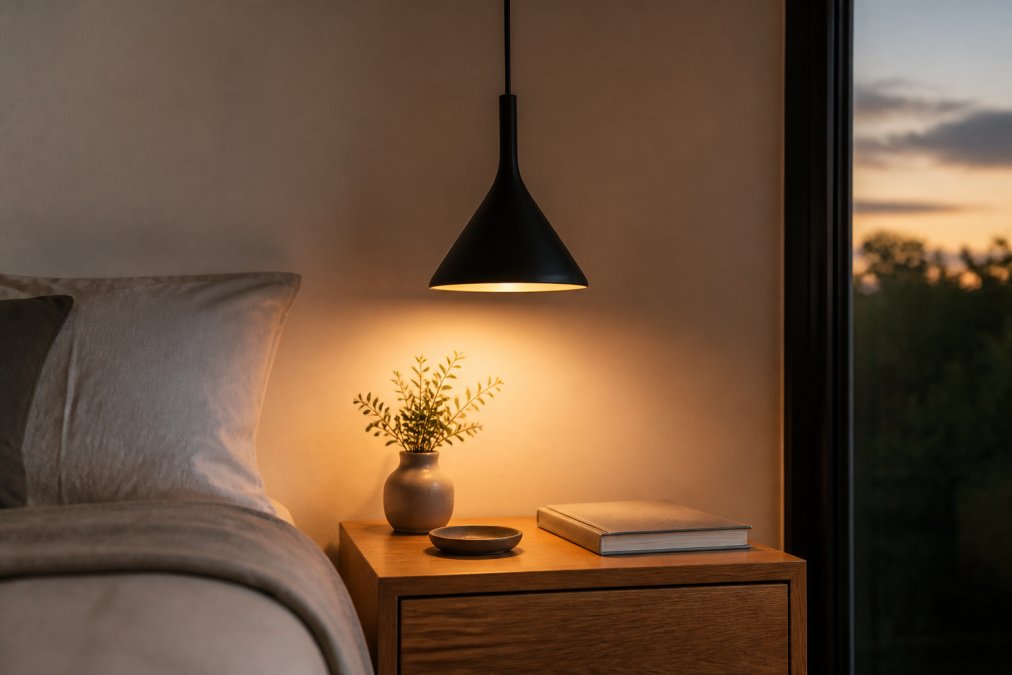
Lucendi Home's minimalist lighting collection exemplifies this: pared-back pendant and wall lights in finishes like matte black, warm white, and brushed nickel. Choose one statement piece per room; multiple competing lighting styles make the space feel scattered.
Ambient and Task Lighting Layering
Layering lighting, combining ambient, task, and accent lighting, creates flexibility and warmth. Ambient lighting sets the general mood, while task lighting (bedside lamps for reading) serves a function. Together, they allow you to adjust the room's feel throughout the day.
Choose warm-toned bulbs (2700K colour temperature) rather than cool white (peer-reviewed research). Warm light feels more inviting and supports better sleep. Dimmer switches are essential: they let you reduce lighting intensity in the evening, signalling to your body that it's time to wind down.
5. Textural Elements and Soft Furnishings
Minimalism isn't about having nothing; it's about having only what matters. Texture and soft furnishings, chosen carefully, add warmth and personality without introducing visual clutter.
Linen and Natural Fabrics for Warmth
Natural fabrics like linen and organic cotton are the foundation of a minimalist bedroom. Linen aligns perfectly with minimalist philosophy: it's durable, becomes softer with each wash, and has a relaxed aesthetic that feels intentional. CULTIVER's European flax linen bedding and Adairs' Vintage Washed Linen sheets offer high-quality options that improve over time. Hommey's organic cotton bedding is OEKO-TEX certified, free from harmful chemicals (oeko-tex.com).
Choose soft whites, warm greys, and natural linen tones for cohesion. Avoid patterned or heavily textured fabrics; they introduce visual noise. A single linen quilt cover in a neutral shade paired with matching pillowcases creates a serene base layer.
Layering Without Excess
Layering means adding depth through texture, not quantity. A linen quilt cover, a lightweight wool throw, and perhaps one textured pillow create visual interest without chaos. Each piece should earn its place through function (warmth, comfort) or subtle aesthetic contribution. A throw blanket you actually use is minimalist; decorative cushions you move aside to sleep are not.
6. Nightstand and Bedside Table Selection
Your bedside table is the last thing you see before sleep and the first thing you see upon waking. Choosing the right piece matters for both function and overall aesthetic.
Australian-made options like Koala and Jardan offer designs that prioritise form and function. Koala's bedside tables feature clean lines, practical drawers, and warm timber finishes. Jardan's handcrafted pieces offer premium materials and bespoke options.
The ideal bedside table has at least one drawer, a compact footprint, and a finish that complements your bed frame. Height matters too: the table should align roughly with your mattress height, making it easy to reach items without stretching.
7. Psychological Benefits and Budget-Friendly Implementation
Minimalism isn't just an aesthetic choice; it's a lifestyle shift with measurable psychological benefits. Understanding why this approach works helps you commit to it.
Why Minimalism Reduces Stress
A clutter-free environment directly reduces cognitive load (peer-reviewed research). Your brain processes visual information constantly; when a space is filled with unnecessary objects, you're unconsciously processing all of them. This creates low-level mental fatigue.
A minimalist bedroom removes that background noise, allowing your mind to settle more easily. This supports better sleep quality and a calmer morning routine. Beyond sleep, a minimal bedroom becomes a genuine refuge where your nervous system can downregulate.
DIY Minimalist Decor on a Budget
Creating a minimalist master bedroom doesn't require spending a fortune. Invest in the big pieces (bed frame, quality bedding, good lighting) and keep accessories minimal.
Start by assessing your current furniture: does it serve a function? Does it fit the aesthetic? Remove what doesn't. Next, invest in one or two quality pieces: a good bed frame (the IKEA MALM is affordable and effective) and quality bedding (linen or organic cotton from CULTIVER, Adairs, or Hommey).
For lighting, a single matte black pendant or wall sconce from Lucendi Home creates impact without major expense. For storage, under-bed boxes or a simple wall-mounted shelf solves clutter without significant investment.
The Family Nest offers space-saving furniture and smart organisation solutions designed with this challenge in mind: creating a functional, beautiful bedroom without breaking the budget. Their commitment to easy installation and free returns means you can test pieces in your space and adjust without financial risk.
A minimalist master bedroom doesn't happen by accident. It requires choosing the right bed frame, committing to a calm colour palette, implementing smart storage, and selecting lighting that supports relaxation. The Family Nest makes this process straightforward with space-saving furniture, easy installation guides, and a 30-day return policy so you can build your sanctuary with confidence. Start with one intentional piece, then layer in the rest. Your calmer mornings and better sleep will confirm you've made the right choice.
Frequently Asked Questions
Q: What are the essential elements of a minimalist master bedroom?
A: A minimalist master bedroom centres on a few key pieces: a clean-lined bed frame, neutral colour palette, intentional lighting, and hidden or minimal storage. The goal is to create a clutter-free sanctuary where every item serves a purpose. Soft natural materials like linen and timber add warmth without visual noise. Keep surfaces clear, choose one or two accent colours, and ensure bedside tables hold only essentials. This approach reduces visual stress and promotes better sleep.
Q: How can space-saving bedroom storage ideas help achieve a minimalist look?
A: Space-saving storage keeps clutter out of sight while maximising floor space. Under-bed storage boxes, built-in wardrobes, and compact bedside tables with drawers hide belongings without adding visual weight. Vertical storage solutions like wall-mounted shelves work well if kept sparse and organised. The key is choosing furniture that serves double duty, a platform bed with integrated storage, for example, so you're not adding extra pieces to the room. This maintains the open, intentional feel of minimalism.
Q: What neutral bedroom colour schemes work best for a minimalist space?
A: Monochromatic schemes using soft greys, warm whites, or soft beiges create visual calm. Layer these with warm wooden accents for depth without colour complexity. Limit your palette to two or three tones maximum. If you want a subtle accent wall, limewash paint in a soft neutral shade adds texture without bold colour. The goal is a cohesive, restful environment where nothing competes for attention.
Q: How do I balance minimalism with comfort in a master bedroom?
A: Minimalism doesn't mean sparse or cold. Invest in quality bedding, linen or organic cotton that feels luxurious, and layer soft textures like a lightweight throw or cotton quilt. Choose lighting that's warm and adjustable so you can create ambient mood in the evening. Select a bed frame and bedside tables in natural timber to add warmth. The key is choosing fewer items but making them high-quality, tactile, and genuinely comfortable. This creates a bedroom that's both restful and psychologically calming.
Q: What are the latest minimalist bedroom lighting trends for 2026?
A: Current trends favour statement lighting with clean lines, matte black or brushed nickel finishes in simple geometric shapes. Pendant lights above bedside tables or a single sculptural ceiling fixture work well. Layering is essential: combine ambient overhead lighting with softer task lighting for reading. Warm white bulbs (2700K) promote relaxation better than cool tones. Many designers are moving away from multiple small lights toward one or two well-chosen pieces that act as functional art, reducing visual clutter while providing adequate illumination.
This article was written using GrandRanker